Best CRM Tools for Small Businesses: Enhance Customer Relationships
Introduction
In today's competitive landscape, small businesses often find it challenging to manage customer interactions effectively. As customer expectations evolve, having the right Customer Relationship Management (CRM) tools is essential. CRM software helps businesses streamline their processes, foster better communication with clients, and ultimately enhance customer satisfaction. This article will provide a comprehensive overview of the best CRM tools tailored for small businesses, examining their features, pricing, and how they can strengthen customer relationships.
Understanding the importance of CRM tools can transform customer interactions from transactional to relational, enabling small businesses to build loyalty and drive growth. Whether you are a startup or an established small business, integrating a suitable CRM can revolutionize how you manage your customer data. In this guide, you will learn about the top CRM options available, their key features, and how to choose the right one for your business needs.
What Is CRM?
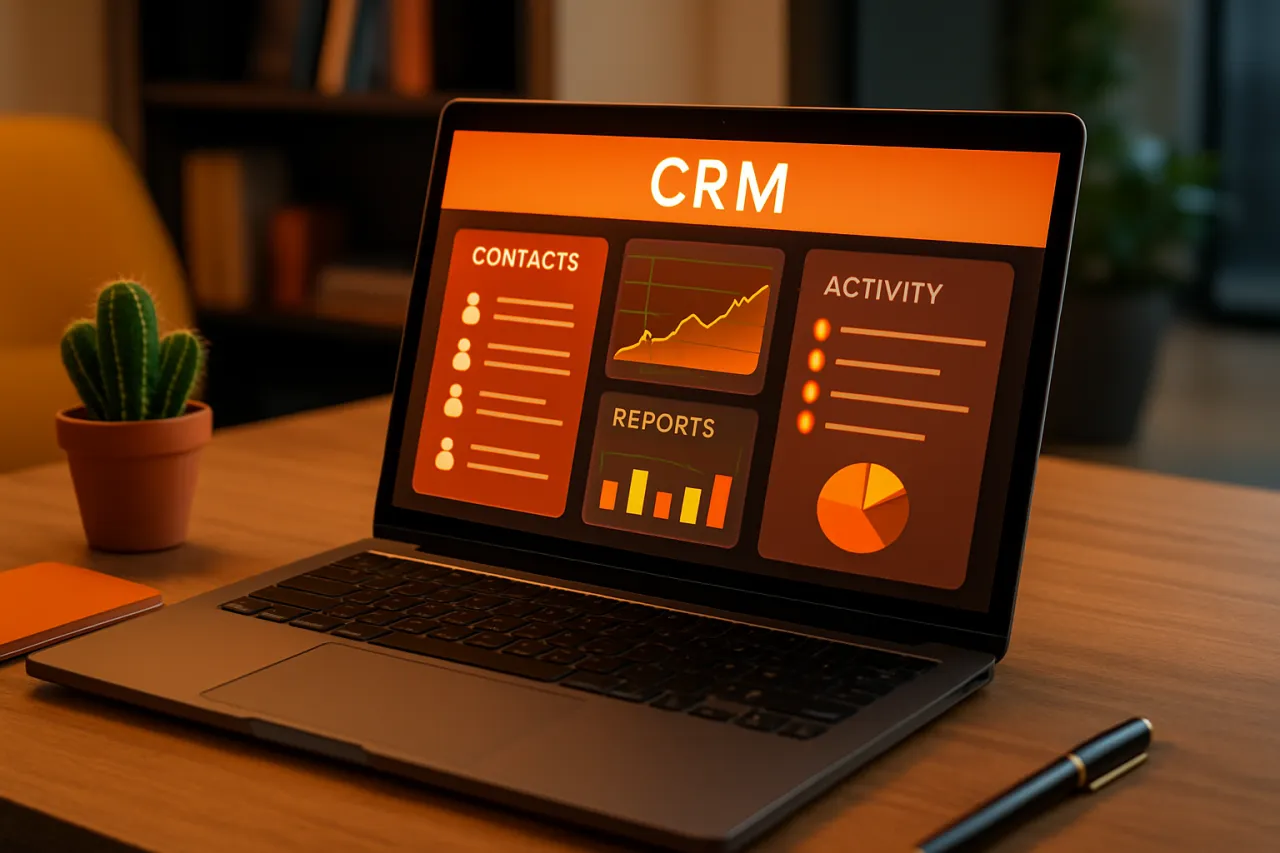
Customer Relationship Management (CRM) software is a tool that helps businesses manage their interactions with current and potential customers. It provides a centralized database to store customer information, track interactions, and analyze data to improve customer relationships. A CRM system can automate processes, manage sales pipelines, and enhance marketing efforts, making it an invaluable asset for small businesses striving to grow.
Why It Matters
For small businesses, effective customer relationship management is crucial to retaining clients and expanding their customer base. With the right CRM tools, businesses can:
- Enhance customer communication and engagement.
- Automate repetitive tasks, allowing teams to focus on strategic initiatives.
- Gain insights into customer behavior and preferences, enabling personalized marketing.
- Improve collaboration among team members through shared access to customer data.
These benefits can lead to increased customer satisfaction, higher retention rates, and ultimately, more revenue.
Best CRM Tools for Small Businesses
1. HubSpot CRM
Overview
HubSpot CRM is a widely-used tool that offers a user-friendly interface and a wide range of features designed for small businesses. It includes contact management, email tracking, sales automation, and reporting tools.
Strengths
- Free version available with essential features.
- Comprehensive integration capabilities with HubSpot's marketing and sales tools.
- Intuitive and easy to use for teams of all sizes.
Limitations
- Advanced features can become expensive as the business scales.
- Some users report that the reporting features are less customizable than competitors.
Best for
Businesses looking for a robust free CRM with the option to upgrade as they grow.
Pricing overview
Free tier available; paid plans start at $50/month.
2. Salesforce Essentials
Overview
Salesforce Essentials is a powerful CRM designed specifically for small businesses. It provides tools for sales, customer service, and marketing within a single platform.
Strengths
- Highly customizable and scalable as the business grows.
- Extensive app marketplace for additional integrations.
- Strong analytics and reporting capabilities.
Limitations
- Steeper learning curve compared to simpler CRMs.
- Can be costly as additional features are added.
Best for
Small businesses that anticipate rapid growth and require a scalable solution.
Pricing overview
Starts at $25/user/month.
3. Zoho CRM
Overview
Zoho CRM is a cloud-based solution that offers a comprehensive suite of features for managing customer relationships. It includes tools for sales automation, marketing automation, and customer support.
Strengths
- Affordable pricing plans, ideal for small businesses.
- Strong automation features to streamline workflows.
- Good integration with other Zoho products.
Limitations
- The user interface can feel cluttered at times.
- Limited customization options in lower-tier plans.
Best for
Cost-conscious businesses looking for an all-in-one solution.
Pricing overview
Free tier available; paid plans start at $14/user/month.
4. Pipedrive
Overview
Pipedrive is a sales-focused CRM that helps small businesses track their sales pipeline and manage customer relationships effectively.
Strengths
- Visual sales pipeline that is easy to navigate.
- Excellent activity reminders to keep sales teams on track.
- Highly intuitive and user-friendly interface.
Limitations
- Limited marketing automation features compared to other CRMs.
- More suitable for sales teams rather than customer support.
Best for
Sales-driven businesses looking for a straightforward pipeline management tool.
Pricing overview
Plans start at $15/user/month.
5. Freshsales
Overview
Freshsales by Freshworks is a CRM solution that includes AI-based lead scoring, built-in phone, and email capabilities, making it suitable for small businesses.
Strengths
- AI features provide insights into customer behavior.
- Integrated phone and email features streamline communication.
- Customizable dashboards and reporting.
Limitations
- Some features may require higher-tier plans.
- User interface can be overwhelming for new users.
Best for
Small businesses looking for a CRM with strong AI features.
Pricing overview
Free tier available; paid plans start at $15/user/month.
How to Choose the Right Solution
Selecting the right CRM tool for your small business involves considering several factors. Here are some key evaluation criteria:
- Feature Set: Assess the features that are most important to your business, such as sales automation, customer support, or marketing tools.
- Usability: Look for a user-friendly interface that your team can adopt quickly without extensive training.
- Scalability: Ensure that the CRM can grow with your business and support additional users and features as needed.
- Pricing: Consider your budget and whether the pricing model aligns with your business size and growth trajectory.
- Integrations: Check for compatibility with existing tools and software your business uses to ensure a seamless workflow.
Common Mistakes
When implementing a CRM tool, small businesses should avoid the following common mistakes:
- Ignoring User Adoption: Failing to involve your team in the selection process can lead to low adoption rates and underutilization of the software.
- Overcomplicating Processes: Choose a CRM that suits your current needs without overwhelming your team with unnecessary features.
- Neglecting Data Quality: Ensure that the data entered into the CRM is accurate and up-to-date to maximize its effectiveness.
Frequently Asked Questions
1. What is a CRM tool?
A CRM tool is software that helps businesses manage customer interactions, sales, and marketing in a centralized system.
2. How can CRM tools benefit small businesses?
CRM tools enhance customer relationships, streamline processes, and provide valuable insights into customer behavior, leading to improved sales and customer satisfaction.
3. Are there free CRM options available for small businesses?
Yes, many CRM tools offer free versions with essential features, such as HubSpot CRM and Zoho CRM.
4. What should I consider when choosing a CRM?
Consider features, usability, scalability, pricing, and integrations when selecting the right CRM for your business.
5. Can I customize my CRM?
Many CRM tools offer customization options to tailor the software to your business processes and needs.
Conclusion
Choosing the right CRM tool is a critical step for small businesses aiming to enhance their customer relationships and streamline operations. By understanding the features, strengths, and limitations of each CRM solution, you can make an informed decision that aligns with your business goals. Remember to prioritize user adoption and data quality for optimal results. With the right CRM, you can build stronger customer connections and drive growth effectively.
About the Author
Startup Advisor
With a background in E-commerce, Michelle Carter brings hands-on expertise to evaluating the latest E-commerce tools. She has reviewed hundreds of SaaS products for startups and enterprises alike.