How to Choose the Best CRM Software for Nonprofits
Introduction
In the ever-evolving landscape of nonprofit management, effective donor relationships are crucial for sustaining operations and driving impact. Choosing the right Customer Relationship Management (CRM) software can be a game-changer for organizations looking to enhance their communication with donors, streamline operations, and ultimately increase fundraising success. This guide is designed to assist nonprofit organizations in navigating the complex world of CRM solutions.
In this article, we will explore the key features to consider when selecting CRM software, understand the importance of usability for your team, and discuss various pricing strategies. You’ll also discover real-life success stories that highlight how the right CRM can transform nonprofit management.
What Is CRM Software?
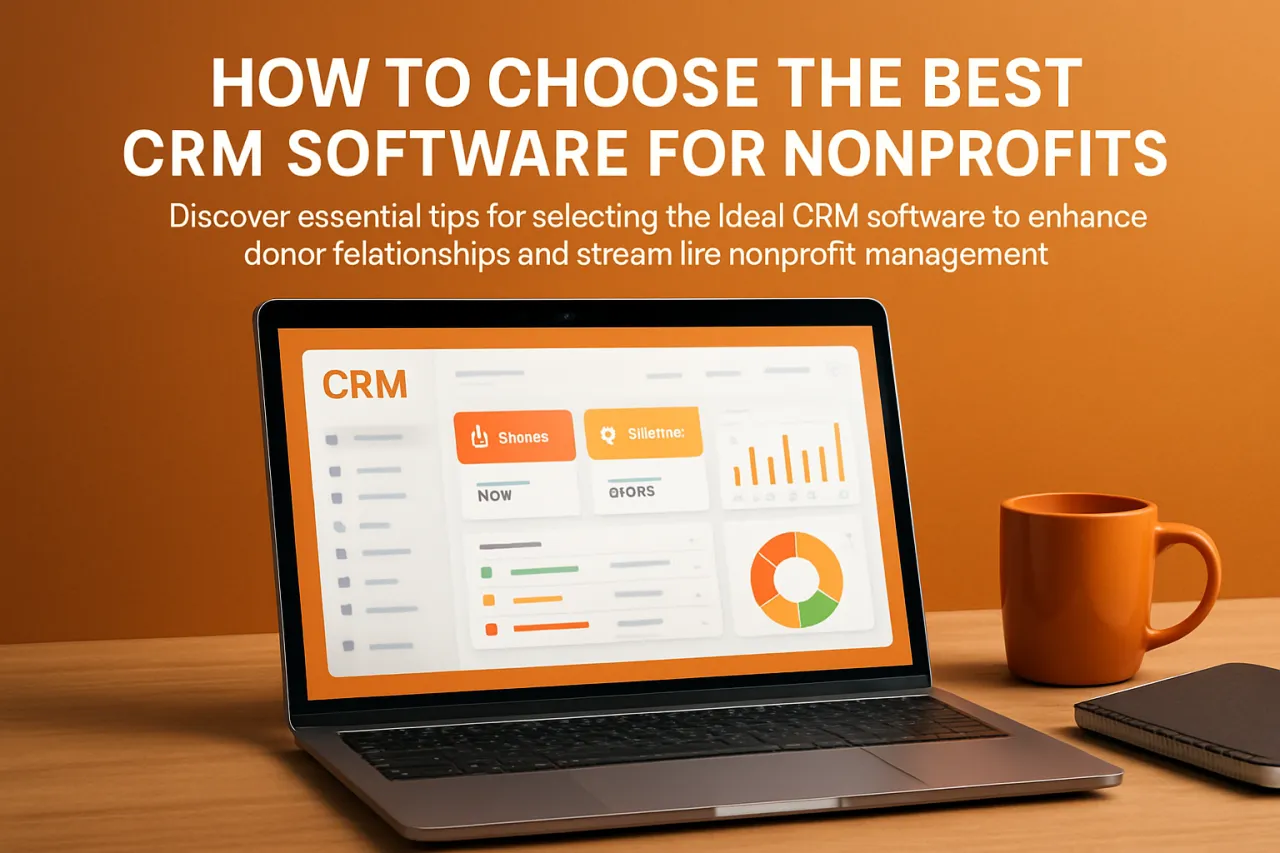
CRM software is a tool that helps organizations manage their relationships and interactions with current and potential donors. It provides a centralized platform for storing donor information, tracking interactions, managing campaigns, and analyzing data related to fundraising efforts. For nonprofits, a CRM is not just a database; it’s an essential tool for fostering relationships, managing donor engagement, and improving operational efficiency.
Why It Matters
For nonprofits, building and maintaining strong relationships with donors is fundamental to achieving their mission. CRM software enables organizations to capture vital donor information, tailor communications, and track contributions over time. By leveraging the right CRM, nonprofits can enhance their donor engagement strategies, leading to improved retention rates and increased funding opportunities. A well-chosen CRM can also save time and resources, allowing staff to focus more on their mission and less on administrative tasks.
Best Software / Methods / Strategies
1. Salesforce Nonprofit Success Pack
- Overview: Salesforce offers a robust CRM solution tailored specifically for nonprofits through its Nonprofit Success Pack. It provides tools for managing donor relationships, fundraising campaigns, and volunteer engagement.
- Strengths: Highly customizable; extensive integration options; strong community support.
- Limitations: Can be complex to set up; higher learning curve for new users.
- Best for: Organizations looking for a comprehensive, scalable solution.
- Pricing overview: Free for eligible nonprofits; paid plans start at $36 per user/month.
2. Bloomerang
- Overview: Bloomerang is a user-friendly CRM designed for small to mid-sized nonprofits, focusing on donor retention and engagement.
- Strengths: Intuitive interface; excellent donor analytics; strong focus on retention strategies.
- Limitations: Limited advanced features compared to larger CRMs; may not meet the needs of larger organizations.
- Best for: Nonprofits prioritizing donor retention and engagement.
- Pricing overview: Starts at $99/month based on the number of contacts.
3. DonorPerfect
- Overview: DonorPerfect is a flexible and comprehensive fundraising software that includes donor management tools, reporting, and online giving.
- Strengths: Versatile features; custom reporting capabilities; robust donor database.
- Limitations: Pricing can add up with additional features; some users find the interface dated.
- Best for: Organizations seeking a balance of functionality and ease of use.
- Pricing overview: Pricing varies based on features; starting at $89/month.
4. Kindful
- Overview: Kindful is a cloud-based CRM that provides tools for managing donations, tracking relationships, and reporting.
- Strengths: Easy to use; integrates with various third-party applications; strong emphasis on donor experience.
- Limitations: Less customizable than some competitors; limited reporting options.
- Best for: Nonprofits looking for a simple, straightforward solution.
- Pricing overview: Starts at $100/month depending on the number of contacts.
How to Choose the Right Solution
When evaluating CRM software for your nonprofit, consider the following criteria:
- Usability: Determine how intuitive the software is for your team. Look for platforms that offer training and support.
- Features: Identify the key features you need, such as donor management, event tracking, and reporting capabilities.
- Integrations: Ensure the CRM can integrate with other tools you already use, like email marketing services or accounting software.
- Scalability: Choose a solution that can grow with your organization as your needs change.
- Budget: Assess your budget and consider both upfront and ongoing costs.
Common Mistakes
Many nonprofits make common mistakes when selecting CRM software. Some of these include:
- Not involving staff in the decision-making process: Ensure that those who will use the CRM are part of the evaluation.
- Overlooking training and support: Select a vendor that offers comprehensive support and training to help your team adapt.
- Ignoring scalability: Avoid choosing software that meets only current needs without considering future growth.
Frequently Asked Questions
1. What key features should I look for in a nonprofit CRM?
Look for donor management, reporting, communication tools, and integration capabilities.
2. How much does CRM software for nonprofits typically cost?
Costs can vary widely, ranging from free to several hundred dollars a month, depending on features and the organization’s size.
3. Can CRM software help with donor retention?
Yes, CRMs can track donor interactions and engagement, enabling targeted communication that fosters long-term relationships.
4. Is it worth investing in CRM software for a small nonprofit?
Investing in CRM software can significantly improve efficiency and donor relationships, making it worthwhile even for small organizations.
5. How can I ensure my team adopts the new CRM?
Involve your team in the selection process, provide adequate training, and communicate the benefits of the new system.
Conclusion
Selecting the best CRM software for your nonprofit is a critical decision that can greatly influence your organization’s ability to manage donor relationships and enhance fundraising efforts. By understanding the key features, considering usability, and avoiding common mistakes, you can find a solution that fits your unique needs. Take the time to evaluate options and choose a CRM that will not only streamline your operations but also help you foster lasting relationships with your donors. Investing in the right CRM can lead to improved donor engagement and ultimately, greater success in fulfilling your mission.
About the Author

Development Lead | Software Reviewer
I'm a software reviewer and web application developer specializing in cybersecurity tools, software comparisons, and buying guides. He is passionate about making technology accessible and helping user...