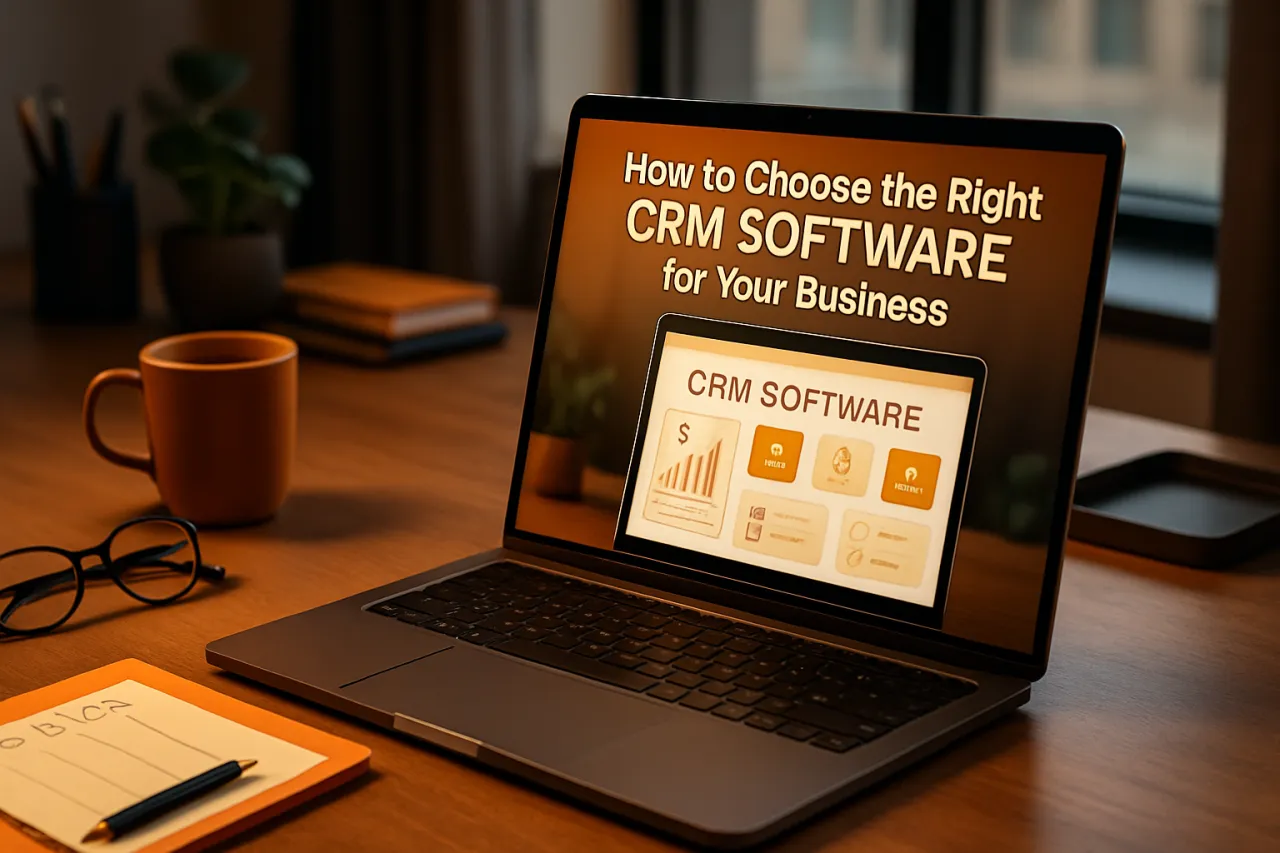
How to Choose the Right CRM Software for Your Business
Introduction
Choosing the right Customer Relationship Management (CRM) software is a crucial decision for any small business. With an ever-growing number of options available, finding the right fit can feel overwhelming. A CRM system can streamline your operations, enhance customer relationships, and ultimately boost your bottom line. However, the wrong choice can lead to wasted time and resources, leaving you frustrated and your team unproductive.
In this guide, we will walk you through the essential factors to consider when selecting CRM software, common pitfalls to avoid, and practical strategies to align your choice with your business goals. Whether you’re a first-time buyer or looking to switch providers, this comprehensive checklist will empower you to make an informed decision.
What Is CRM Software
CRM software is designed to help businesses manage interactions with current and potential customers. It centralizes customer data, streamlines processes, and enhances communication across departments. Key features often include contact management, sales tracking, email marketing integration, and analytics.
These tools vary widely in functionality, pricing, and complexity, making it essential to understand your specific business needs before diving into the selection process.
Why It Matters
Investing in CRM software can significantly enhance your business efficiency and customer satisfaction. A well-implemented CRM system can help you:
- Improve customer retention by fostering stronger relationships.
- Analyze customer data to tailor your marketing strategies.
- Automate routine tasks, allowing your team to focus on higher-value activities.
Recognizing the importance of CRM software in modern business operations can help you prioritize this decision and ensure that you choose a solution that supports your growth.
Best Software / Methods / Strategies
1. HubSpot CRM
- Overview: HubSpot offers a free CRM solution that is feature-rich and user-friendly. It provides tools for sales and marketing automation, contact management, and analytics.
- Strengths: Easy to use, extensive integration options, strong community support.
- Limitations: Advanced features may require paid tiers, which can become costly.
- Best for: Small to medium-sized businesses looking for an intuitive platform.
- Pricing Overview: Free tier available; paid plans start at $50/month.
2. Salesforce
- Overview: Salesforce is a leading CRM platform known for its extensive capabilities and customization options.
- Strengths: Highly customizable, robust analytics features, and strong integration capabilities.
- Limitations: Can be complex to set up, with a steeper learning curve.
- Best for: Businesses that require a high level of customization and advanced functionality.
- Pricing Overview: Plans start at $25/user/month.
3. Zoho CRM
- Overview: Zoho CRM offers a comprehensive suite of features at an affordable price, making it popular among small businesses.
- Strengths: Cost-effective, good automation features, and mobile-friendly.
- Limitations: Some users report a less intuitive interface.
- Best for: Budget-conscious businesses looking for a full-featured CRM.
- Pricing Overview: Plans start at $12/user/month.
4. BrandJet
- Overview: BrandJet focuses on cold outreach and lead generation, making it ideal for sales teams.
- Strengths: Specialized tools for outreach, good analytics, and tracking.
- Limitations: May lack some broad CRM functionalities found in larger platforms.
- Best for: Sales teams focused on lead generation and outreach.
- Pricing Overview: Pricing available upon request.
5. LanceDB
- Overview: LanceDB is designed for managing customer data and interactions seamlessly.
- Strengths: Easy integration with various databases, enhanced data analytics.
- Limitations: May not have as many third-party integrations as competitors.
- Best for: Tech-forward businesses needing data-centric solutions.
- Pricing Overview: Pricing available upon request.
How to Choose the Right Solution
When evaluating CRM software, consider the following criteria:
- Business Needs: Identify your specific requirements, such as sales tracking, marketing automation, or customer support.
- Scalability: Choose a solution that can grow with your business, accommodating more users and features as needed.
- User Experience: A user-friendly interface will reduce the learning curve and improve adoption rates among your team.
- Integration: Ensure the CRM can integrate with your existing tools and systems for seamless data flow.
- Support and Training: Look for solutions that offer robust customer support and training resources to help your team maximize the software’s potential.
Common Mistakes
Avoid these common pitfalls when selecting a CRM:
- Ignoring User Feedback: Engage your team in the decision-making process to ensure the chosen system meets their needs.
- Overlooking Scalability: Don’t choose a solution that only meets your current needs; consider future growth and expansion.
- Neglecting Training: Failing to train your team can lead to poor adoption and underutilization of the tool.
- Not Testing: Take advantage of free trials to test functionality and usability before committing.
Frequently Asked Questions
1. What is the average cost of CRM software?
The cost varies widely depending on the features and number of users, ranging from free options to several hundred dollars per month.
2. How can CRM software improve customer relationships?
By centralizing customer data and interactions, CRM software enables personalized communication and better understanding of customer needs.
3. Is CRM software suitable for all business sizes?
Yes, while many CRMs are designed with small and medium-sized businesses in mind, there are also options tailored for large enterprises.
4. Can CRM software integrate with other business tools?
Most CRM systems offer integrations with various business tools, including email, calendars, and project management software.
5. What features should I prioritize in a CRM?
Focus on features that align with your business goals, such as sales automation, reporting, and customer support tools.
Conclusion
Choosing the right CRM software is a critical step in enhancing your business operations and customer relationships. By understanding your business needs, evaluating different options, and avoiding common mistakes, you can select a CRM solution that drives efficiency and growth. Remember to engage your team in the process and leverage trial periods to ensure the best fit for your organization. With the right CRM in place, you're well on your way to achieving your business goals.
About the Author
Digital Marketing Expert
David White is passionate about helping teams discover the right software. As a digital marketing expert, He specializes in AI Tools solutions and has been featured in multiple tech publications.