
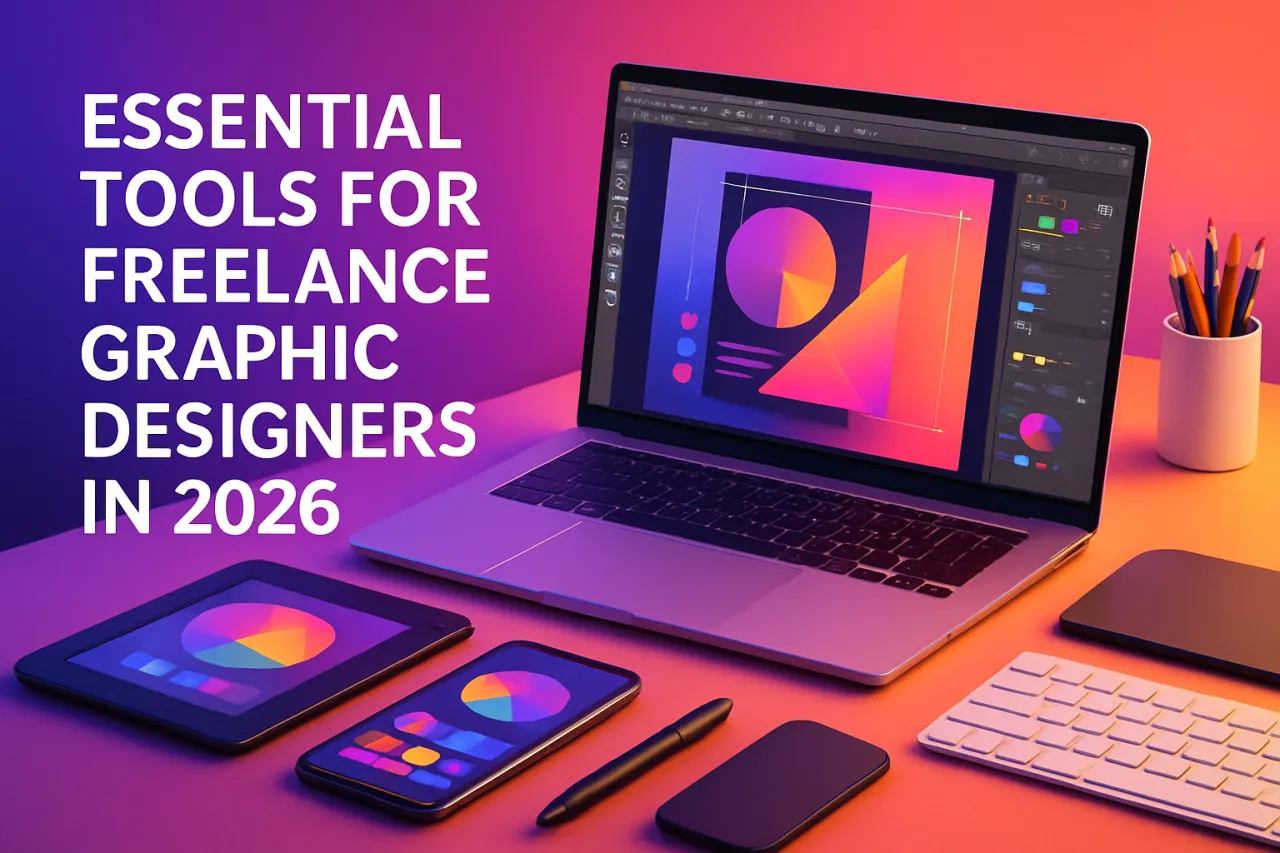
Essential Tools for Freelance Graphic Designers in 2026
Introduction
Freelance graphic designers play a crucial role in shaping visual communication across industries. However, juggling multiple projects, managing client expectations, and keeping up with design trends can be overwhelming. The right set of tools can make all the difference in streamlining workflows and enhancing creativity.
In this article, we’ll explore essential graphic design tools that cater specifically to freelancers, focusing on affordability and functionality. We’ll address common challenges freelancers face, such as time management and client communication, while providing curated recommendations based on user reviews and expert opinions.
What Is Essential Graphic Design Tools?
Essential graphic design tools encompass software and applications that facilitate the creation, editing, and management of design projects. For freelancers, these tools are vital for producing high-quality work efficiently. From graphic editing software to project management platforms, the right tools can significantly impact a designer's productivity and professionalism.
Why It Matters
As a freelance graphic designer, choosing the right tools can enhance your design capabilities while also improving client interactions. The right tools save time, reduce errors, and help maintain a professional image. With a plethora of options available, understanding which tools are essential can help you make informed decisions that benefit your design career.
Best Software / Methods / Strategies
1. Adobe Creative Cloud
- Overview: Adobe Creative Cloud is a comprehensive suite offering industry-standard software such as Photoshop, Illustrator, and InDesign.
- Strengths: Extensive features, powerful tools for image editing, vector graphics, and layout design. Access to cloud storage and collaboration tools.
- Limitations: Subscription-based pricing can be high for freelancers; a steep learning curve for new users.
- Best for: Designers looking for professional-grade tools and versatility.
- Pricing overview: Plans start at around $20.99/month for individual apps, with a complete suite available at higher rates.
2. Canva
- Overview: Canva is a user-friendly graphic design tool ideal for creating marketing materials, presentations, and social media graphics.
- Strengths: Easy-to-use interface, extensive library of templates, and assets. Great for quick designs.
- Limitations: Limited design capabilities compared to more advanced software like Adobe; less control over fine-tuning designs.
- Best for: Beginners and those needing fast, visually appealing designs without extensive training.
- Pricing overview: Free version available, with a Pro version for $12.99/month.
3. Figma
- Overview: Figma is a collaborative interface design tool that allows multiple users to work on a project in real time.
- Strengths: Excellent for UI/UX design, real-time collaboration features, and cloud-based accessibility.
- Limitations: May not be suitable for print design or complex graphic illustrations.
- Best for: Teams or freelancers working on web and mobile design projects.
- Pricing overview: Free version available, with a Professional plan starting at $12/editor/month.
4. Trello
- Overview: Trello is a visual project management tool that helps freelancers organize tasks and collaborate with clients.
- Strengths: Intuitive Kanban boards, easy task tracking, and integration with other tools.
- Limitations: Can become cluttered with complex projects; limited functionality without Power-Ups.
- Best for: Freelancers needing a simple, visual way to manage tasks and deadlines.
- Pricing overview: Free version available, with Business Class at $10/user/month.
5. BrandCrowd
- Overview: BrandCrowd is a logo maker and brand design tool that allows freelancers to create logos and branding materials quickly.
- Strengths: User-friendly, quick logo generation, and a wide variety of design options.
- Limitations: Limited customization compared to professional design software.
- Best for: Freelancers needing quick branding solutions for clients.
- Pricing overview: Free to create, with logo downloads available for a small fee.
How to Choose the Right Solution
When selecting graphic design tools, consider the following criteria:
- Functionality: Ensure the tool meets your specific design needs, whether it’s for print, web, or branding.
- Budget: Evaluate the pricing structure and choose tools that fit your financial situation as a freelancer.
- Ease of Use: Look for tools with intuitive interfaces that minimize the learning curve.
- Integration: Consider how well the tool integrates with other software you use, such as project management or communication tools.
Common Mistakes
Freelancers often make several mistakes when choosing graphic design tools:
- Overlooking Budget: Many freelancers invest in high-cost tools without assessing their necessity.
- Neglecting User Reviews: Failing to read user reviews can lead to poor decisions regarding tool selection.
- Avoiding Trials: Not taking advantage of free trials can result in purchasing tools that don't meet your needs.
Frequently Asked Questions
-
What are the best graphic design tools for beginners?
Tools like Canva and Adobe Spark offer user-friendly interfaces perfect for those new to graphic design. -
Are there free graphic design tools available?
Yes, many tools like GIMP and Canva offer free versions with essential features. -
How do I choose the right graphic design software?
Consider your specific design needs, budget, and whether you require collaboration features. -
Can I use graphic design tools for video content?
Some tools, like Adobe Creative Cloud, include software for video editing, while others focus solely on static images. -
What’s the difference between vector and raster graphics?
Vector graphics are made of paths and are scalable without loss of quality, while raster graphics are made of pixels and can lose quality when enlarged.
Conclusion
Choosing the right graphic design tools as a freelancer can significantly impact your efficiency and creativity. By evaluating your specific needs and considering the strengths and limitations of each tool, you can build a toolkit that enhances your productivity and helps you deliver outstanding work to clients. Remember to keep budget considerations in mind and don’t hesitate to explore free options before committing to a purchase.
About the Author
Tech Blogger
With a background in Automation, Rida Zafar brings hands-on expertise to evaluating the latest Automation tools. She has reviewed hundreds of SaaS products for startups and enterprises alike.