Overview
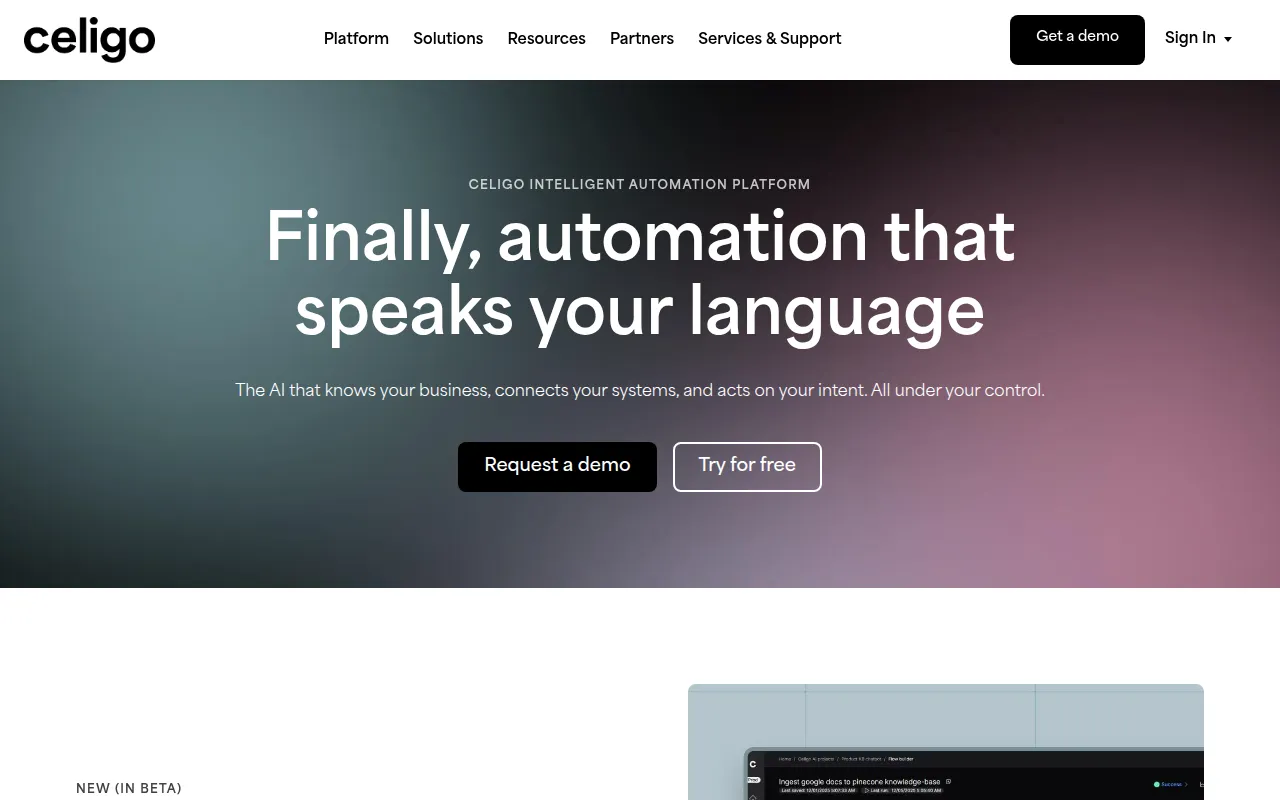
Celigo is an intelligent automation platform designed to unify data, applications, and AI workflows. Its primary purpose is to streamline operations by automating critical business processes and integrating various systems. Celigo addresses challenges such as data silos, inefficient workflows, and the complexity of managing multiple software applications. By facilitating seamless data flow and automating repetitive tasks, Celigo enhances operational efficiency and supports informed decision-making.
Key Features
- Integration Platform as a Service (iPaaS) for seamless application connectivity
- Automated workflows that connect disparate systems
- Natural language interface for user-friendly interaction
- Real-time data synchronization across applications
- Customizable dashboards for insightful analytics
- Pre-built connectors for major software applications
- Custom integration for tailored business needs
- AI-driven automation that learns from user behavior
- Scalable architecture to grow with business needs
- Security compliance to protect sensitive data
Benefits
Celigo provides practical advantages that deliver real business value. By automating workflows, teams can focus on higher-value tasks rather than manual processes. The platform's ability to integrate multiple systems reduces the risk of errors associated with data entry and enhances data accuracy. With its real-time data synchronization, businesses can respond quickly to market changes. The intuitive interface makes it accessible for users with varying technical expertise, enabling broader adoption across organizations. Furthermore, Celigo’s scalable pricing model allows businesses to expand their integrations without unexpected costs.
Common Use Cases
Celigo is beneficial in several realistic situations. For example, an e-commerce company can use Celigo to integrate its online store with inventory management and accounting systems, ensuring that inventory levels are accurate and financial records are up-to-date. A marketing team might automate lead tracking by connecting their CRM with email marketing tools, streamlining communication and follow-up processes. In a manufacturing setting, Celigo can synchronize data between production management software and supply chain systems, improving operational transparency and efficiency.
Who Should Use It
Celigo is ideal for medium to large businesses that require robust integration solutions across multiple departments. Organizations with complex workflows needing automation and real-time data sharing will benefit most from its features. However, very small businesses or startups with minimal integration needs might find Celigo’s capabilities exceed their requirements. Additionally, teams that prefer highly customized solutions may need dedicated technical resources to fully leverage the platform.
Pricing Overview
Celigo operates on a flat-rate pricing model based on the number of endpoints and flows. This approach allows users to scale their integrations without hidden fees or unexpected costs. Specific pricing details are not publicly available on the website.
Conclusion
In summary, Celigo stands out as a comprehensive automation and integration platform that effectively addresses modern business challenges. Its strengths lie in its user-friendly interface, robust integration capabilities, and scalability. While it may be more suited for medium to large enterprises, smaller organizations might find it too complex or feature-rich for their needs. Overall, Celigo is a worthwhile option for businesses looking to enhance their operational efficiency through intelligent automation.