Overview
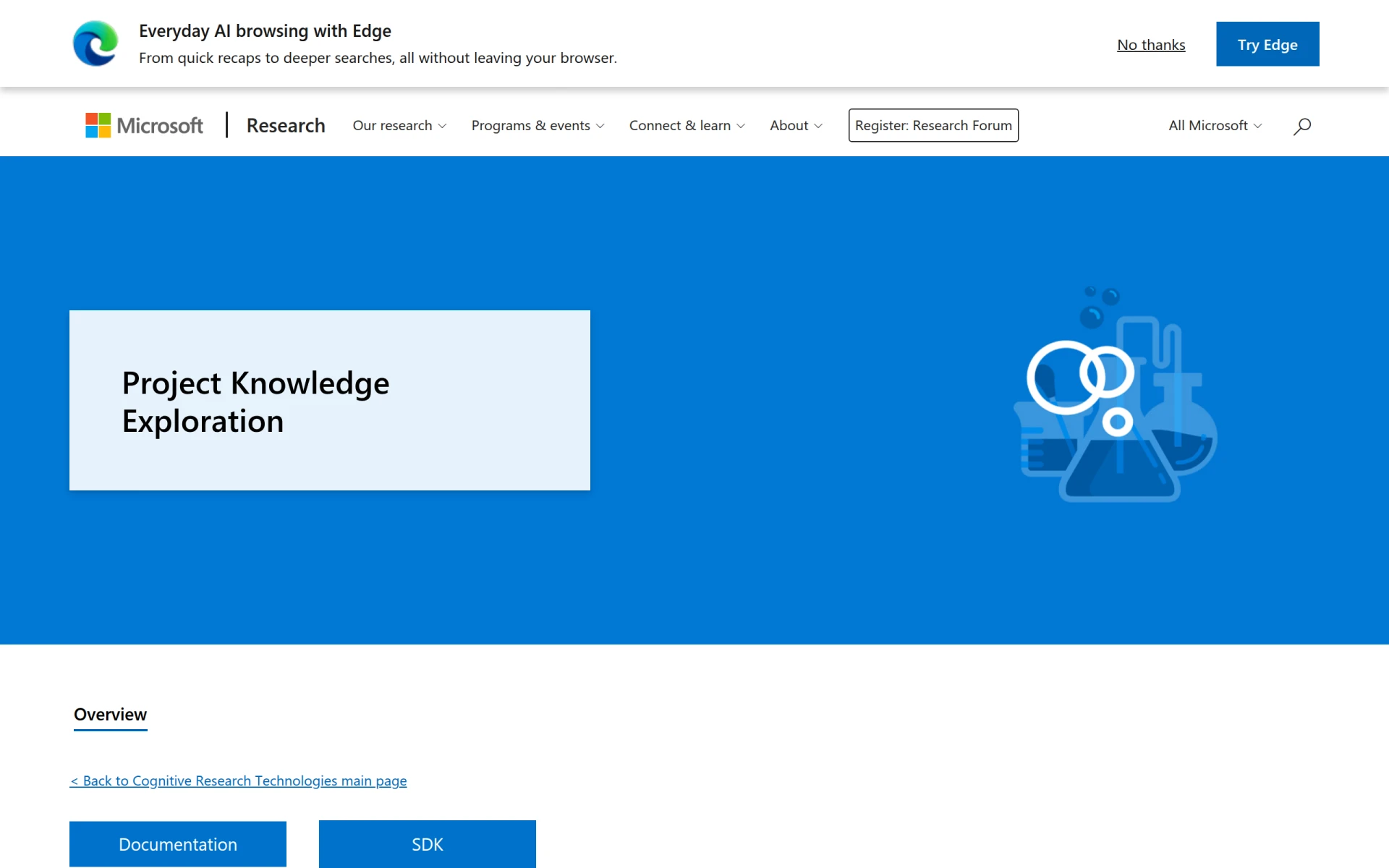
Microsoft Knowledge Exploration is a project developed by Microsoft Research aimed at enhancing search experiences through the use of natural language inputs over structured data. The primary purpose of this software is to provide users with an intuitive and interactive way to access and explore information, allowing for a more conversational search experience compared to traditional keyword-based queries. By enabling users to ask questions in natural language, this tool addresses the common limitations of conventional search engines, which often require precise keyword input.
The software solves the problem of accessibility in data retrieval, allowing users from various backgrounds—ranging from technical experts to everyday users—to interact with complex datasets without needing specialized knowledge. This can lead to more inclusive data exploration, where insights can be derived from structured data sets that might otherwise remain underutilized.
Key Features
- Interactive search capabilities: Engage with data through conversational queries.
- Natural language processing: Understand user queries in human language.
- Structured data exploration: Access and analyze complex datasets easily.
- API integration: Seamlessly integrate with existing applications and workflows.
- Data visualization tools: Present data insights in an easily digestible format.
- Customizable search experiences: Tailor search functionality to specific user needs.
- Support for various data formats: Work with different types of structured data sources.
- Scalability: Handle large volumes of data efficiently.
Benefits
The practical advantages of Microsoft Knowledge Exploration lie in its ability to bridge the gap between users and data. By allowing users to perform searches in natural language, the software significantly reduces the learning curve associated with data analytics and retrieval. This is particularly beneficial for organizations that require quick decision-making based on data insights, as it enables faster access to relevant information. Furthermore, the interactive nature of the tool fosters a more engaging user experience, enhancing overall productivity and satisfaction.
Common Use Cases
Organizations can utilize Microsoft Knowledge Exploration in various scenarios. For instance, a marketing team can leverage the software to extract insights from customer data stored in a structured database, helping to inform campaign strategies. Data analysts can use it to quickly query large datasets and retrieve specific information without needing to write complex SQL queries. Additionally, educational institutions can implement this tool to allow students to explore research data interactively, encouraging self-directed learning and inquiry.
Who Should Use It
Microsoft Knowledge Exploration is ideal for a wide range of users, including data analysts, researchers, marketers, and educators who require easy access to structured data. Its natural language capabilities make it particularly beneficial for teams that may not have deep technical expertise but need to work with complex datasets. However, it may not be the best fit for users who prefer traditional search methods or those who work with unstructured data extensively, as the tool focuses primarily on structured data exploration.
Pricing Overview
Currently, specific pricing information for Microsoft Knowledge Exploration is not available. Users are encouraged to check the official website for potential updates regarding pricing models or availability.
Conclusion
Microsoft Knowledge Exploration offers a unique approach to data interaction, allowing users to query structured datasets through natural language. While it presents significant advantages in terms of accessibility and user engagement, potential users should consider their specific data needs and whether they align with the software's capabilities. As the tool continues to evolve, it holds promise for enhancing how organizations interact with data and derive insights.