
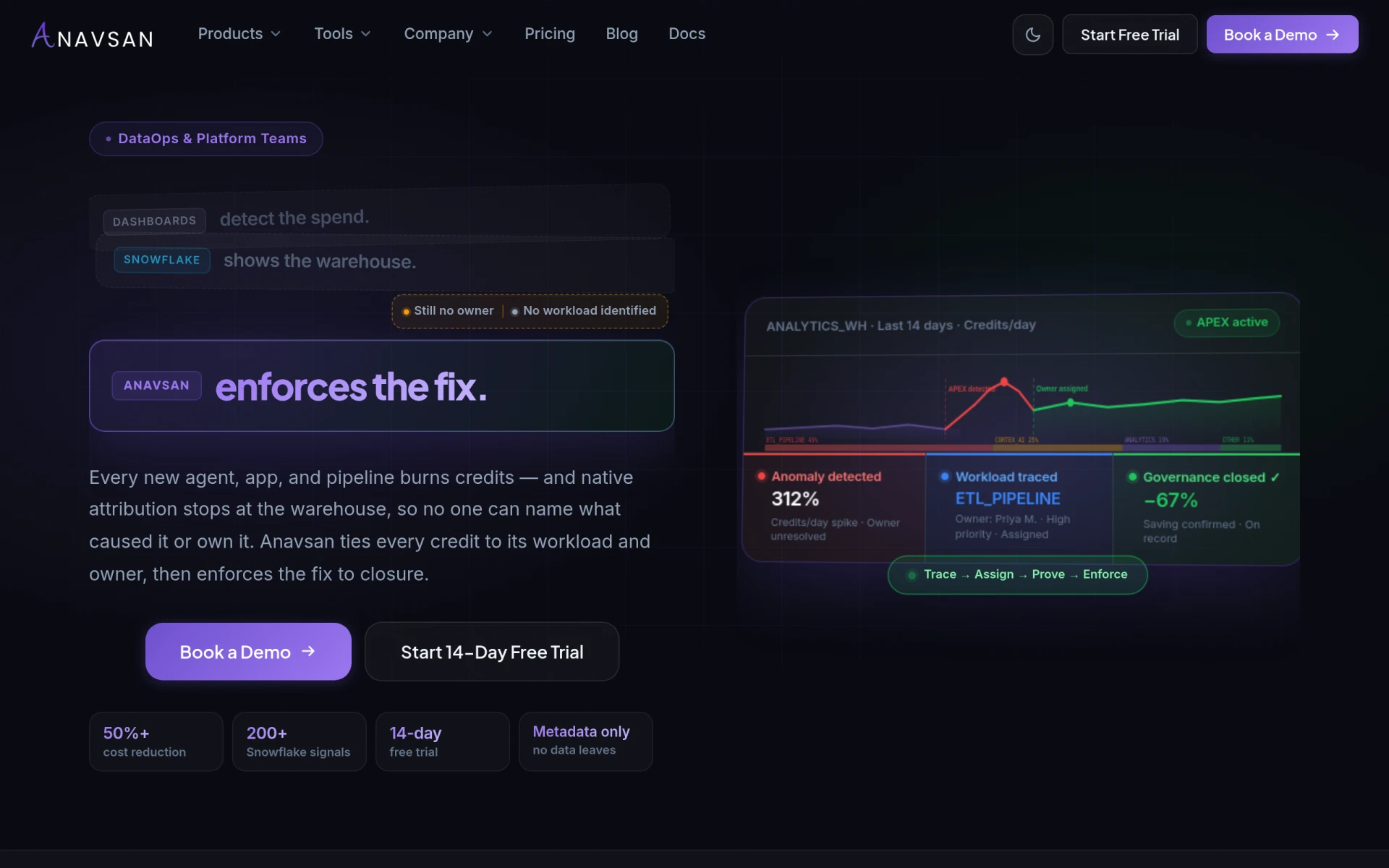

Anavsan
Paid
Anavsan is a cost optimization tool for Snowflake that helps organizations track and manage workload credits effectively.
 P
P
Planck Data enhances commercial insurance underwriting with GenAI, enabling effective data navigation and risk detection.
Planck Data is an innovative tool designed to enhance the efficiency and accuracy of commercial insurance underwriting. By leveraging Generative AI (GenAI), it empowers underwriters to effectively navigate vast amounts of data, classify various types of businesses, and identify critical risk factors with confidence. The primary purpose of Planck Data is to minimize the complexities associated with underwriting processes, making them more data-driven and informed. This software addresses the challenges of managing large datasets, enabling users to make better decisions and reduce the potential for oversight in risk assessment.
Planck Data provides several practical advantages for commercial insurance underwriting. By leveraging GenAI, it significantly reduces the time required for data analysis, allowing underwriters to focus on high-value tasks. The improved accuracy in risk detection minimizes the likelihood of underwriting errors, which can lead to financial losses. Furthermore, the ability to generate customizable reports enhances transparency and facilitates better communication with stakeholders. Overall, Planck Data helps organizations to streamline their underwriting processes and make informed decisions that positively impact their bottom line.
Planck Data is particularly effective in various scenarios within the insurance sector. For example, underwriters at insurance firms can utilize the software to quickly assess the risk profiles of new business applicants, leading to faster approvals and improved customer satisfaction. Additionally, risk management teams can employ the tool to analyze historical data and identify trends that may indicate emerging risks in specific industries. Furthermore, compliance officers can use the reporting features to ensure adherence to regulatory requirements, thereby reducing the risk of penalties.
Planck Data is ideal for insurance underwriters, risk managers, and compliance officers who require precise data analysis and risk assessment tools. It is particularly beneficial for medium to large insurance firms looking to optimize their underwriting processes. However, smaller insurance companies or those with limited data analytics needs may find the software's capabilities exceed their requirements, making it less suitable for their operations.
Pricing information for Planck Data is not readily available on the website. Potential users should contact the company directly for detailed pricing options and packages tailored to their needs.
Planck Data stands out as a valuable tool in the realm of commercial insurance underwriting, driven by its ability to harness the power of GenAI for data analysis and risk assessment. While it offers several strengths, including improved efficiency and accuracy, organizations must evaluate their specific needs to determine whether this solution aligns with their operational requirements. By considering the strengths and potential limitations, businesses can make informed decisions about integrating Planck Data into their underwriting processes.
Anavsan is a cost optimization tool for Snowflake that helps organizations track and manage workload credits effectively.
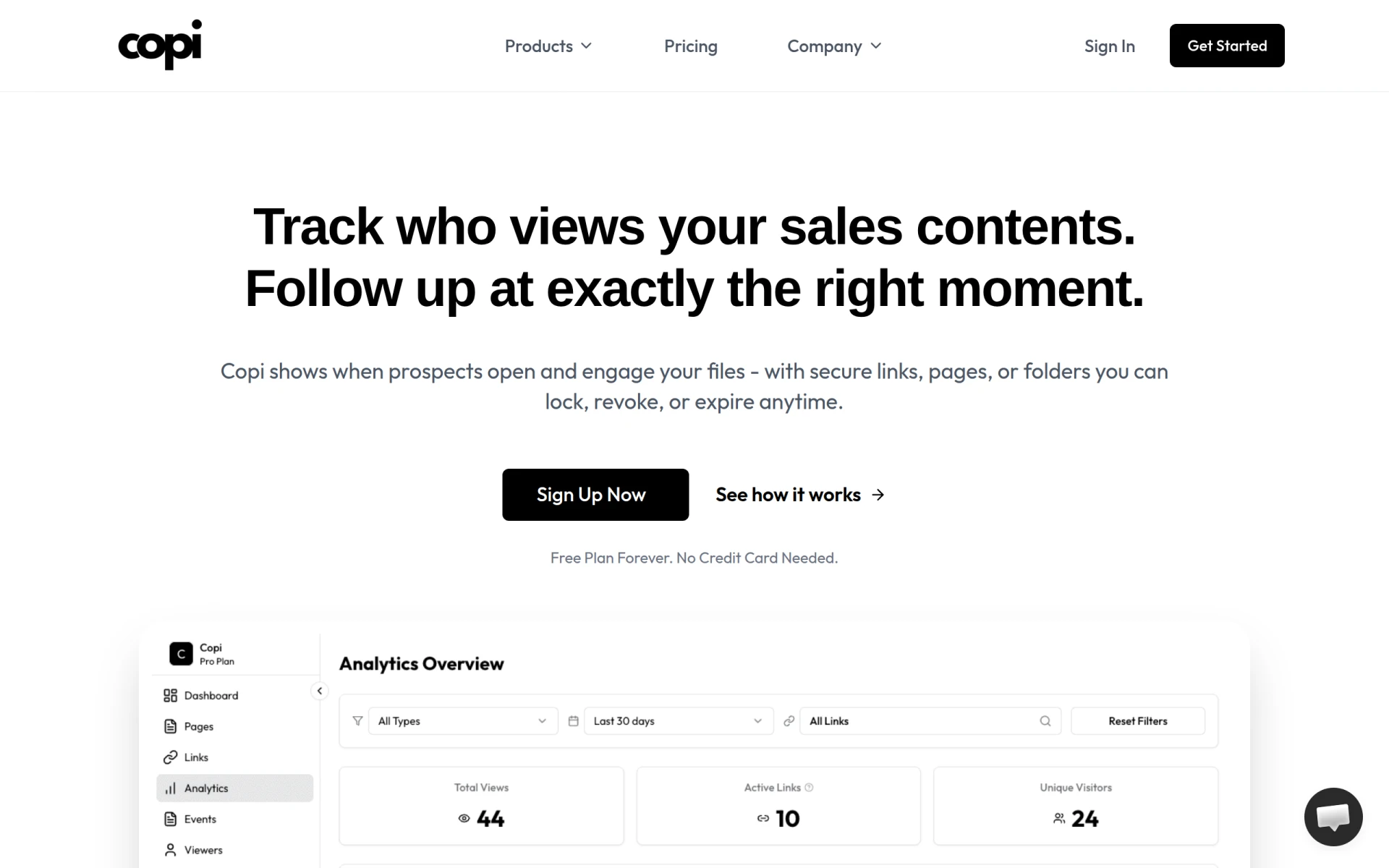
Copi is a sales engagement tool that enables teams to track content views and follow up effectively with AI insights.
Contracko is an AI-powered contract management platform that helps organizations manage risks, obligations, and deadlines efficiently.
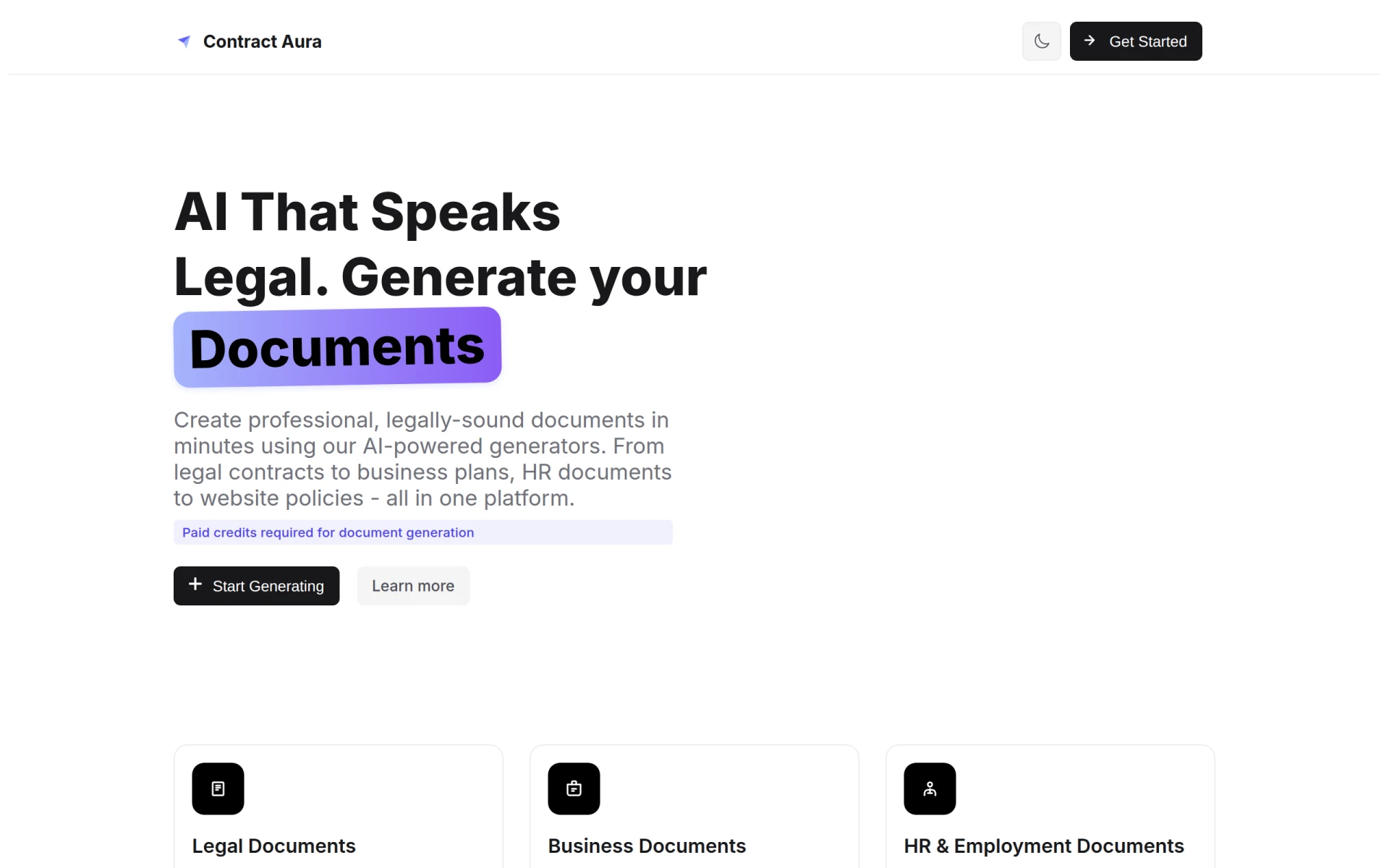
Contract Aura is an AI-driven platform for generating legal and business documents quickly and efficiently.
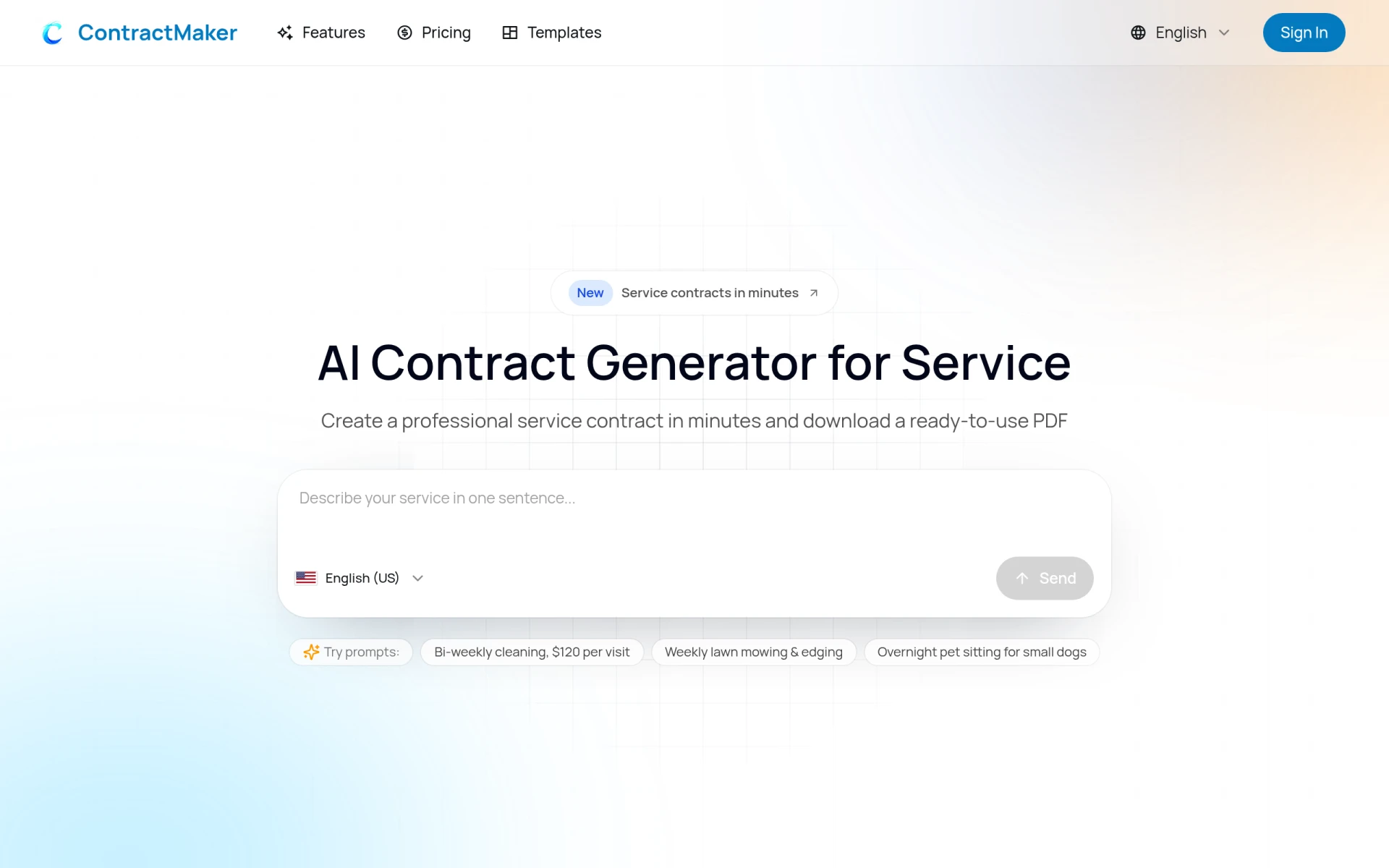
ContractMaker is an AI-driven tool that generates professional service contracts quickly and efficiently.
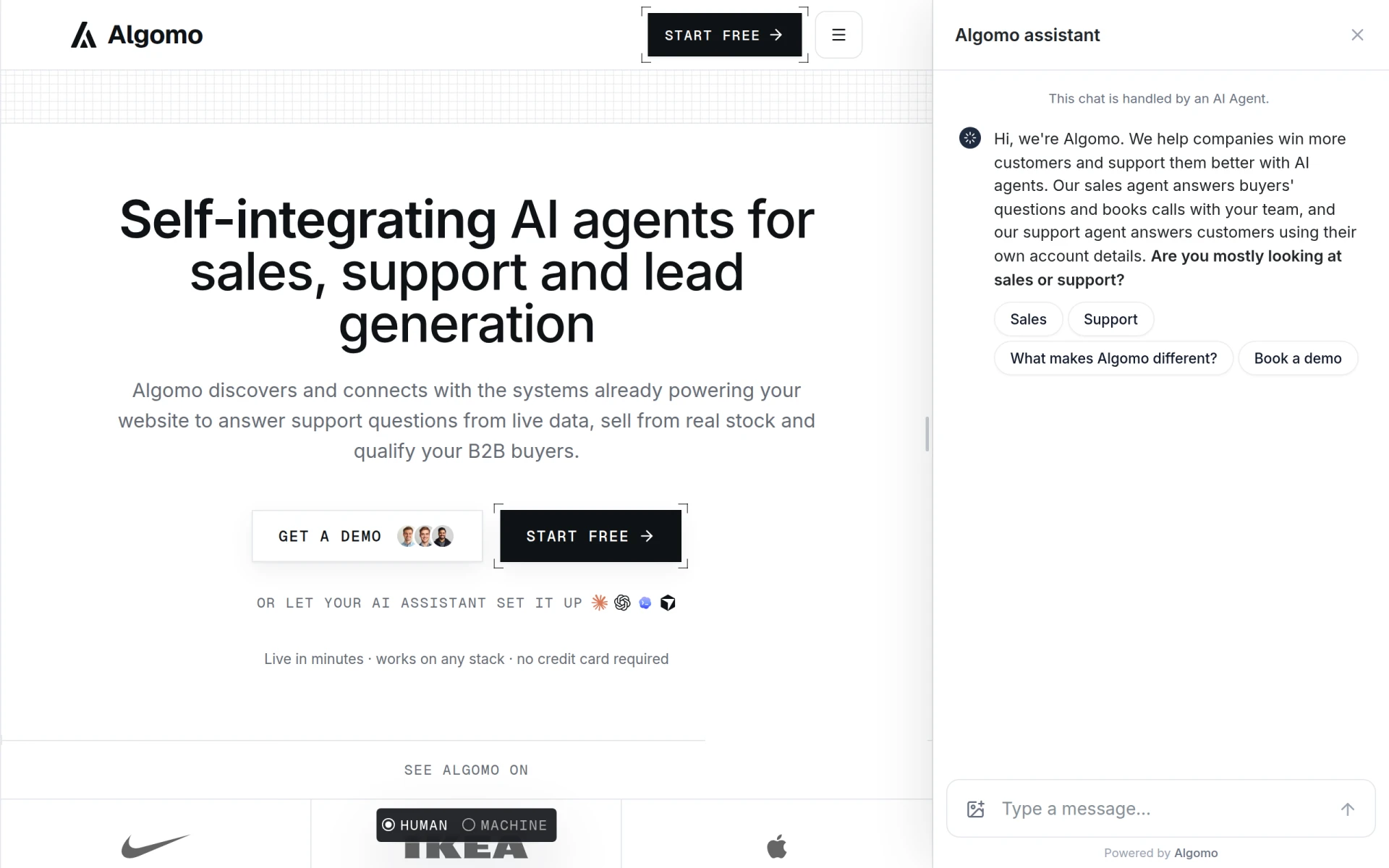
Algomo provides an AI agent for websites, integrating with existing systems to offer support and sales functionalities.
Weekly roundup of new AI tools, launches, and trending software. No spam — unsubscribe anytime.
No credit card required · Cancel anytime
Weekly roundup of new AI tools, launches, and trending software. No spam — unsubscribe anytime.
No credit card required · Cancel anytime