

Composio
Freemium
Composio is a developer tool that enables secure access to over 1,500 applications through an easy-to-use SDK.
 T
T
Temporal Technologies provides a durable execution platform for building reliable applications in various languages and frameworks.
 H
H
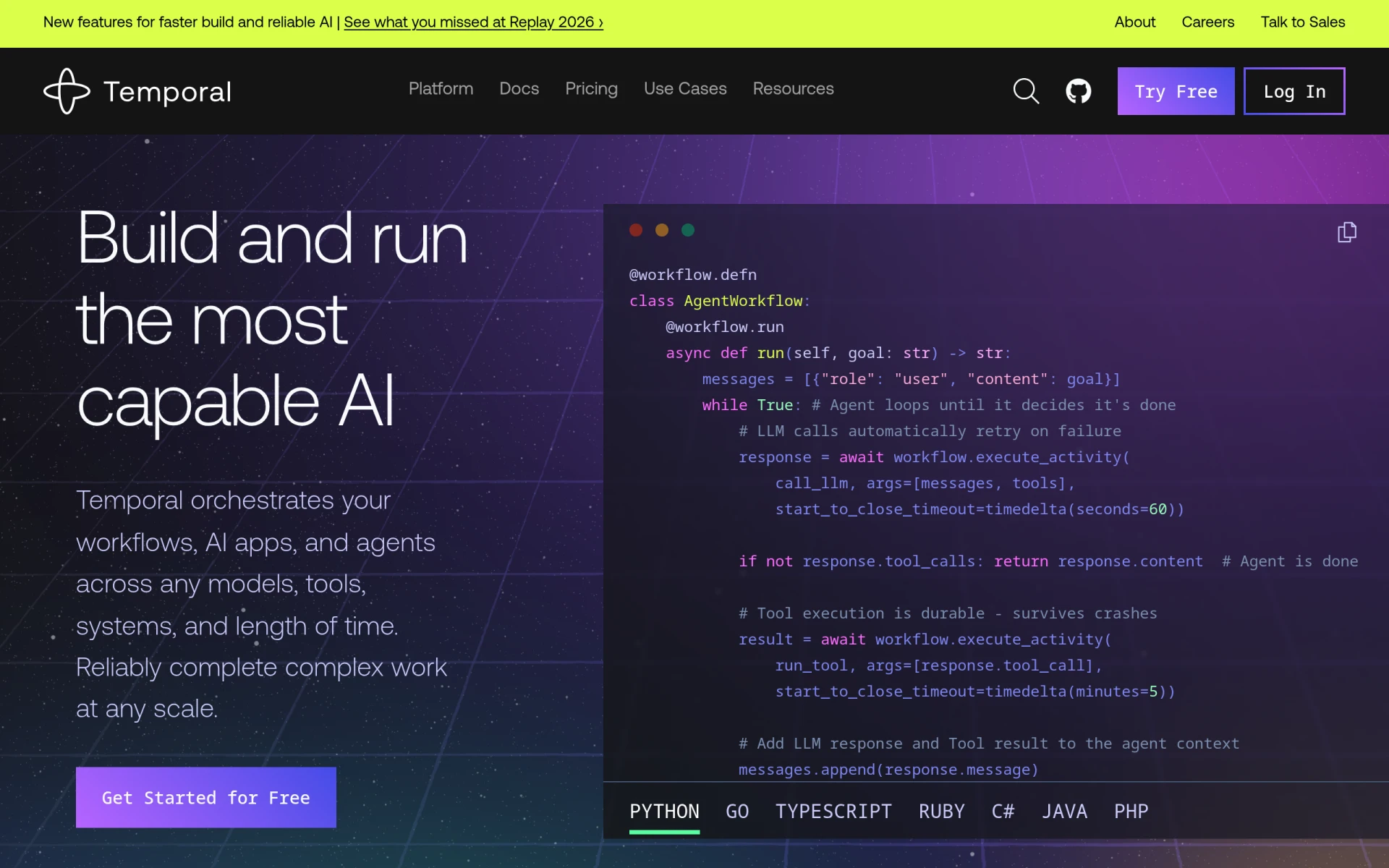
Temporal Technologies specializes in providing a durable execution platform that enables developers to build resilient applications. The primary purpose of Temporal is to simplify the orchestration of complex workflows and manage the state of applications reliably. By addressing the challenges of traditional execution models, Temporal helps developers avoid common pitfalls such as failures in long-running processes and state management issues.
The practical advantages of using Temporal Technologies include improved reliability of applications, which leads to increased user satisfaction. By managing application state automatically, developers can focus more on feature development rather than on error handling. Temporal’s fault-tolerant design reduces downtime and operational risks, making it easier for businesses to maintain critical workflows. Additionally, the flexible deployment options allow companies to scale their applications easily, adapting to evolving needs without compromising performance.
Temporal is particularly effective in scenarios such as:
Ideal users of Temporal Technologies include software developers, DevOps engineers, and teams working on complex backend systems. It is particularly beneficial for organizations that rely heavily on microservices or are building AI-driven applications. However, smaller teams or companies with less complex workflow requirements may find the platform's capabilities to be more than what they need, potentially leading to unnecessary complexity.
Temporal offers a pay-as-you-go pricing model, starting with a free tier that provides $1,000 in credits. The Essentials plan begins at $100 per month, which includes various features such as support for basic workflows and a service level agreement (SLA) for uptime.
In summary, Temporal Technologies presents a solid option for developers seeking to create reliable applications with complex workflows. Its durable execution platform addresses significant challenges in software development, particularly in state management and fault tolerance. While it offers substantial benefits, organizations should carefully evaluate their specific needs to determine if the platform's capabilities align with their use cases. For those with simpler requirements, exploring alternatives may be worthwhile, but for complex applications, Temporal stands out as a trusted solution.
Composio is a developer tool that enables secure access to over 1,500 applications through an easy-to-use SDK.
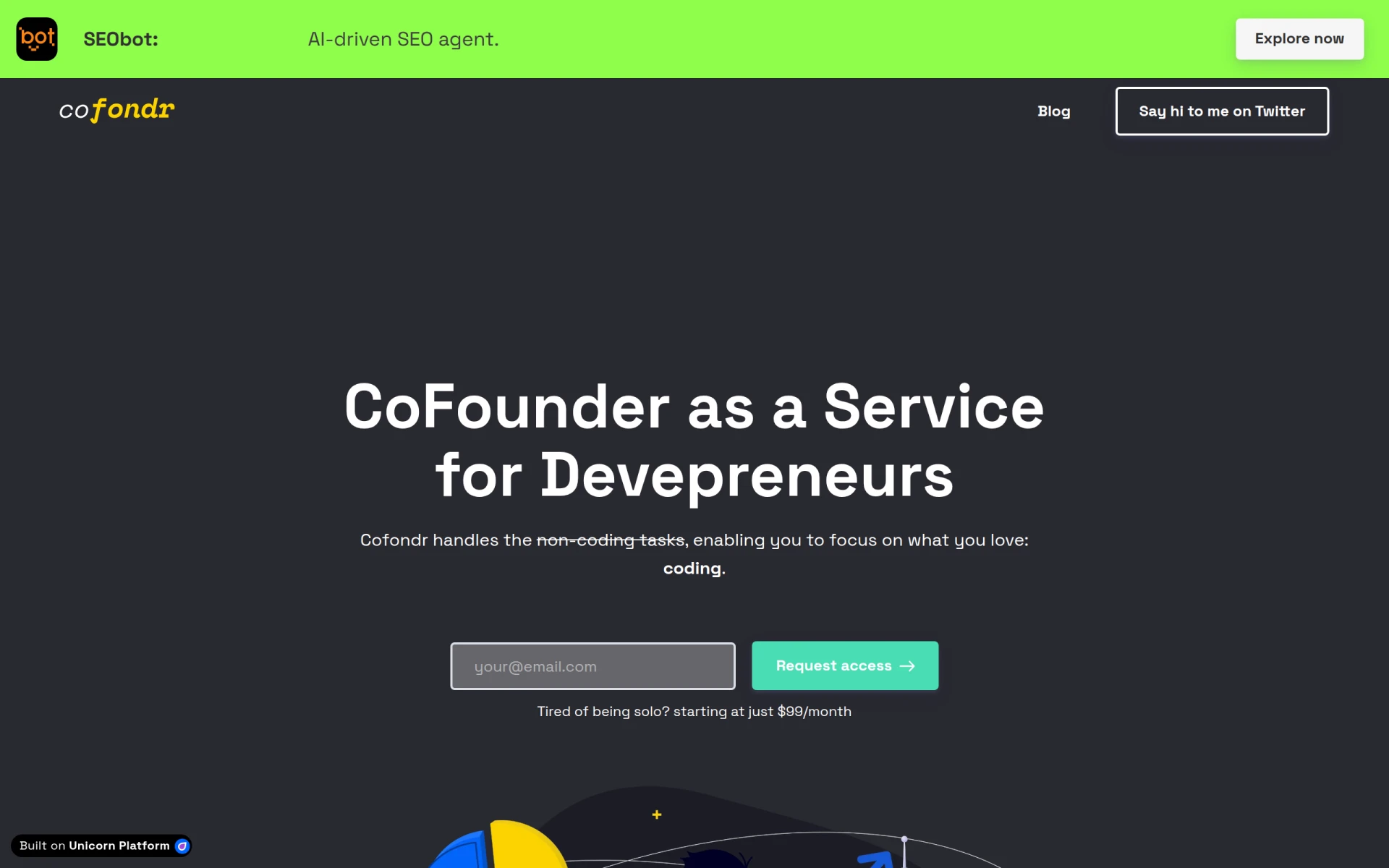
Cofondr simplifies non-coding tasks for developers, allowing them to focus on coding and marketing.
Coding Assistant is a developer tool designed to enhance coding efficiency and accuracy through intelligent code suggestions and problem-solving.
CodeMerge is a collaborative development tool designed to streamline code integration and version control for software teams.
The collaborative design tool for teams. Design, prototype, and collaborate on UI/UX in real-time.
AI-powered code completion. Write code faster with intelligent suggestions in any programming language.
Weekly roundup of new AI tools, launches, and trending software. No spam — unsubscribe anytime.
No credit card required · Cancel anytime
Weekly roundup of new AI tools, launches, and trending software. No spam — unsubscribe anytime.
No credit card required · Cancel anytime