Introduction
In today's fast-paced business world, remote teams often face significant challenges in maintaining effective communication and collaboration. As a remote team leader, you understand the nuances of coordinating team efforts across different locations, and the right video conferencing tools can make all the difference in ensuring smooth interactions and productive workflows.
Why Remote Team Leaders Struggle With Challenges in team coordination across distances
Remote team leaders grapple with several issues that stem from physical distance. Time zones can hinder real-time collaboration, leading to missed opportunities for spontaneous brainstorming sessions. Moreover, the lack of non-verbal cues in video calls can result in misunderstandings, which further complicates team dynamics. For instance, a tone that might convey enthusiasm in person may come off as abrupt over a video call. Additionally, technology barriers and varying internet speeds can interrupt meetings, causing frustration and disengagement among team members. These challenges necessitate tools that not only facilitate meetings but also foster a sense of unity and shared purpose.
What to Look For in Business Tools
- User-friendly Interface: A simple, intuitive design helps team members quickly adapt to the tool, minimizing the learning curve and maximizing productivity.
- Integration Capabilities: The ability to connect with other software tools ensures that team workflows remain seamless, allowing for smoother transitions between tasks.
- Real-time Collaboration Features: Features that enable simultaneous editing or brainstorming can enhance creativity and engagement during meetings.
- Security Measures: Robust security protocols are vital to protect sensitive information shared during video calls.
- Scalability: As your team grows, your tools should be able to accommodate more users and additional features without sacrificing performance.
Best Best Video Conferencing Tools for Remote Teams
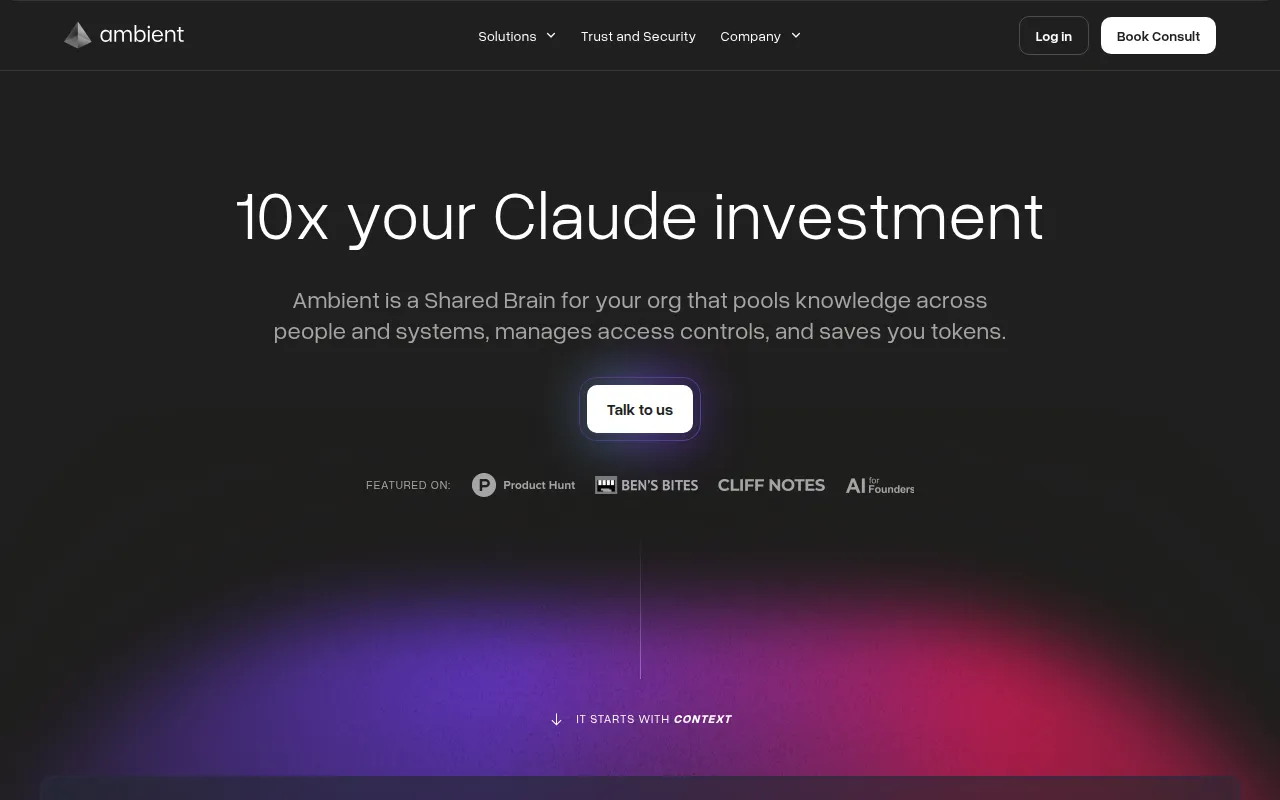
Ambient - Best for centralized information management
Ambient stands out as an AI Chief of Staff that enhances team collaboration by organizing knowledge across various platforms. This tool is particularly beneficial for medium to large organizations that need a centralized hub for all team information. With Ambient, team leaders can ensure that knowledge is pooled effectively, making it easier to access critical insights and data when needed.
What makes Ambient particularly appealing is its capability for context engineering and self-driving reporting. These features allow for automated updates and insights, freeing team leaders from the hassle of manual reporting and enabling them to focus on strategic decision-making. As teams work on complex projects, the seamless customer handoffs offered by Ambient ensure that all members are on the same page, reducing friction and confusion.
- Knowledge pooling: Facilitates easy access to shared resources and insights, enhancing collaboration.
- Context engineering: Helps provide relevant information at the right time, improving decision-making.
- Self-driving reporting: Automates reporting processes, saving time and reducing errors.
- Seamless customer handoffs: Ensures that transitions between team members are smooth and efficient.
- Integration capabilities: Works well with other platforms to streamline workflows.
Pricing: Contact for details. Best for: Medium to large organizations focusing on centralized information management.
Asana - Best for project management
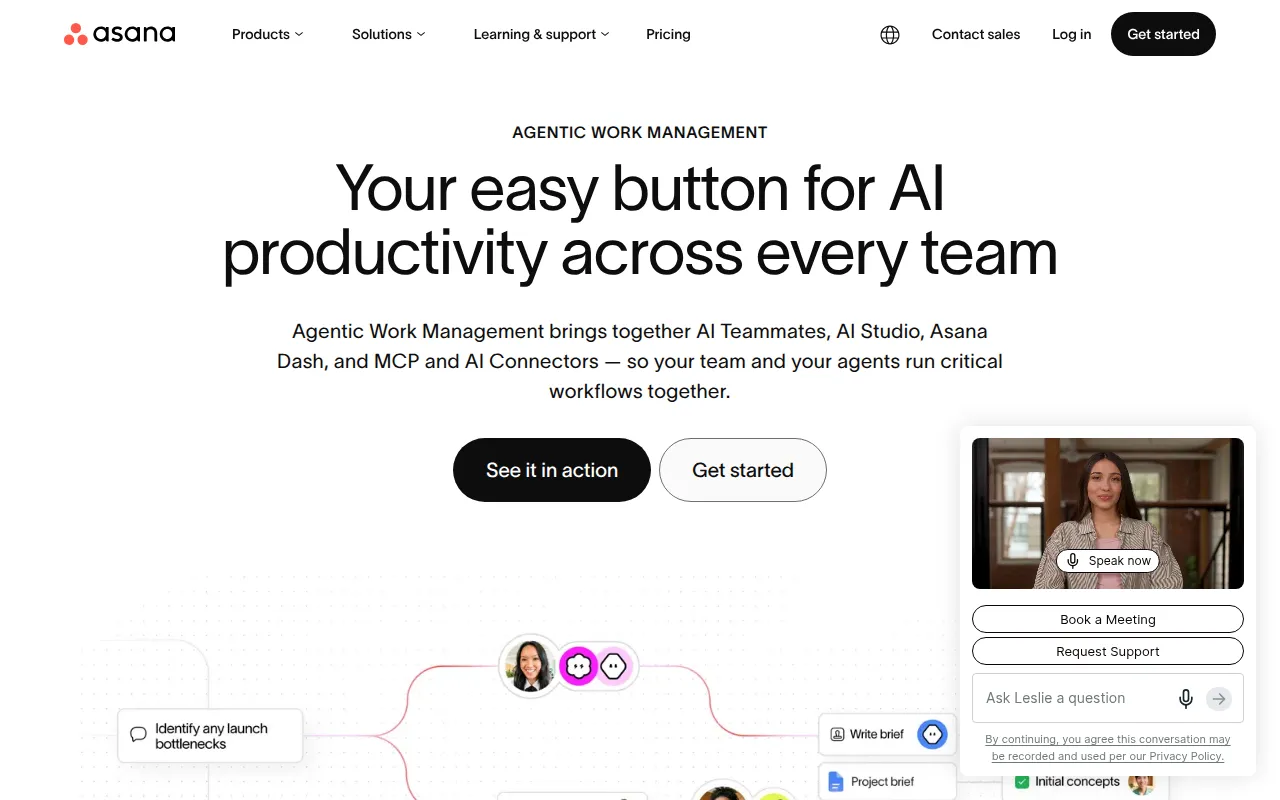
Asana is a highly regarded project management tool that helps teams coordinate their work efficiently. It empowers remote teams by providing a structured approach to task management and project tracking. With customizable dashboards, team leaders can monitor progress and ensure that everyone remains accountable, thus enhancing collaboration across distances.
One of Asana’s standout features is its workflow automation, which allows teams to set up recurring tasks and reminders. This capability helps maintain momentum and ensures that key deadlines are met without the need for constant oversight. Additionally, Asana’s team collaboration features enable members to comment on tasks and provide updates, fostering an environment where everyone feels engaged and informed.
- Task management: Organizes tasks clearly, making it easy for teams to understand their responsibilities.
- Project tracking: Provides visibility into project status, helping teams stay aligned.
- Team collaboration: Allows comments and discussions directly on tasks, enhancing communication.
- Customizable dashboards: Tailors views to meet team needs, improving usability.
- Workflow automation: Reduces manual work, allowing teams to focus on higher-value tasks.
Pricing: Freemium - Free plan available with paid options. Best for: Marketing teams managing campaigns and software development teams tracking sprints.
BigIdeasDB - Best for idea management
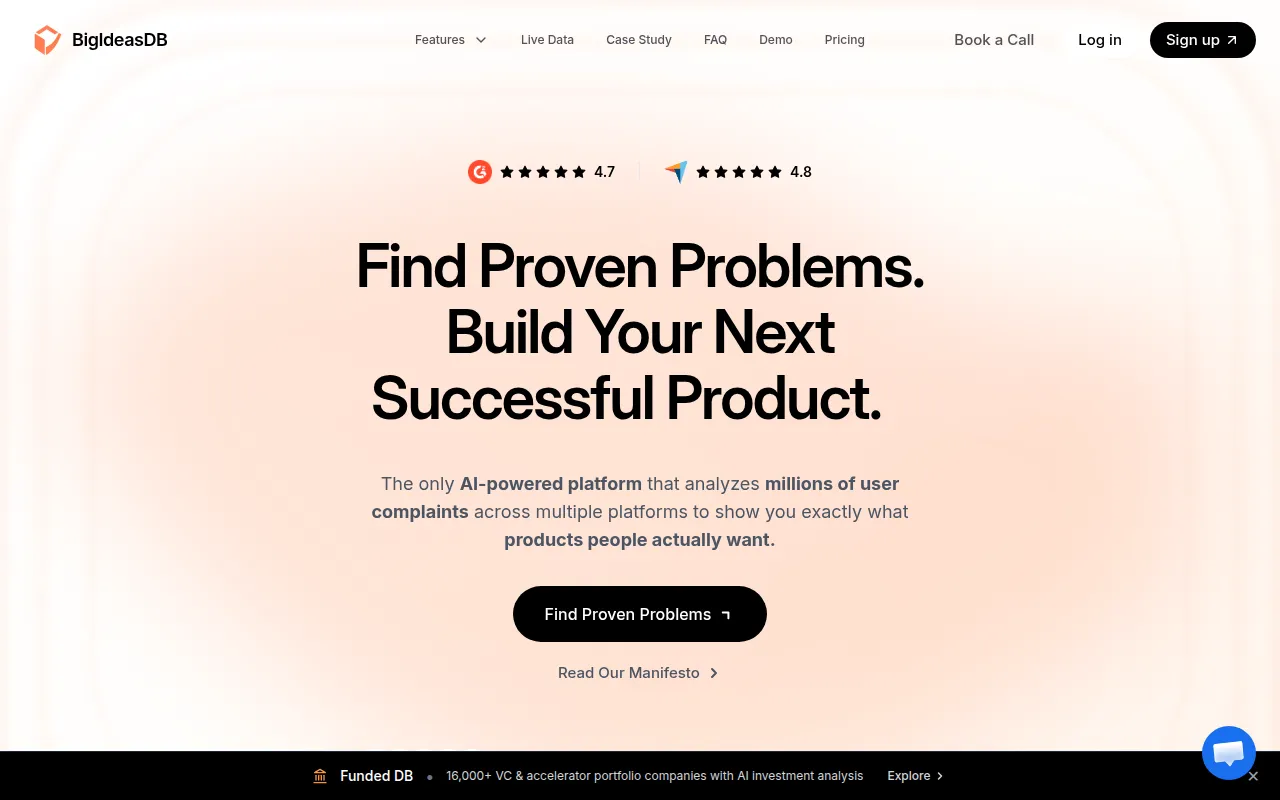
BigIdeasDB serves as an idea management platform that helps organizations capture, evaluate, and prioritize innovative ideas efficiently. For remote teams looking to foster innovation, this tool is invaluable as it provides a structured approach to managing the creative process. With its collaborative tools, team members can submit ideas and engage in discussions, ensuring that all voices are heard.
The evaluation process within BigIdeasDB allows teams to prioritize ideas based on predefined criteria, making it easier to focus on the most promising concepts. Its reporting and analytics features provide valuable insights into the innovation pipeline, helping leaders make informed decisions about project direction and resource allocation.
- Idea Submission: Encourages team members to contribute their thoughts, fostering a culture of innovation.
- Evaluation Process: Helps prioritize ideas based on impact and feasibility.
- Collaboration Tools: Facilitates discussions around ideas, enhancing team engagement.
- Prioritization Matrix: Visualizes the potential of ideas, aiding decision-making.
- Reporting and Analytics: Provides insights into the innovation process, enabling data-driven strategies.
Pricing: Freemium - Pricing details available upon request. Best for: Medium to large organizations seeking to enhance innovation.
BizCard - Best for sharing contact information
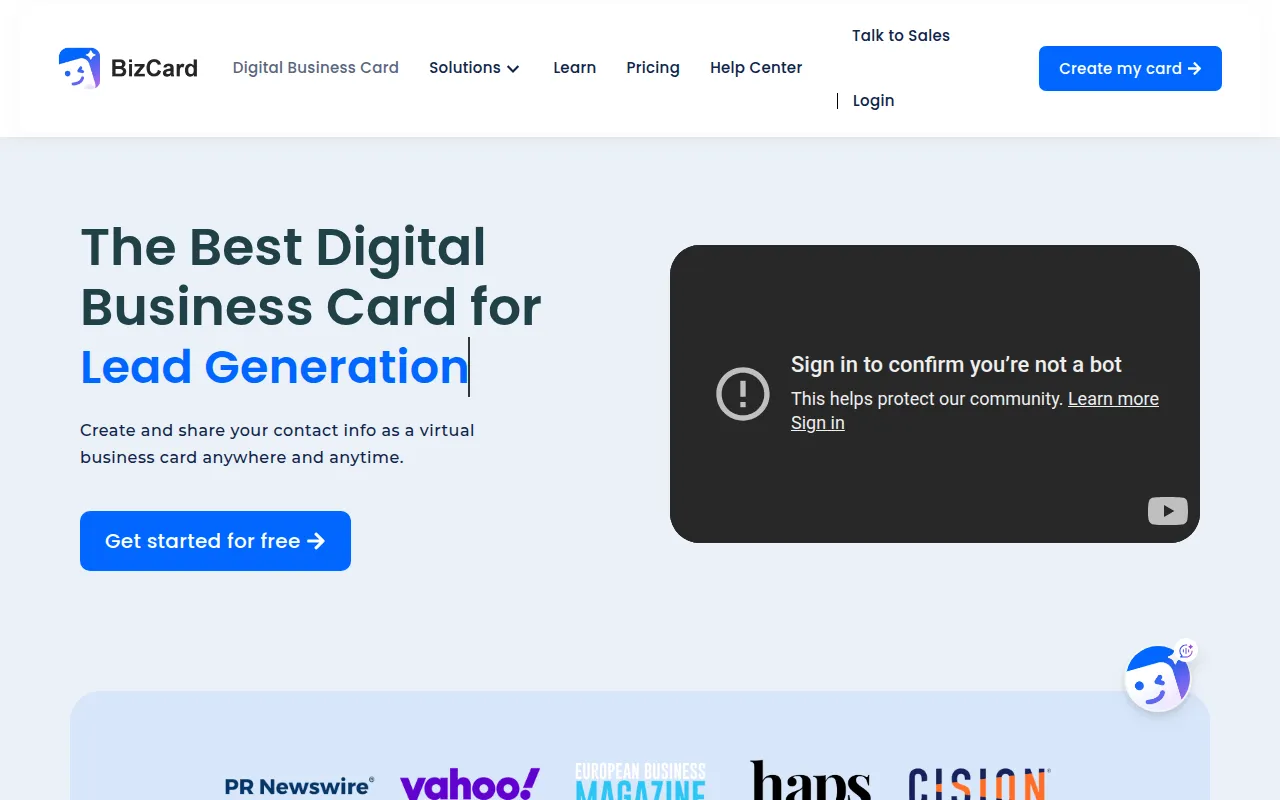
BizCard is a digital business card platform designed to help individuals and small businesses share contact information seamlessly. In a remote work environment, maintaining connections is crucial, and BizCard simplifies this process. Users can create digital business cards that can be easily shared via QR codes or links, making networking effortless.
The platform's integration with Google Wallet and Apple Wallet allows for easy access to digital cards, ensuring that information is always at hand. This is especially useful for marketing teams and freelancers who need to share their contact details quickly and efficiently during virtual networking events.
- Digital business card creation: Enables users to design and customize their cards, enhancing professionalism.
- QR code sharing: Facilitates quick sharing of contact information in various settings.
- Integration with Google Wallet: Ensures easy access to digital cards.
- Integration with Apple Wallet: Provides compatibility for iOS users, widening reach.
- Customizable templates: Allows for personal branding through design flexibility.
Pricing: Freemium - Free tier available with paid options. Best for: Small businesses and freelancers.
Notion - Best for all-in-one workspace
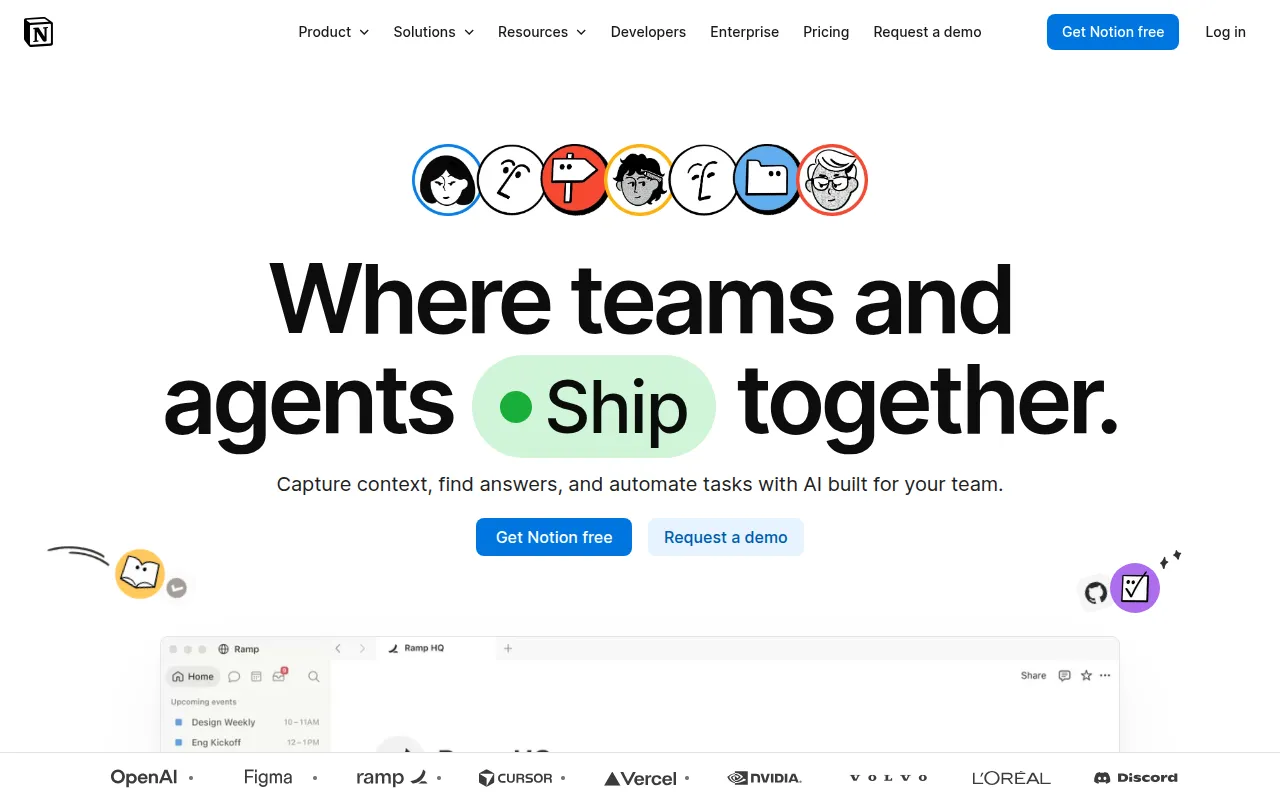
Notion is an all-in-one workspace that combines notes, tasks, wikis, and databases into a single platform. This versatility makes it an ideal tool for remote teams looking to streamline their workflows. With Notion, team leaders can create a centralized hub for all project-related materials, ensuring that everyone has access to the information they need.
The flexibility of Notion allows users to design their workflows according to their unique needs. Whether it is creating Kanban boards for project management or setting up a knowledge base for team resources, Notion adapts to various use cases. Its powerful collaborative features enable real-time editing and commenting, enhancing communication and creativity among team members as they work together remotely.
- Flexible databases: Organizes information in a way that suits the team's workflow.
- Notion AI: Assists with content creation and management, improving efficiency.
- Team wikis: Centralizes knowledge and resources for easy access.
- API access: Allows for further customization and integration with other tools.
- Mobile apps: Ensures access to information from anywhere, supporting remote work.
Pricing: Freemium - Free for personal use; Plus plan at $10/month, Team plan at $15/user/month. Best for: Teams looking for an adaptable workspace that combines multiple functions.
AI Prompt Library - Best for content generation
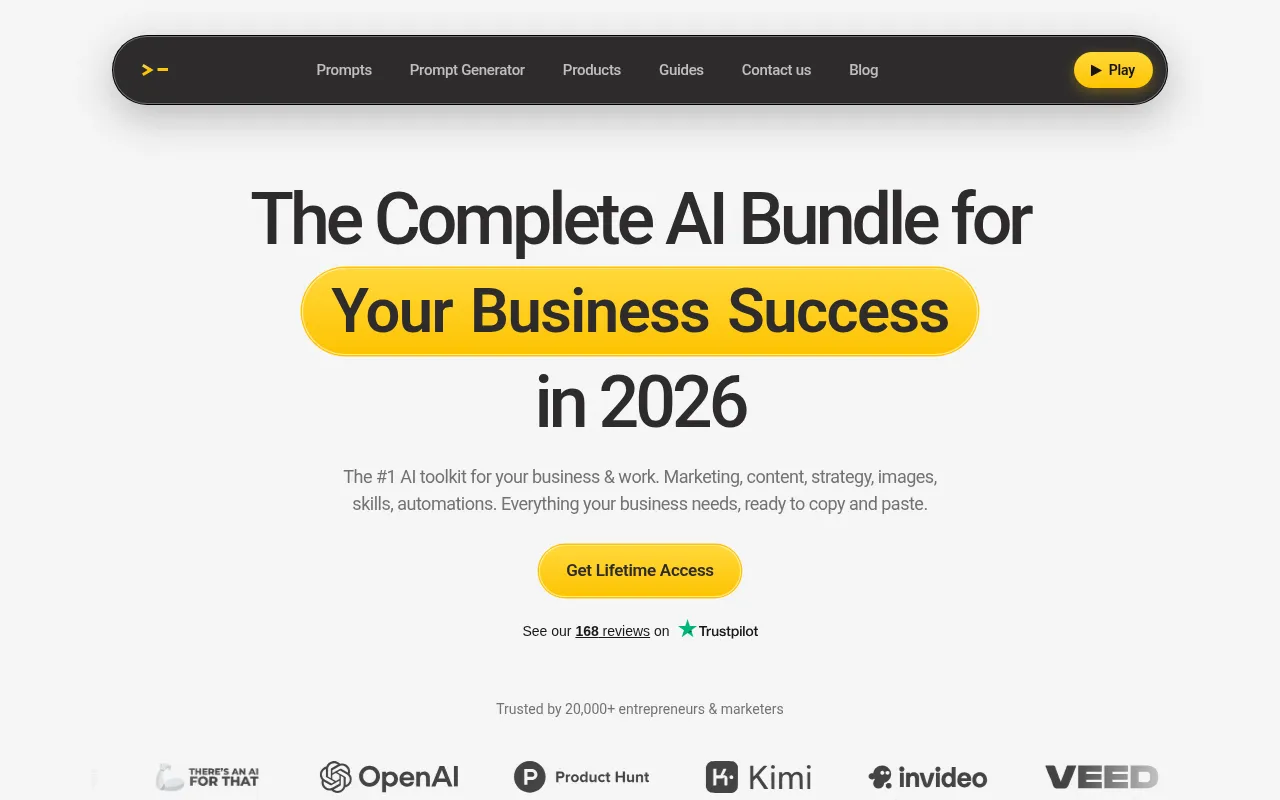
The God of Prompt offers a comprehensive AI prompt library with over 30,000 prompts designed to enhance various business functions. This tool is particularly beneficial for marketing teams looking for quick content generation solutions. With a vast array of prompts, team members can easily find inspiration for writing tasks, social media posts, or even brainstorming sessions.
One of the key advantages of the God of Prompt is its lifetime access model through a one-time payment. This makes it a cost-effective solution for freelancers and educators who need ongoing support for their content creation efforts. The AI cheatsheets simplify prompt usage, allowing even those new to AI tools to leverage their capabilities effectively.
- 30,000+ AI prompts: Provides a diverse range of options for various applications, making it versatile.
- Lifetime access: Eliminates ongoing costs, providing long-term value.
- AI cheatsheets: Simplifies usage, making the tool accessible to all skill levels.
- Custom GPTs: Tailors prompts for specific tasks, enhancing relevance.
- No-code automation tools: Enables easy implementation without technical expertise.
Pricing: Paid - One-time payment for lifetime access. Best for: Freelancers and marketing teams needing efficient writing solutions.
AI Phone - Best for multilingual communication
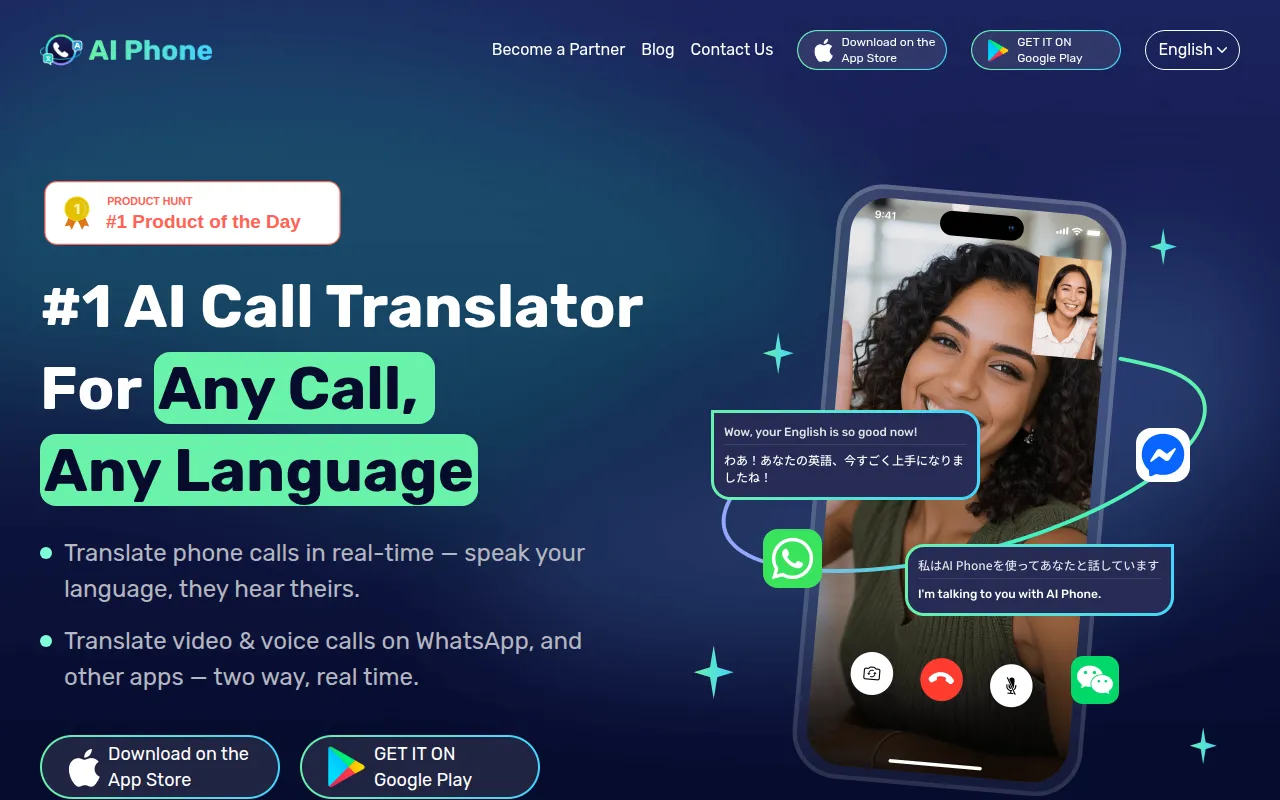
AI Phone translates phone and video calls in real time across 150+ languages, making it an essential tool for businesses operating in international markets. For remote teams that need to communicate with clients or colleagues from diverse backgrounds, AI Phone facilitates seamless conversations without language barriers.
The real-time translation feature ensures that participants can interact naturally, allowing for open discussions and idea exchanges. With two-way translation capabilities, AI Phone empowers team members to engage with non-native speakers confidently, enhancing collaboration and understanding across cultural divides.
- Real-time translation: Enables immediate communication during calls, fostering engagement.
- Supports over 150 languages: Ensures inclusivity for diverse teams.
- Works with popular communication apps: Integrates easily into existing workflows.
- Two-way translation: Facilitates smooth conversations, enhancing understanding.
- AI-driven speech recognition: Improves accuracy in translations, ensuring clarity.
Pricing: Freemium - Pricing information currently unavailable. Best for: Businesses dealing with multilingual clients.
Figma - Best for design collaboration
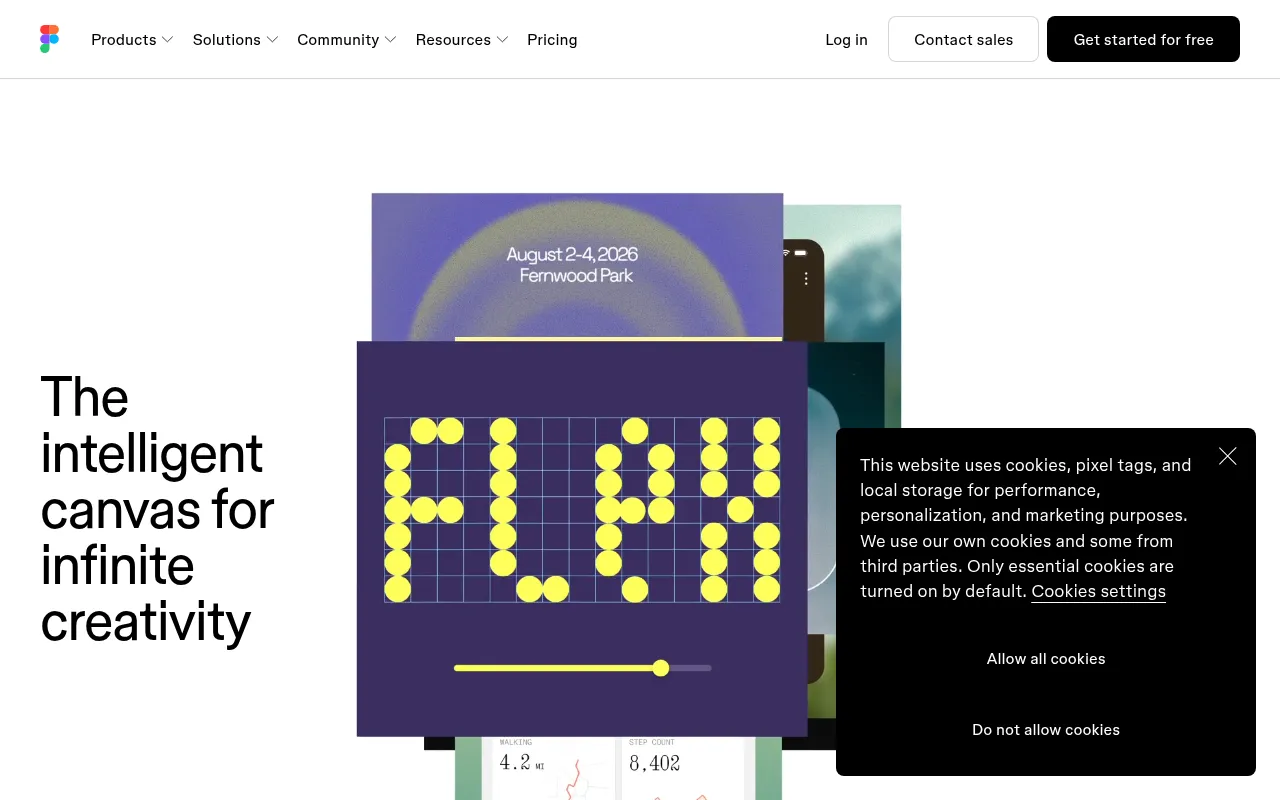
Figma is a collaborative design tool that enables teams to design, prototype, and collaborate on UI/UX in real time. This tool is particularly valuable for remote teams involved in product development, as it allows designers and stakeholders to work together seamlessly, no matter where they are located.
Figma's real-time collaboration features stand out, allowing multiple users to edit designs simultaneously. This fosters creativity and innovation while eliminating the need for lengthy back-and-forth communications. Additionally, Figma's component libraries and plugin ecosystem provide designers with the resources they need to create high-quality user experiences efficiently.
- Real-time collaboration: Facilitates simultaneous editing, enhancing teamwork.
- Prototyping: Allows teams to create interactive designs quickly.
- Component libraries: Streamlines design processes by providing reusable elements.
- Dev Mode: Aids collaboration between designers and developers, ensuring alignment.
- Plugin ecosystem: Extends functionality, allowing for customization based on team needs.
Pricing: Freemium - Free for 3 projects; Professional at $15/editor/month, Organization at $45/editor/month. Best for: Design teams working on collaborative projects.
Box - Best for content management
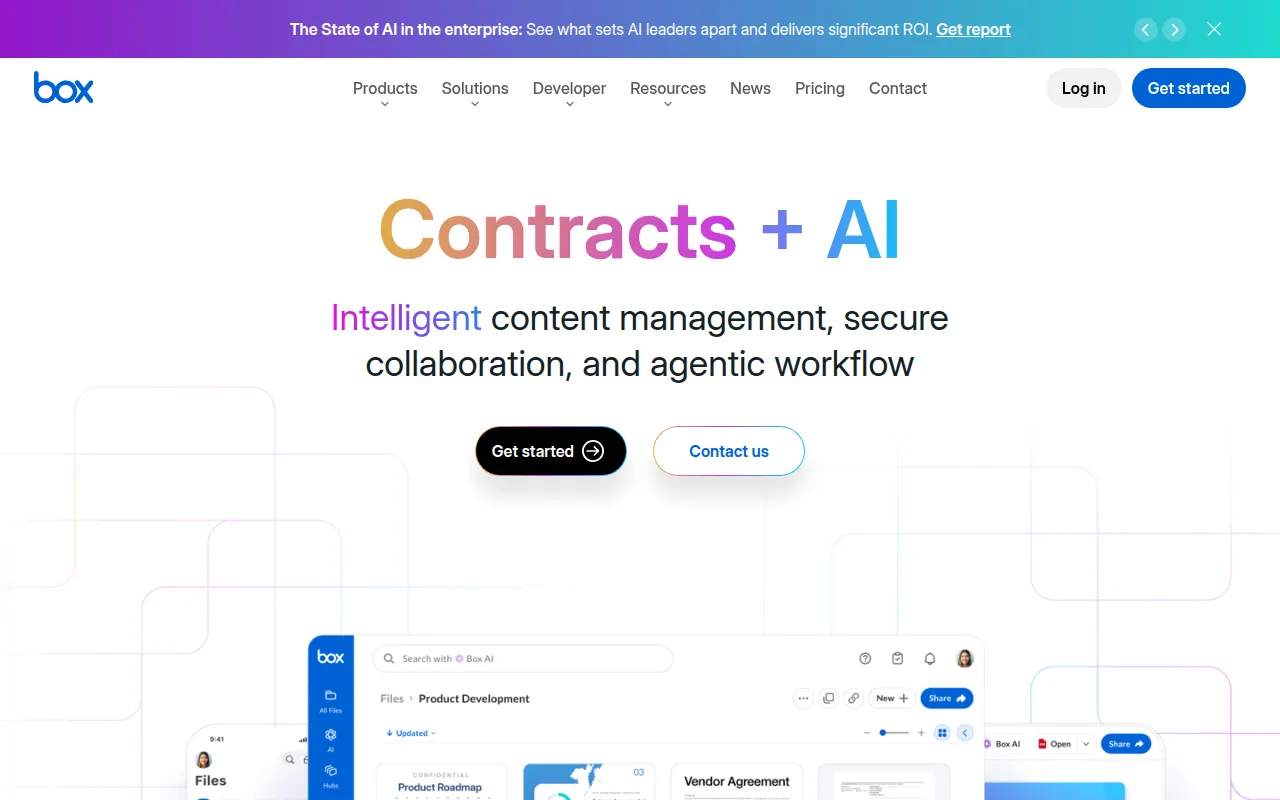
Box is a content management platform that facilitates workflow automation and secure collaboration for businesses of all sizes. Remote teams can benefit from Box's robust cloud storage and collaboration tools, enabling easy sharing and management of files and documents.
The platform's workflow automation features help streamline processes, reducing the time spent on manual tasks. Additionally, Box prioritizes data security, ensuring that sensitive information is protected during collaboration, which is essential for remote teams handling confidential projects.
- Cloud Storage: Provides secure access to files from anywhere, supporting remote work.
- Workflow Automation: Streamlines processes, allowing teams to focus on their core tasks.
- Collaboration Tools: Facilitates sharing and feedback on documents, enhancing teamwork.
- Data Security: Implements robust measures to protect sensitive information.
- Integrations: Works well with other tools, ensuring seamless workflows.
Pricing: Contact for details. Best for: Medium to large enterprises looking for secure collaboration.
Quick Comparison
| Tool | Best For | Starting Price | Rating |
|---|
| Ambient | Centralized information management | Contact | 0.0/5 |
| Asana | Project management | Free | 0.0/5 |
| BigIdeasDB | Idea management | Free | 0.0/5 |
| BizCard | Sharing contact information | Free | 0.0/5 |
| Notion | All-in-one workspace | Free | 4.6/5 |
| AI Prompt Library | Content generation | Paid | 0.0/5 |
| AI Phone | Multilingual communication | Freemium | 0.0/5 |
| Figma | Design collaboration | Free | 4.8/5 |
| Box | Content management | Contact | 0.0/5 |
| Accio | Business task execution | Contact | 0.0/5 |
Best Choice for Beginners
Asana is the best choice for beginners due to its user-friendly interface and clear task management features. New users can easily navigate the platform, making it an ideal starting point for those new to project management tools.
Best Choice for Professionals
Figma emerges as the best choice for professionals, particularly designers, due to its advanced real-time collaboration features and extensive plugin ecosystem. These capabilities allow professionals to maximize their productivity and enhance their design processes.
Best Value Pick
Notion stands out as the best value pick with its freemium model and versatile features. The free tier offers substantial functionality for personal and team use, making it an excellent ROI for businesses looking to optimize their workflows.
Conclusion
Choosing the right video conferencing and collaboration tools is crucial for remote team leaders aiming to enhance communication and coordination. By leveraging the right technology, you can foster a more connected and productive remote team.