Introduction
In the fast-paced world of healthcare, time-consuming paperwork can lead to frustration for both professionals and patients. This guide explores automation tools that can help you reclaim valuable time, allowing you to focus on what truly matters—patient care.
Why Healthcare Professionals Struggle With Time-consuming paperwork impacts patient satisfaction
The healthcare sector is notorious for its administrative burdens. Healthcare professionals often find themselves bogged down by paperwork, from patient registrations to insurance claims, which can detract from the quality of patient care. For instance, a busy clinic may have a backlog of patient follow-ups and appointment scheduling, leading to longer wait times and decreased patient satisfaction. These challenges not only affect workflow but can also impact health outcomes as patients may feel neglected or frustrated by delays.
What to Look For in Healthcare Tools
- User-Friendliness: Healthcare professionals often have limited time for training, making intuitive interfaces crucial for quick adoption.
- Integration Capability: The ability to seamlessly integrate with existing systems is vital for streamlining operations and avoiding data silos.
- Scalability: As your practice grows, your tools should scale with you, accommodating increased patient volumes without added complexity.
- Customization: Tools that offer customizable features can better meet the unique needs of your practice or healthcare facility.
- Regulatory Compliance: Given the strict regulations in healthcare, tools must ensure compliance with HIPAA and other relevant laws to protect patient data.
Best Top Automation Tools for Healthcare Professionals
Infinitus Systems - Best for Streamlining Patient Communication
Infinitus Systems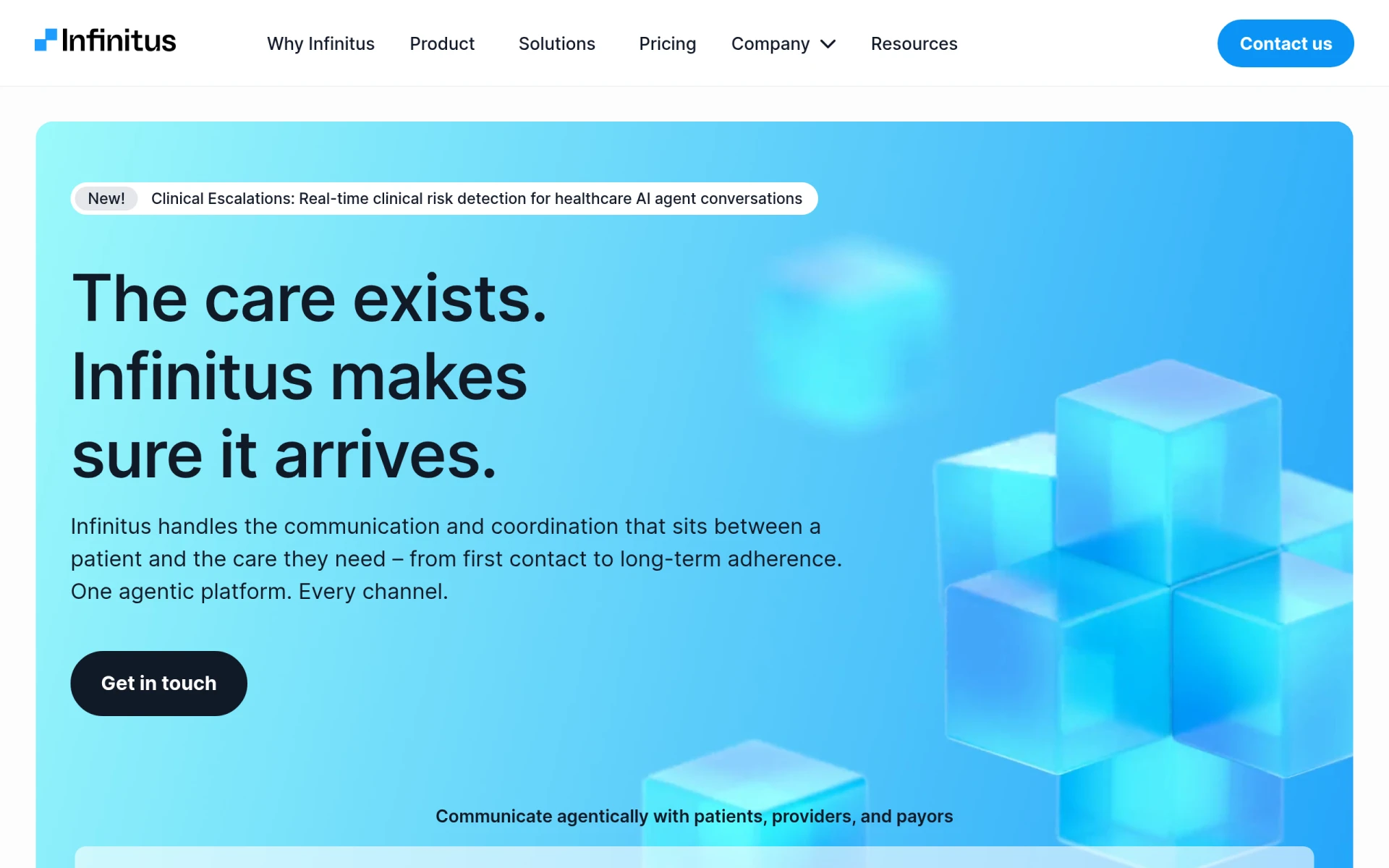 takes the lead in automating healthcare communication through AI agents. This tool is particularly valuable for hospitals and clinics looking to improve patient interactions while reducing administrative workloads. By employing AI-driven voice agents, Infinitus allows healthcare professionals to focus on patient care rather than getting lost in paperwork.
What sets Infinitus apart is its ability to conduct benefit verifications, follow up on prior authorizations, and assist in patient enrollment processes. This automation not only saves time but also enhances the overall patient experience, as patients receive timely updates and support.
- AI-Driven Voice Agents: Reduce the burden of manual communication by automating patient interactions.
- Benefit Verification: Quickly confirm patient eligibility for services, minimizing delays.
- Prior Authorization Follow-Up: Streamline necessary approvals to expedite patient care.
- Enrollment Assistance: Help patients navigate complex enrollment processes efficiently.
- Real-Time Clinical Risk Detection: Identify potential risks during patient interactions for timely intervention.
Pricing: Contact for details. Best for: Hospitals looking to streamline patient communication.
Luminai - Best for Operational Efficiency
Luminai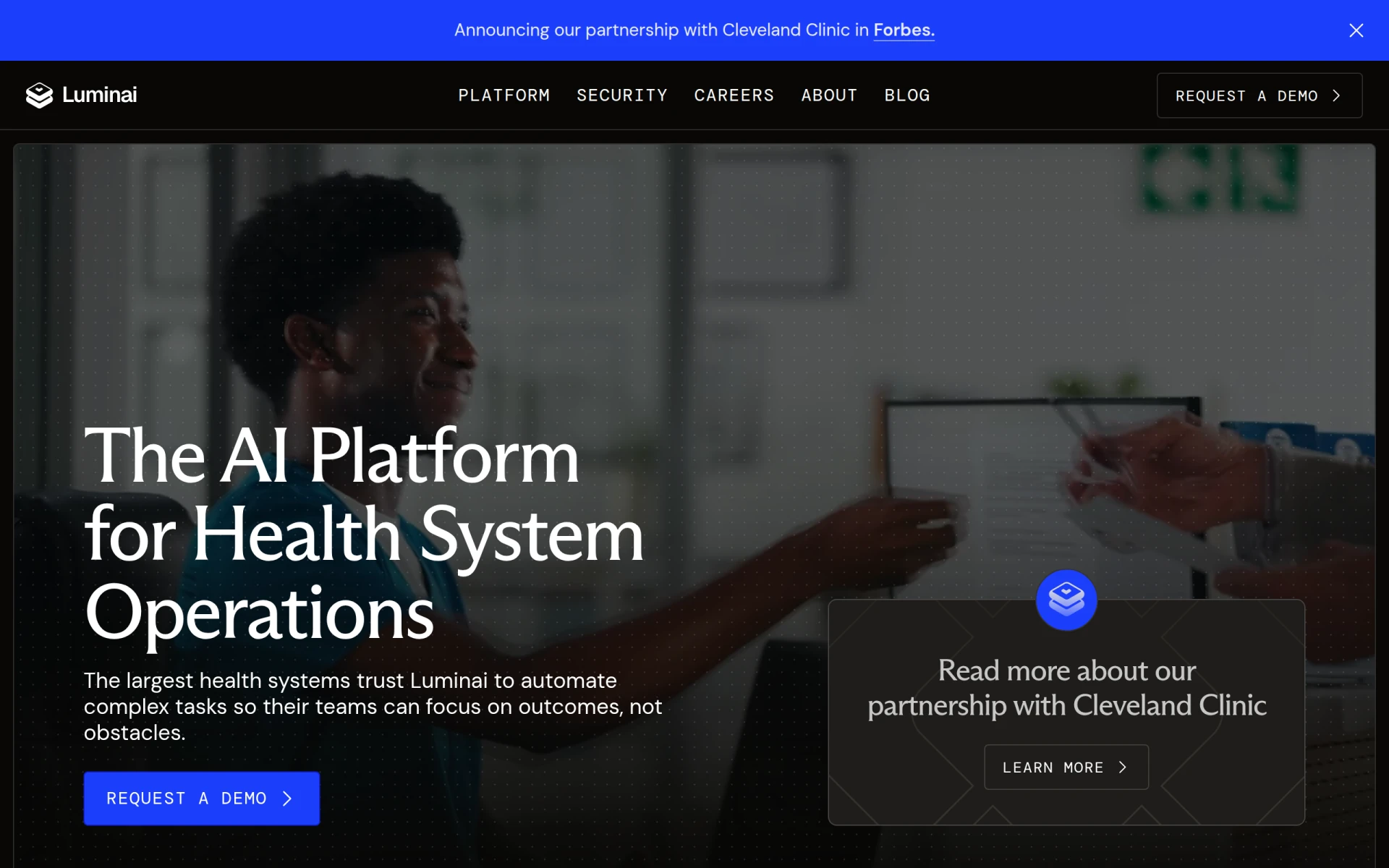 is designed to automate complex healthcare operations, allowing teams to prioritize patient outcomes over administrative tasks. With its sophisticated automation capabilities, Luminai helps healthcare teams manage referrals, registrations, and orders with ease, leading to significant time savings and increased productivity.
This tool is particularly beneficial for large hospitals and health systems that require operational efficiency. By automating routine processes, Luminai enables healthcare professionals to devote more time to patient care, ultimately improving health outcomes.
- Referral Intake: Streamline the referral process to reduce wait times and improve patient flow.
- Provider Inbox Automation: Organize and prioritize communications effectively, ensuring no patient query goes unanswered.
- Patient Registration: Simplify the onboarding process for new patients, enhancing their first experience.
- Orders and Referrals Processing: Automate the handling of medical orders and referrals for greater accuracy.
- Pharmacy Management: Manage prescriptions and medication orders efficiently without manual input.
Pricing: Contact for details. Best for: Large hospitals needing operational efficiency.
Clarion - Best for Improving Patient Communication
Clarion stands out in automating phone-based workflows through its conversational AI technology. This tool is ideal for healthcare providers aiming to reduce administrative overhead while maintaining effective communication with patients. By automating appointment reminders and follow-up calls, Clarion enhances patient engagement and satisfaction.
Healthcare practices can benefit from customizable scripting that allows for tailored patient interactions. This flexibility ensures that communication is not only efficient but also personalized, leading to improved patient relationships.
- Automated Appointment Reminders: Reduce no-show rates by sending timely reminders to patients.
- Patient Follow-Up Calls: Ensure continuity of care through automated follow-ups post-appointment.
- Conversational AI Integration: Utilize AI for natural and intuitive patient interactions.
- Customizable Scripting for Specific Workflows: Tailor interactions to specific patient needs or practice specialties.
- Multi-Specialty Support: Adaptable for various medical specialties, enhancing versatility.
Pricing: Contact for details. Best for: Practices in need of efficient workflow solutions.
Hippocratic AI - Best for Enhancing Patient Engagement
Hippocratic AI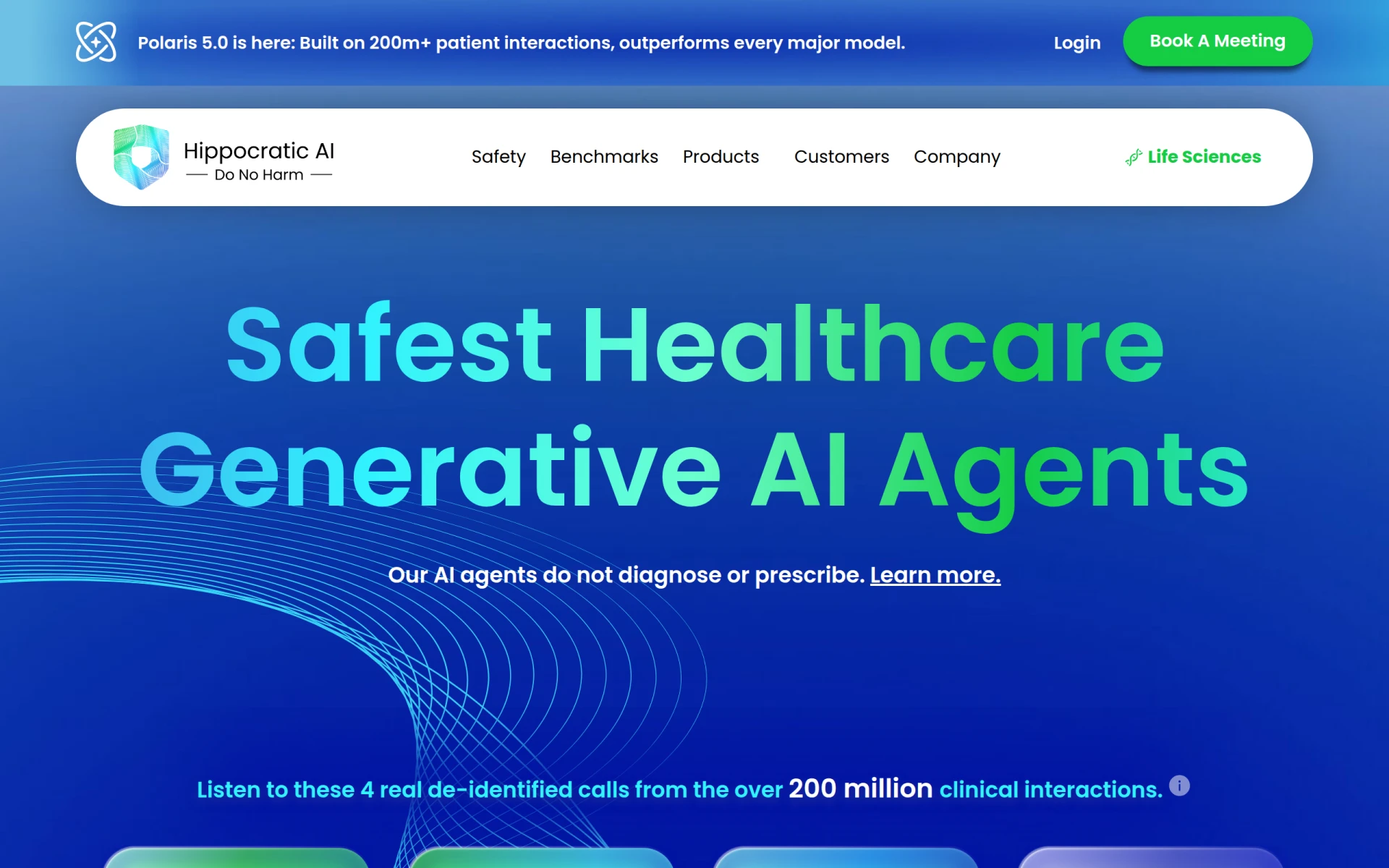 offers a generative AI healthcare agent that enhances patient interaction and accessibility across health systems and pharmaceutical companies. This innovative tool is essential for healthcare providers looking to improve patient engagement through advanced natural language processing and clinical interaction analysis.
By incorporating tools that assist patients in drug identification and motivational interviewing, Hippocratic AI not only enhances communication but also supports patient education and empowerment. This tool is particularly useful in environments where patient knowledge and engagement are critical for positive health outcomes.
- Natural Language Processing: Facilitate meaningful conversations between patients and healthcare providers.
- Clinical Interaction Analysis: Gain insights into patient interactions to improve care strategies.
- Patient Engagement Tools: Empower patients with information and support for managing their health.
- Drug Identification Assistance: Help patients understand medications and their uses effectively.
- Motivational Interviewing Techniques: Enhance patient motivation and adherence to treatment plans.
Pricing: Contact for details. Best for: Healthcare providers enhancing patient engagement.
Sully AI - Best for Streamlining Healthcare Processes
Sully AI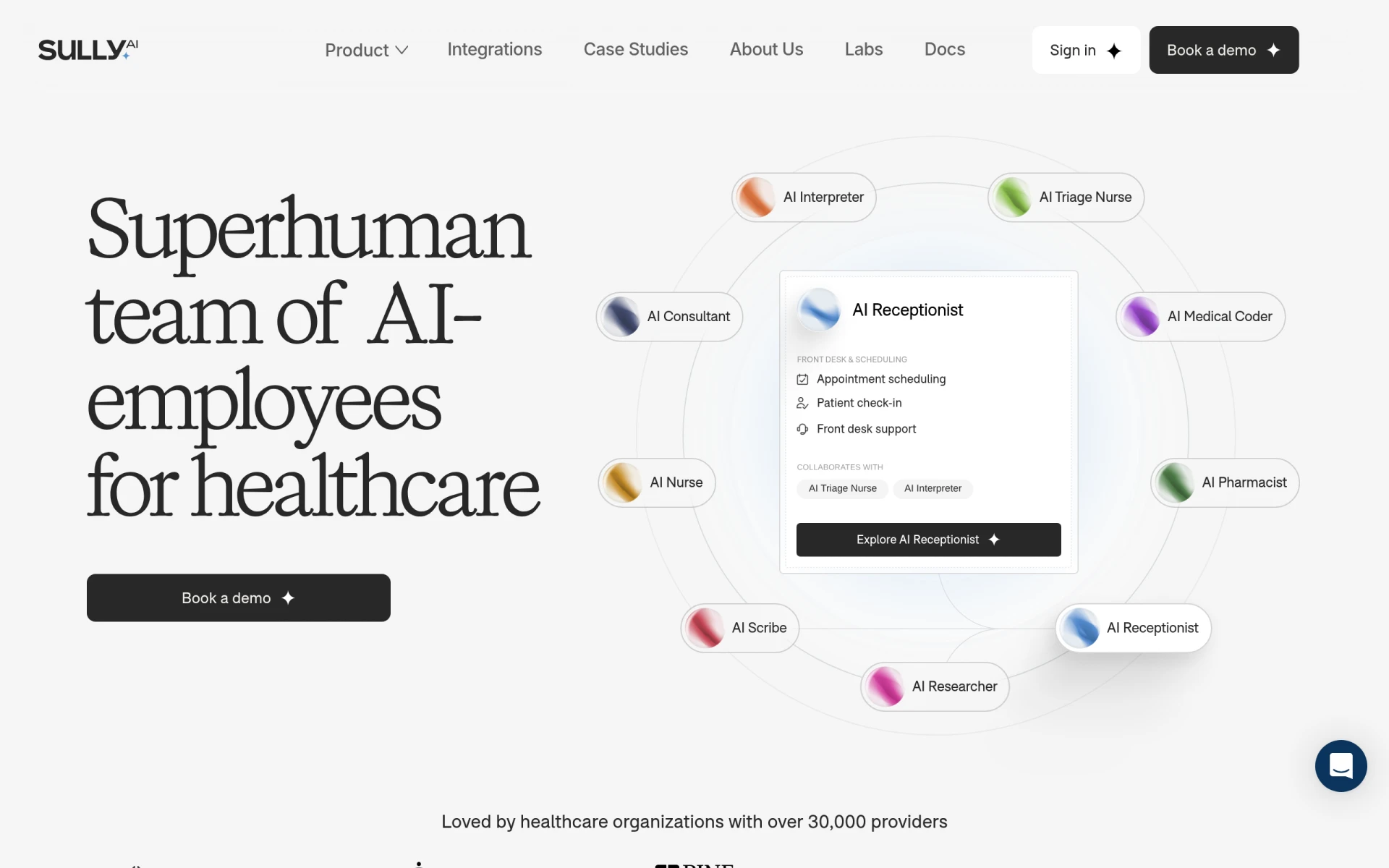 introduces an AI-driven team designed to support hospitals in various administrative roles, from receptionists to nurses. This tool is particularly advantageous for large healthcare systems dealing with high administrative workloads. By automating routine tasks, Sully AI allows healthcare professionals to focus more on patient care.
With roles like Nurse AI and Receptionist AI, Sully AI can manage a variety of tasks, including scheduling, patient inquiries, and documentation. This flexibility makes it suitable for clinics and hospitals aiming to enhance their efficiency and patient management processes.
- Nurse AI: Automate nursing tasks and patient monitoring for improved care delivery.
- Receptionist AI: Handle patient inquiries and scheduling seamlessly.
- Scribe AI: Assist in documentation to reduce clinician burnout.
- Medical Assistant AI: Support clinical workflows and patient interactions.
- Coder AI: Automate coding for billing purposes, ensuring accuracy and compliance.
Pricing: Contact for details. Best for: Large hospitals with high administrative workloads.
Outbound AI - Best for Enhancing Administrative Productivity
Outbound AI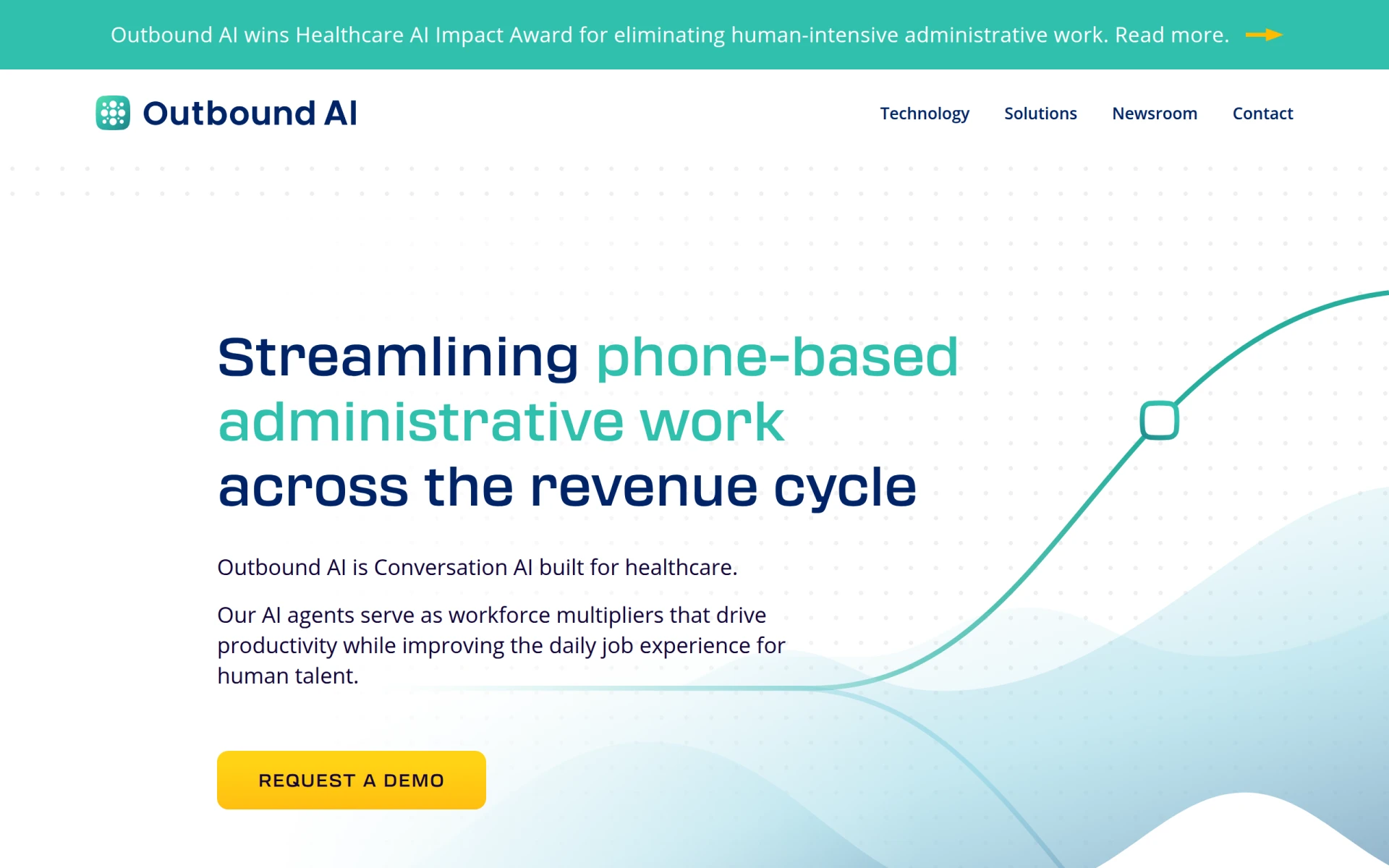 offers AI-powered virtual agents that are designed to enhance productivity in healthcare administrative tasks. This versatile tool can be a game-changer for healthcare organizations of all sizes, especially those with busy billing departments.
The virtual agents provided by Outbound AI can handle various administrative functions, including automated billing inquiries and multi-modal communications, enabling a more productive workforce. This tool is particularly useful for clinics and hospitals looking to alleviate the administrative burden on staff.
- Conversation AI Cloud: Facilitate smooth interactions between patients and the healthcare system.
- Virtual Agents: Automate routine inquiries to free up staff for more complex tasks.
- Multi-modal Communications: Engage patients through various channels for convenience.
- Human-Agent Teaming: Combine human oversight with AI efficiency for optimal results.
- Automated Billing Inquiries: Streamline the billing process, enhancing patient satisfaction.
Pricing: Contact for details. Best for: Healthcare organizations of all sizes.
Kognitos - Best for Workflow Automation
Kognitos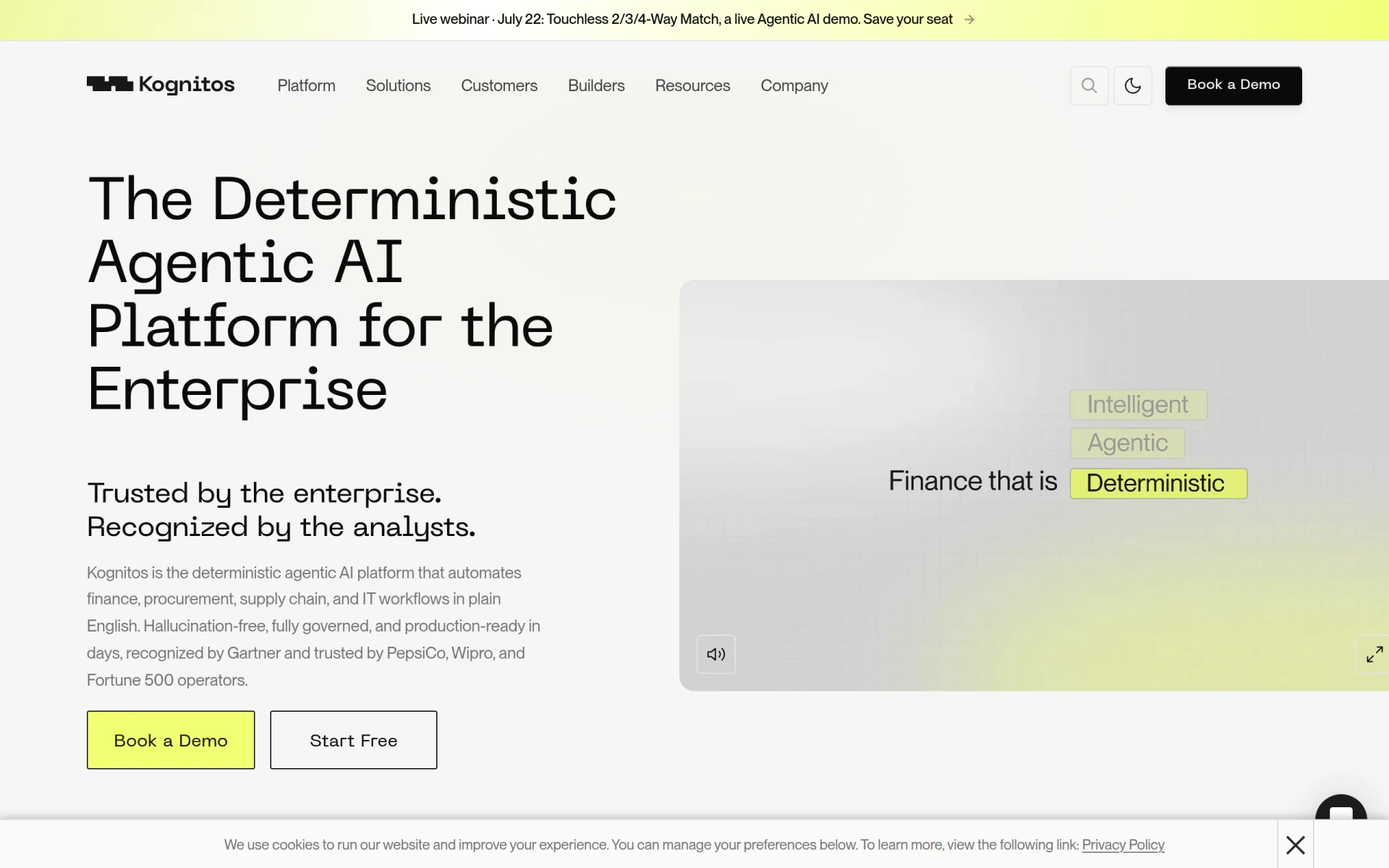 is a neurosymbolic AI platform that excels in automating workflows across finance, healthcare, and IT sectors. This tool is particularly suited for medium to large enterprises seeking to streamline their administrative tasks with minimal manual intervention.
By leveraging plain English for automation, Kognitos simplifies complex processes, making it easier for healthcare organizations to implement. This approach not only enhances efficiency but also reduces the likelihood of errors in administrative workflows.
- Natural Language Processing: Enable users to interact with the platform easily, ensuring a smooth experience.
- Agentic AI Capabilities: Automate tasks while maintaining a human-like understanding of context.
- Hallucination-free Execution: Guarantee accurate task execution without misinformation.
- Deep Integrations: Seamlessly connect with existing healthcare systems.
- No-code Interface: Empower users without technical expertise to automate processes.
Pricing: Contact for details. Best for: Healthcare organizations looking to streamline administrative tasks.
Anatomy Financial - Best for Financial Operations
Anatomy Financial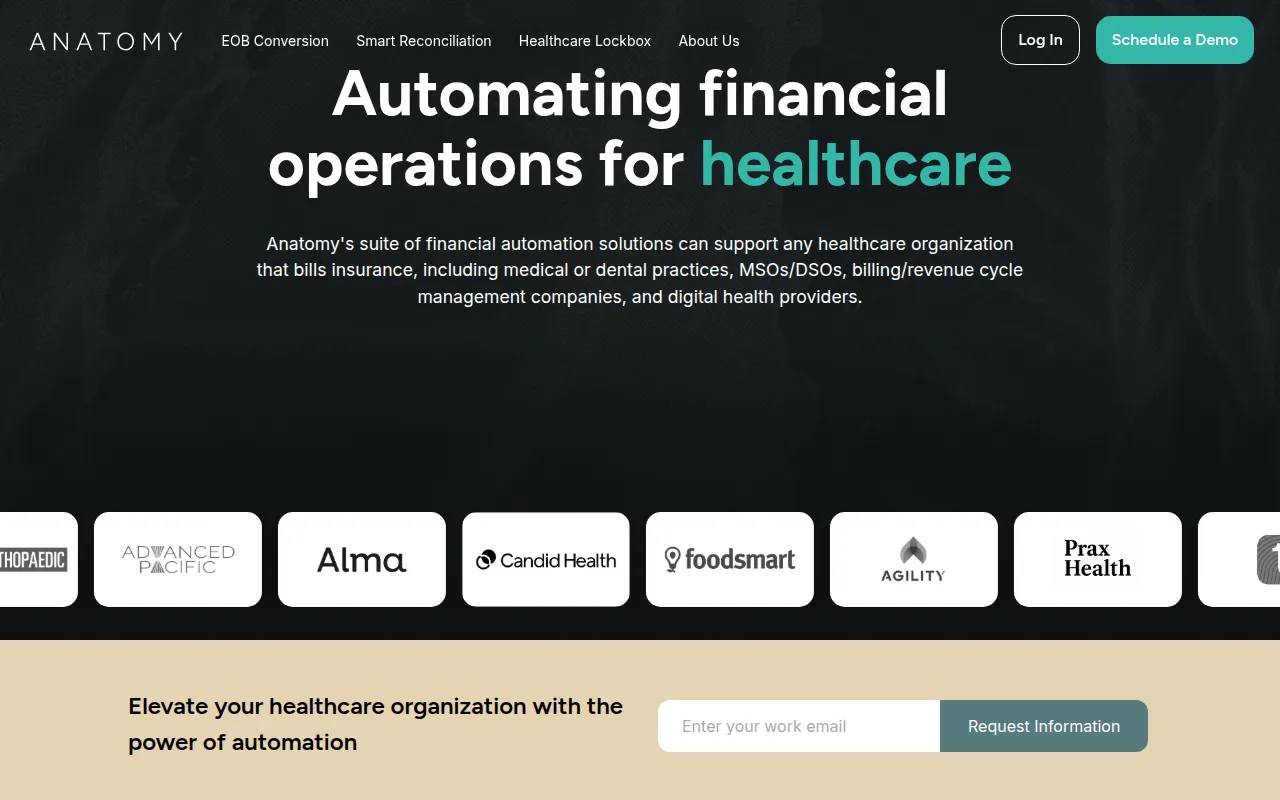 specializes in automating financial operations for healthcare organizations, ensuring that billing and reconciliation processes are efficient and accurate. This tool is particularly useful for medical and dental practices managing complex insurance billing.
By automating key financial tasks like EOB conversion and smart reconciliation, Anatomy Financial enables healthcare providers to manage their finances more effectively, leading to reduced errors and improved cash flow.
- EOB Conversion: Automate the conversion of Explanation of Benefits for easier processing.
- Smart Reconciliation: Ensure accurate financial reporting and reduce discrepancies.
- Healthcare Lockbox: Simplify payment processing for timely revenue collection.
- Automated Payment Posting: Streamline payment entries to enhance financial accuracy.
- Real-time Financial Reporting: Gain insights into financial health for better decision-making.
Pricing: Contact for details. Best for: Medical practices managing insurance billing.
ColdConvert - Best for Staffing Solutions
ColdConvert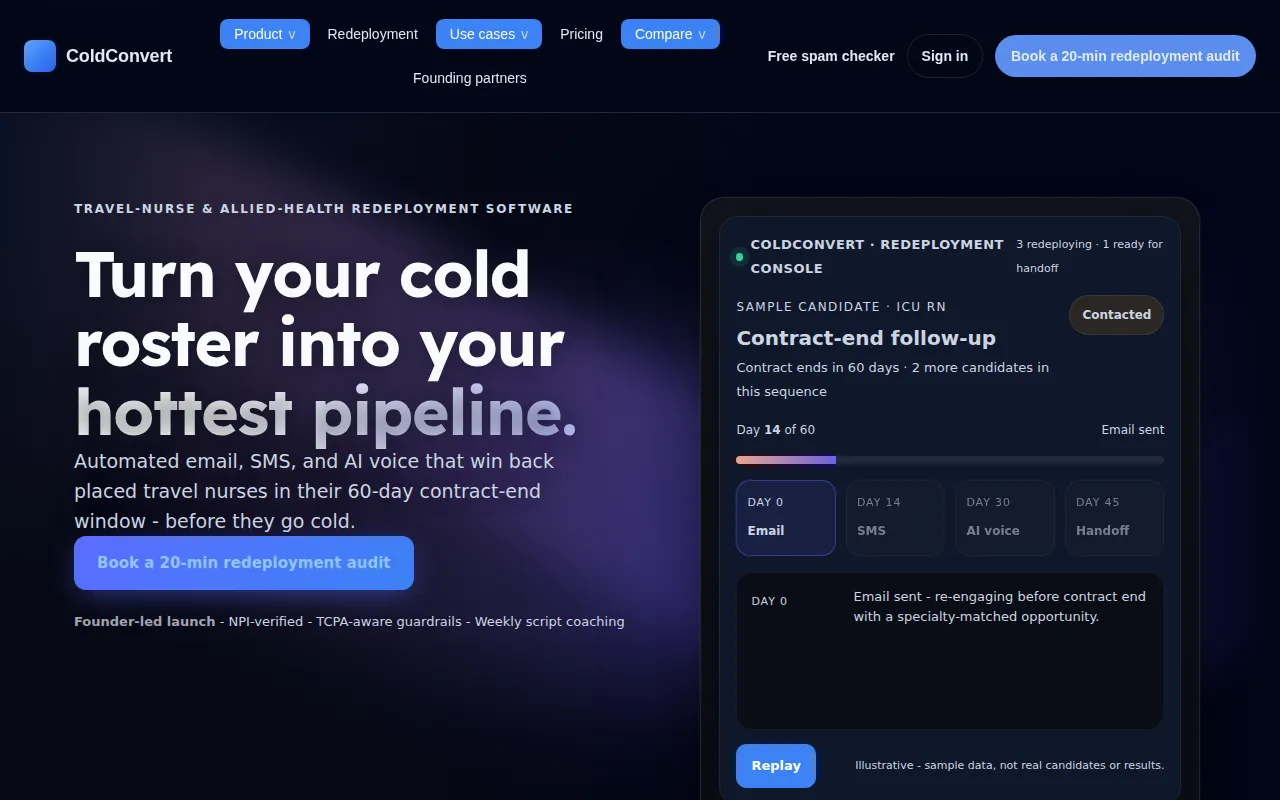 is a specialized software designed for managing travel nurse redeployment and staffing solutions in healthcare settings. This tool is essential for hospitals facing fluctuating staffing needs, especially in critical care environments.
By automating travel nurse redeployment management and staffing logistics coordination, ColdConvert helps healthcare facilities ensure compliance and optimize their staffing processes, allowing for better patient care during staffing shortages.
- Travel Nurse Redeployment Management: Streamline the process of placing travel nurses in critical areas quickly.
- Staffing Logistics Coordination: Manage staffing needs efficiently to avoid gaps in care.
- Compliance Monitoring Tools: Ensure regulatory compliance in staffing practices.
- Automated Scheduling Notifications: Keep staff informed about schedule changes automatically.
- Integration with Existing Healthcare Systems: Enhance functionality by connecting with current systems.
Pricing: Contact for details. Best for: Healthcare staffing agencies.
mapEDU - Best for Educational Institutions
mapEDU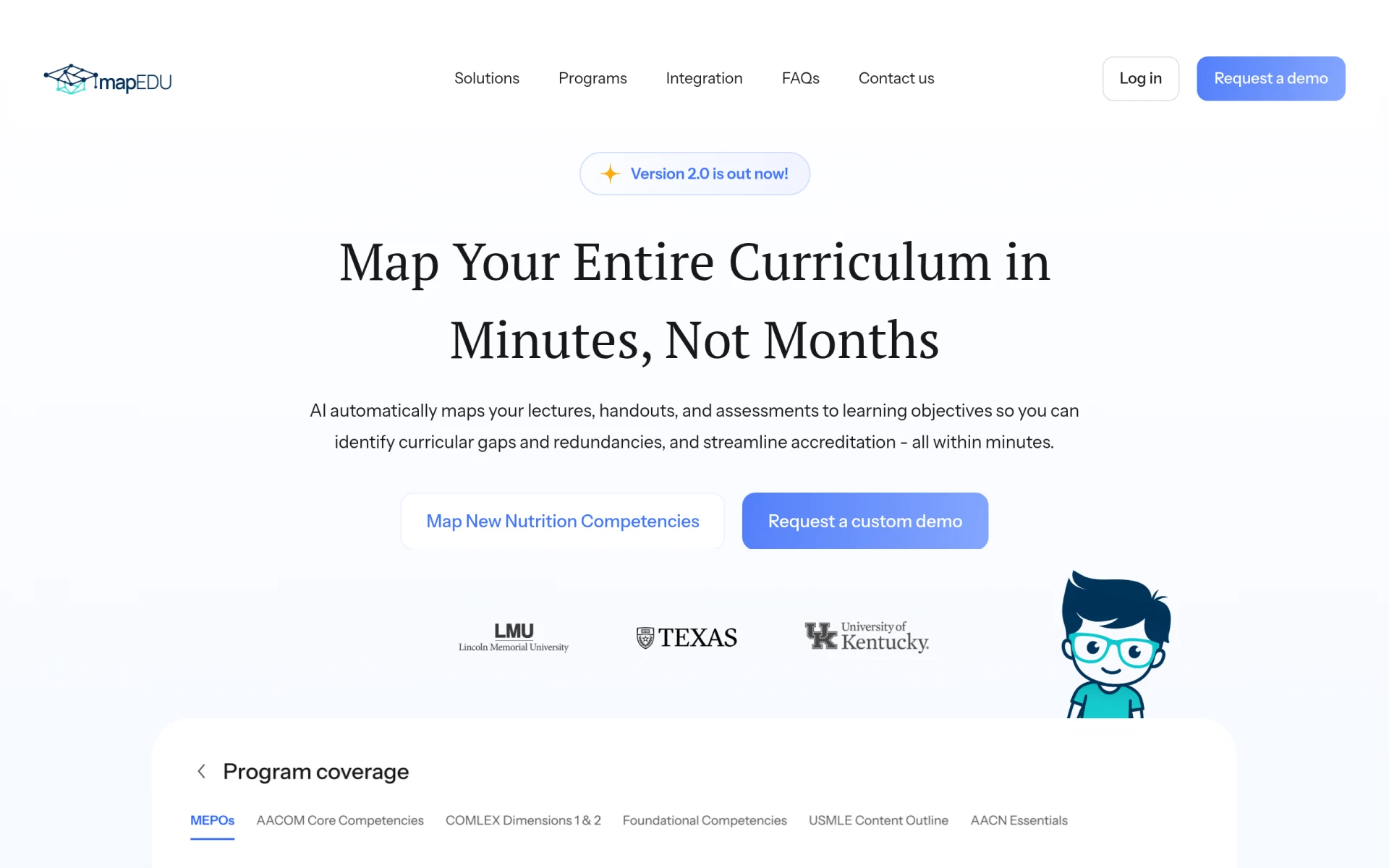 offers AI-driven curriculum mapping and analytics tailored for healthcare professions. This tool is particularly beneficial for educational institutions aiming to enhance reporting and student outcomes in healthcare education.
By automating curriculum mapping and providing customizable templates, mapEDU allows administrators to focus on improving educational quality rather than getting lost in manual processes. This enhances the overall educational experience for healthcare students.
- AI-driven Analytics: Gain insights into curriculum effectiveness for continuous improvement.
- Curriculum Mapping Automation: Simplify the mapping process to ensure alignment with educational standards.
- Reporting Tools: Generate reports easily for accreditation and institutional assessments.
- Customizable Templates: Tailor materials to meet specific educational needs.
- Integration Capabilities: Connect with existing educational platforms for enhanced functionality.
Pricing: Contact for details. Best for: Healthcare educational institutions.
Quick Comparison
| Tool | Best For | Starting Price | Rating |
|---|
| Infinitus Systems | Streamlining Patient Communication | Contact | 0.0/5 |
| Luminai | Operational Efficiency | Contact | 0.0/5 |
| Clarion | Improving Patient Communication | Contact | 0.0/5 |
| Hippocratic AI | Enhancing Patient Engagement | Contact | 0.0/5 |
| Sully AI | Streamlining Healthcare Processes | Contact | 0.0/5 |
| Outbound AI | Enhancing Administrative Productivity | Contact | 0.0/5 |
| Kognitos | Workflow Automation | Contact | 0.0/5 |
| Anatomy Financial | Financial Operations | Contact | 0.0/5 |
| ColdConvert | Staffing Solutions | Contact | 0.0/5 |
| mapEDU | Educational Institutions | Contact | 0.0/5 |
Best Choice for Beginners
For beginners, Clarion is an excellent choice. Its user-friendly interface combined with powerful automation features makes it easy for new users to navigate and implement without extensive training. The focus on automating patient communication ensures immediate relief from administrative burdens.
Best Choice for Professionals
The best choice for professionals is Hippocratic AI. Its advanced features, such as natural language processing and clinical interaction analysis, offer a depth of functionality that seasoned users will appreciate. This tool empowers healthcare professionals with insights that can significantly enhance patient engagement.
Best Value Pick
Infinitus Systems stands out as the best value pick. While pricing details are not publicly available, the potential ROI from improved patient communication and reduced administrative workload makes it a worthwhile investment for healthcare facilities seeking efficiency.
Conclusion
Embracing automation tools can significantly enhance patient care and reduce administrative burdens in healthcare. By choosing the right tool, you can focus on what matters most—providing excellent patient care. Explore these options and take the first step towards a more efficient practice.