Why Look for Alternatives to KlavisAI?
KlavisAI has gained attention for its unique offering of live environments for training AI agents, especially in the context of long-horizon tasks and programmatic verification. However, users have reported several limitations that can make seeking alternatives a worthwhile endeavor. One significant concern is the lack of transparent pricing. Many potential users find it difficult to assess cost-effectiveness without publicly available pricing information. This ambiguity can deter small to medium-sized businesses that require clear budgeting for their development tools. Additionally, while KlavisAI excels in certain use cases, its focus on specific training environments may not cater to all user needs, particularly those looking for more versatile solutions that can adapt to various project requirements.
Another pain point observed among KlavisAI users is its limited feature set when it comes to automated testing and quality assurance. While the platform is robust for developing AI agents, it may not provide the comprehensive tools necessary for thorough testing and validation of software applications. Users in fast-paced development environments often require tools that not only assist in AI training but also ensure the reliability and performance of the resultant software. When these needs are not met, teams may find themselves balancing multiple tools, which can lead to inefficiencies and increased costs. For these reasons, exploring alternatives to KlavisAI can help organizations find solutions that better fit their specific development and operational needs.
Best Alternatives to KlavisAI in 2026
Blinq - Best for Automated Testing
Blinq stands out as an AI-driven automated testing platform that autonomously generates and maintains test automation code. Unlike KlavisAI, which is more focused on training AI agents, Blinq is tailored specifically for developers who need a robust solution for testing software applications efficiently. With its ability to adapt to various coding environments and frameworks, Blinq can seamlessly integrate into existing CI/CD pipelines, making it an excellent choice for teams looking to enhance their testing capabilities without significant manual intervention. This makes it particularly advantageous for organizations aiming to reduce the time spent on test case development and maintenance.
Moreover, Blinq offers a unique feature that allows users to write less code while achieving more comprehensive test coverage. This is a significant improvement over KlavisAI, where users often need to manually verify AI behaviors, which can be time-consuming and error-prone. Blinq's intelligent automation not only accelerates the testing process but also ensures higher accuracy in identifying potential bugs and issues. As a result, development teams can focus on innovation rather than being bogged down by testing logistics.
- Key Strength: Autonomous test code generation reduces manual effort.
- Key Strength: Seamless integration with existing CI/CD pipelines.
- Key Strength: Enhanced test coverage with less code.
- Limitation: Limited support for non-standard programming languages.
Pricing: Contact for pricing details. Best for: Development teams focused on automated testing solutions.
Series AI - Best for Game Development
Series AI caters specifically to developers in the gaming industry by leveraging generative AI technology to create immersive gaming experiences. Unlike KlavisAI, which is focused on AI agent training, Series AI empowers game developers to innovate rapidly with AI-generated content and gameplay mechanics. This makes it an exceptional choice for studios looking to reduce development time and costs while enhancing player engagement through unique and dynamic content.
One of the standout features of Series AI is its ability to generate complex game assets and storyline elements based on user inputs and parameters. This level of customization and flexibility allows developers to explore creative avenues that traditional game development tools may not support. For studios that prioritize creativity and efficiency, Series AI provides a compelling alternative to KlavisAI, particularly when long-horizon tasks and character development are involved.
- Key Strength: Generative AI for dynamic game content creation.
- Key Strength: Customization options for game mechanics and assets.
- Key Strength: Focused specifically on the gaming sector.
- Limitation: May not cater to non-gaming AI development needs.
Pricing: Contact for pricing details. Best for: Game developers looking for innovative content creation tools.
Rebellions.ai - Best for AI Workloads in Data Centers
Rebellions.ai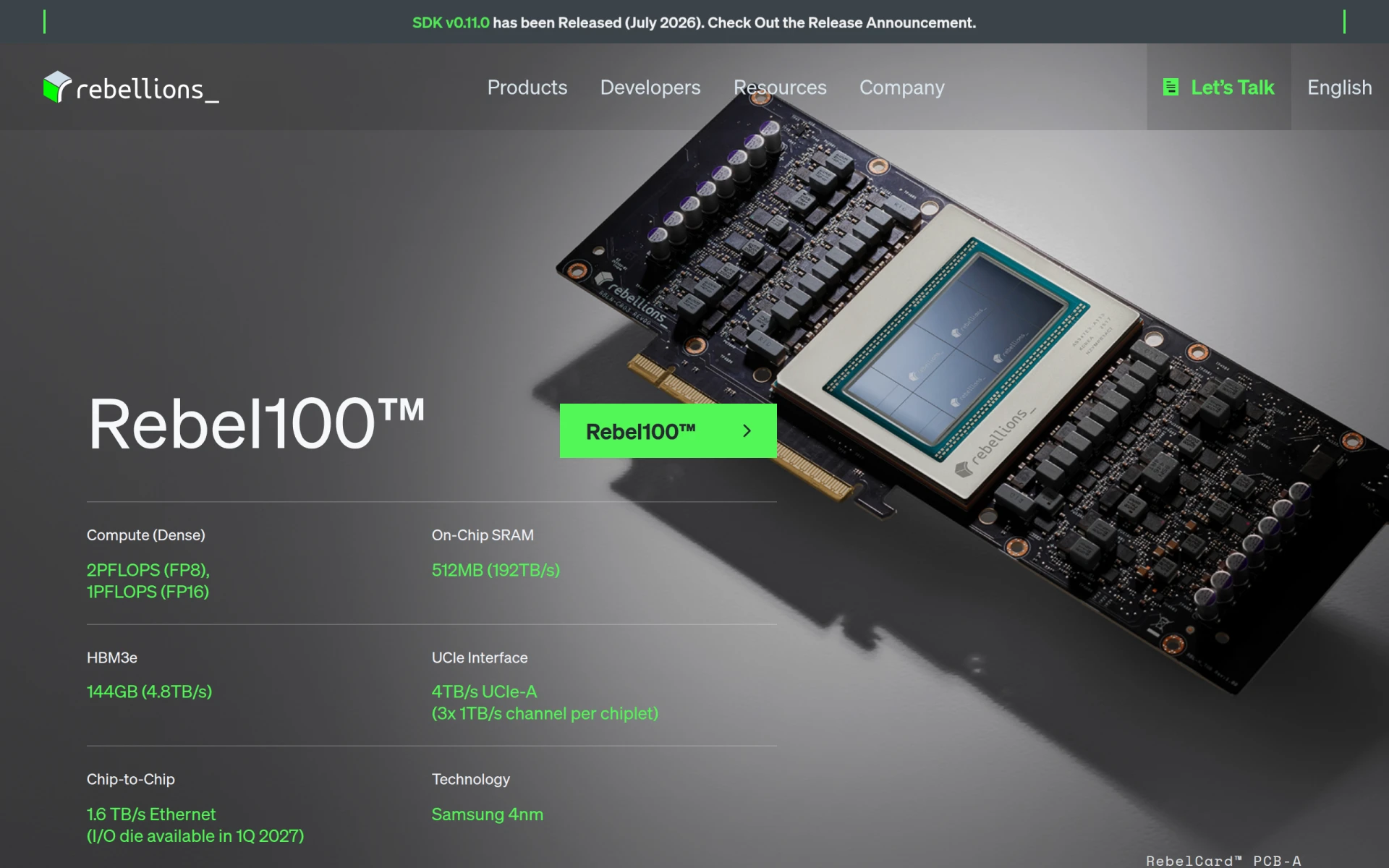 offers specialized AI hardware and software solutions designed to optimize AI workloads in data centers. This alternative serves organizations that require high-performance computing capabilities, making it a strong contender when compared to KlavisAI's focus on training AI agents. Rebellions.ai is particularly beneficial for enterprises handling large datasets and complex machine learning tasks, providing them with the necessary infrastructure to enhance performance and scalability.
What sets Rebellions.ai apart is its robust hardware-software integration, which enables seamless processing of AI tasks. Organizations can expect improved efficiency and reduced latency when deploying AI applications, a crucial factor in maintaining competitive advantage in data-centric industries. Users looking for a comprehensive solution that addresses both hardware and software aspects of AI deployment will find Rebellions.ai to be a superior choice compared to KlavisAI.
- Key Strength: Specialized hardware for enhanced AI performance.
- Key Strength: Optimized for large-scale data processing.
- Key Strength: Strong infrastructure support for AI applications.
- Limitation: Requires a larger investment upfront.
Pricing: Contact for pricing details. Best for: Enterprises needing high-performance AI workload solutions.
LanceDB - Best for Data Management in AI Applications
LanceDB is a multimodal lakehouse designed specifically for AI applications, enabling efficient data management and retrieval. Unlike KlavisAI, which primarily focuses on training AI agents, LanceDB provides a comprehensive framework for storing, processing, and analyzing data from various sources. This makes it an ideal alternative for teams that require robust data handling capabilities to support their AI initiatives.
The standout feature of LanceDB is its ability to integrate disparate data types seamlessly, allowing teams to work with structured, semi-structured, and unstructured data all in one place. This is particularly advantageous for organizations that deal with diverse datasets and need a flexible solution to manage them effectively. As AI increasingly relies on high-quality data for training and performance, LanceDB presents a compelling option for those looking to streamline their data management processes compared to KlavisAI.
- Key Strength: Multimodal data handling capabilities.
- Key Strength: Efficient integration of various data types.
- Key Strength: Strong focus on AI application needs.
- Limitation: May require additional setup for optimal performance.
Pricing: Contact for pricing details. Best for: Teams focused on comprehensive data management for AI.
QualGent - Best for Quality Assurance in AI Software
QualGent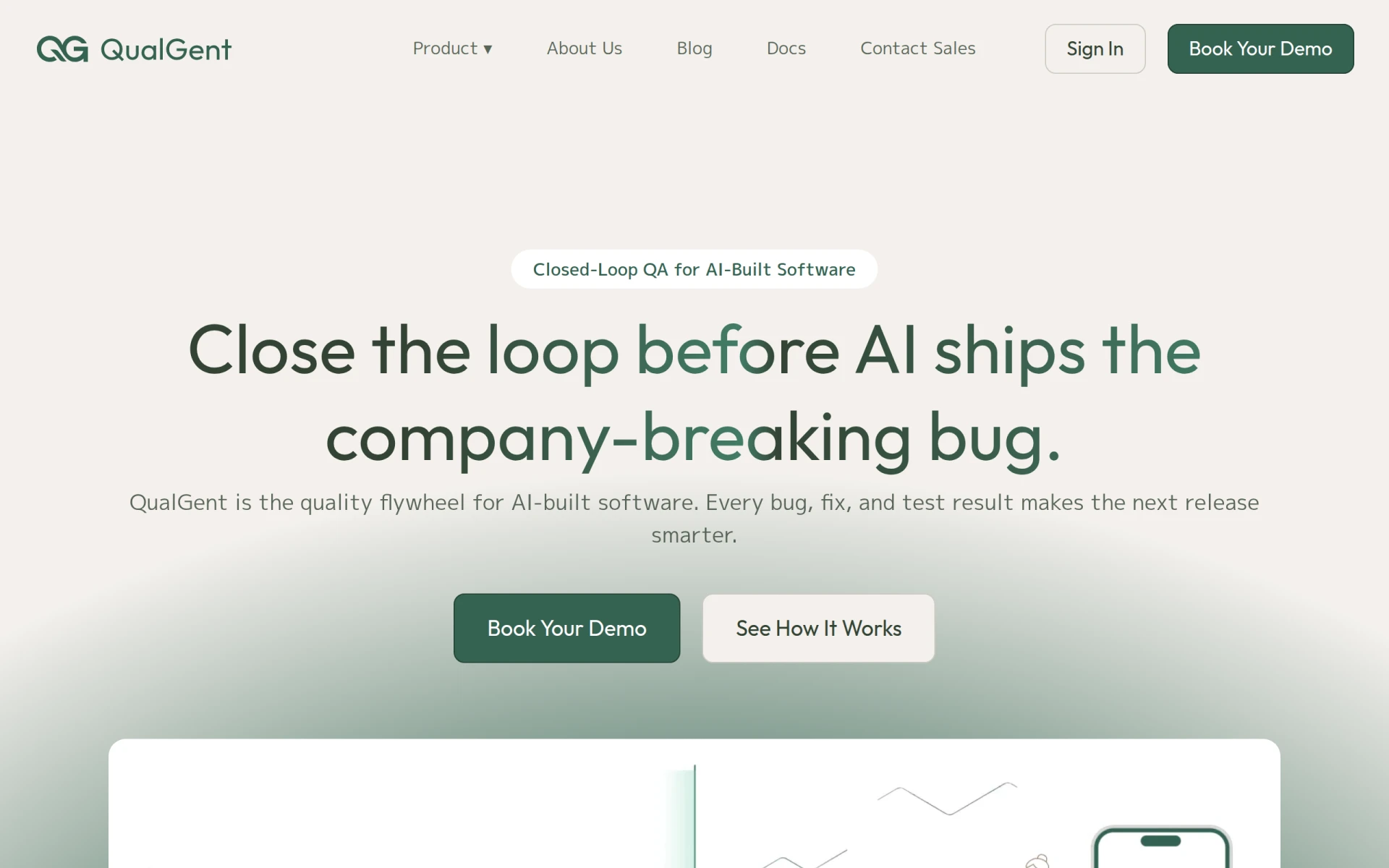 is a quality assurance tool specifically designed for AI-built software, providing teams with the necessary tools to manage bugs and improve testing processes. Unlike KlavisAI, which focuses on training AI agents, QualGent emphasizes the quality and reliability of AI applications, ensuring that the software performs as expected in real-world scenarios. This makes it a suitable alternative for teams that prioritize robust QA practices in their development lifecycle.
One of QualGent's key features is its ability to integrate AI testing methodologies, allowing for more intelligent and automated testing processes. This can significantly reduce the time and effort required for manual testing, a process that can be cumbersome with KlavisAI's approach. By focusing on continuous quality assurance, QualGent enables teams to detect issues early in the development process, leading to a more reliable final product.
- Key Strength: AI-driven testing methodologies enhance QA processes.
- Key Strength: Focus on reliability and performance of AI applications.
- Key Strength: Automation capabilities reduce manual testing efforts.
- Limitation: May not integrate deeply with all development environments.
Pricing: Contact for pricing details. Best for: Development teams focusing on quality assurance in AI software.
Regression - Best for Game Development in Unity
Regression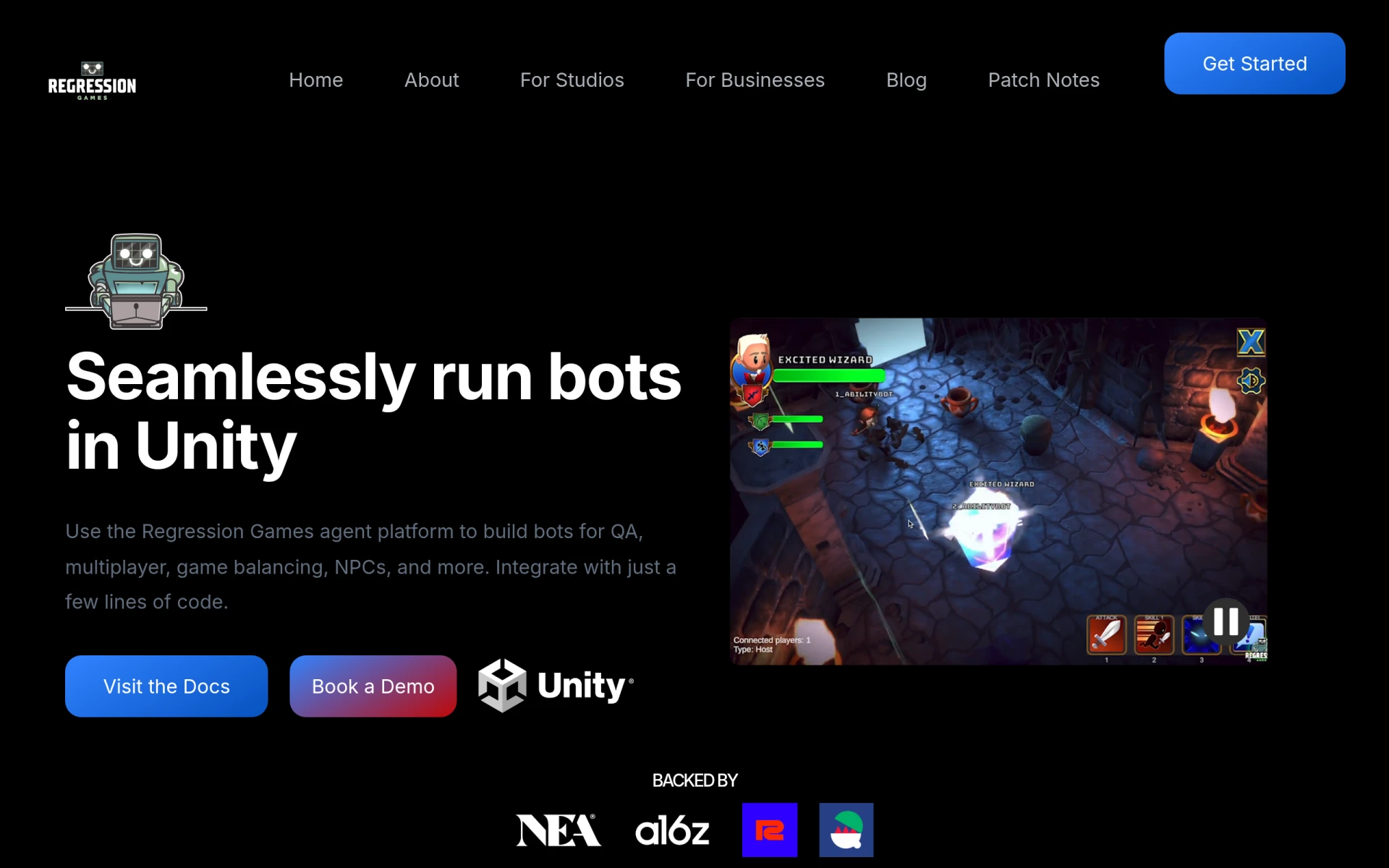 is an AI agent development platform tailored specifically for Unity, enabling seamless integration and real-time bot development. This makes it an excellent alternative to KlavisAI for game developers who are heavily invested in the Unity ecosystem. Regression provides tools that allow developers to build intelligent agents that can interact dynamically within their game environments, enhancing player experiences significantly.
The platform's focus on real-time bot development is a major advantage over KlavisAI, which does not specialize in the gaming industry's unique requirements. Regression allows users to test and iterate on AI behaviors quickly, making it ideal for studios looking to innovate and respond to player feedback promptly. This agility can be a game-changer in the competitive gaming market, where rapid iteration can lead to better user engagement and satisfaction.
- Key Strength: Real-time bot development tailored for Unity.
- Key Strength: Seamless integration within the Unity environment.
- Key Strength: Focus on dynamic player interactions.
- Limitation: Limited to Unity projects, less flexible for other platforms.
Pricing: Contact for pricing details. Best for: Game developers using Unity looking for AI agent solutions.
Quilter - Best for PCB Design Automation
Quilter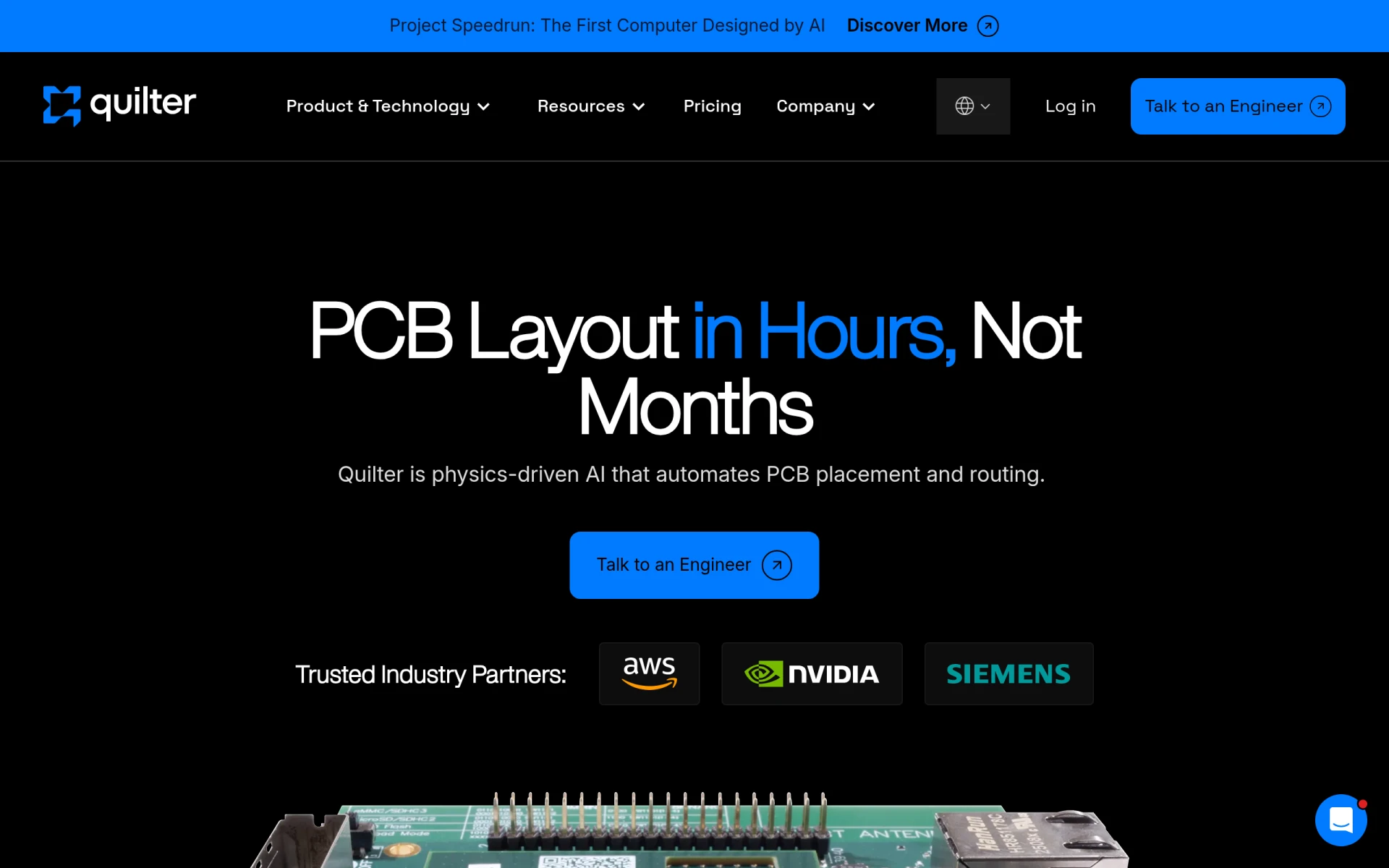 is an AI-driven PCB design tool that accelerates the design process and reduces validation time for electronic hardware projects. Unlike KlavisAI, which is focused on AI agent training, Quilter addresses a specific niche in electronic design automation, making it an ideal alternative for engineers and developers in the hardware space. With its ability to automate various aspects of PCB design, Quilter helps teams streamline their workflows and ensure quicker time-to-market for their products.
One of Quilter's significant advantages is its ability to generate optimized design layouts based on user specifications, reducing the need for manual adjustments. This feature allows engineers to focus on more complex design challenges while benefiting from the efficiency that Quilter brings to routine tasks. As the demand for faster and more efficient electronic product development increases, Quilter presents a compelling option for those who need a dedicated solution for PCB design compared to KlavisAI.
- Key Strength: Automated PCB design accelerates development.
- Key Strength: Optimized design layouts reduce manual effort.
- Key Strength: Focused tool for electronic hardware projects.
- Limitation: Limited integration with non-PCB design tools.
Pricing: Contact for pricing details. Best for: Engineers focused on PCB design automation.
OutSystems - Best for Enterprise Application Development
OutSystems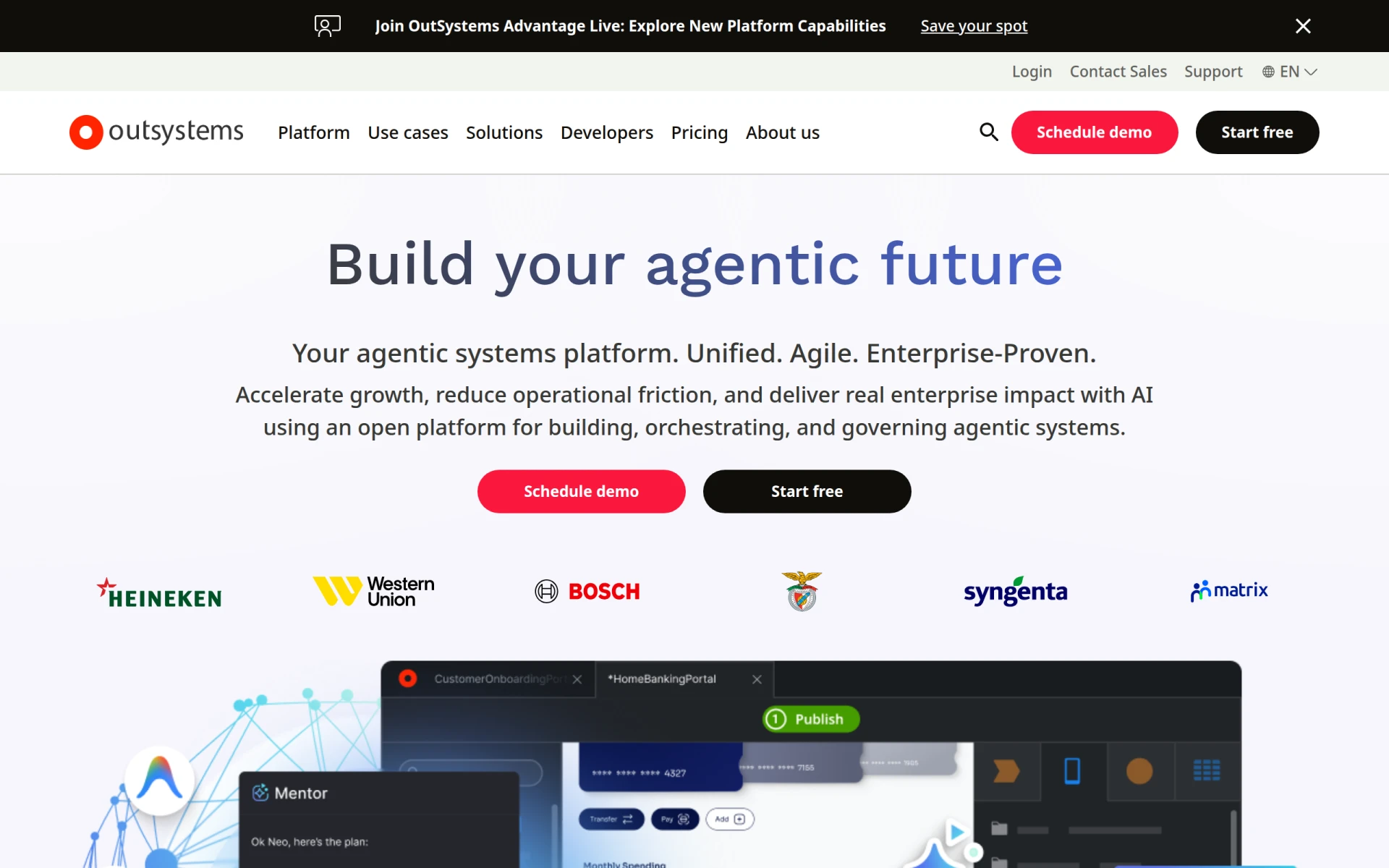 is an AI development platform designed for enterprises, enabling teams to create and manage applications and AI agents efficiently. Unlike KlavisAI, which primarily focuses on training AI agents, OutSystems provides a comprehensive low-code environment that facilitates application development across various industries. This makes it an attractive alternative for organizations looking to build scalable applications quickly without extensive coding requirements.
One of the standout features of OutSystems is its flexibility in handling both AI and traditional app development tasks. This versatility allows teams to leverage AI capabilities within their applications seamlessly, making it easier to implement intelligent features that enhance user experiences. For enterprises that require a multifaceted development platform, OutSystems offers a robust solution that can adapt to changing business needs compared to KlavisAI's more specialized focus.
- Key Strength: Low-code environment accelerates application development.
- Key Strength: Versatile platform for both AI and traditional apps.
- Key Strength: Scalable solutions for enterprise needs.
- Limitation: May require training for teams unfamiliar with low-code platforms.
Pricing: Flexible pricing models based on organizational needs. Best for: Enterprises looking for low-code development solutions.
Modl - Best for Game Testing Automation
Modl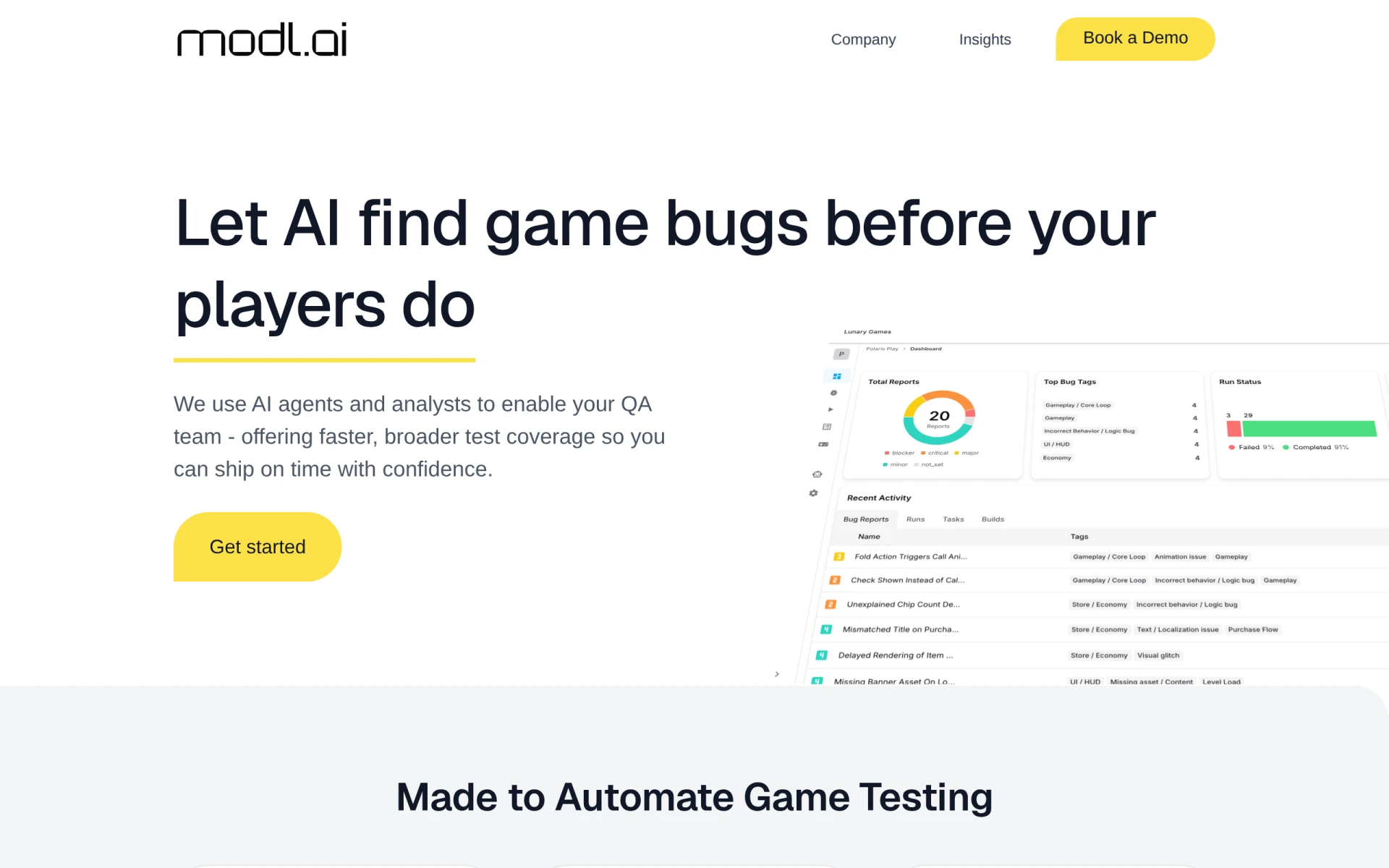 is an AI-driven game testing tool that automates quality assurance processes to identify bugs and performance issues efficiently. Unlike KlavisAI, which focuses on training AI agents, Modl is tailored specifically to the gaming industry, providing developers with tools to ensure their games run smoothly before release. This makes it an excellent choice for studios that want to streamline their testing processes and deliver high-quality gaming experiences.
Modl's automation capabilities allow teams to simulate real user interactions, which is crucial for identifying potential bugs that may not be evident through traditional testing methods. This proactive approach to quality assurance enables developers to catch issues early, leading to a smoother launch and improved player satisfaction. For game studios looking for a specialized testing solution, Modl offers a clear advantage over KlavisAI, which does not provide the same level of focused testing capabilities.
- Key Strength: Automated testing simulates real user interactions.
- Key Strength: Focused on the gaming industry for tailored solutions.
- Key Strength: Proactive bug detection enhances game quality.
- Limitation: May not support non-gaming applications.
Pricing: Contact for pricing details. Best for: Game developers seeking efficient testing solutions.
Solid - Best for Rapid Web Application Development
Solid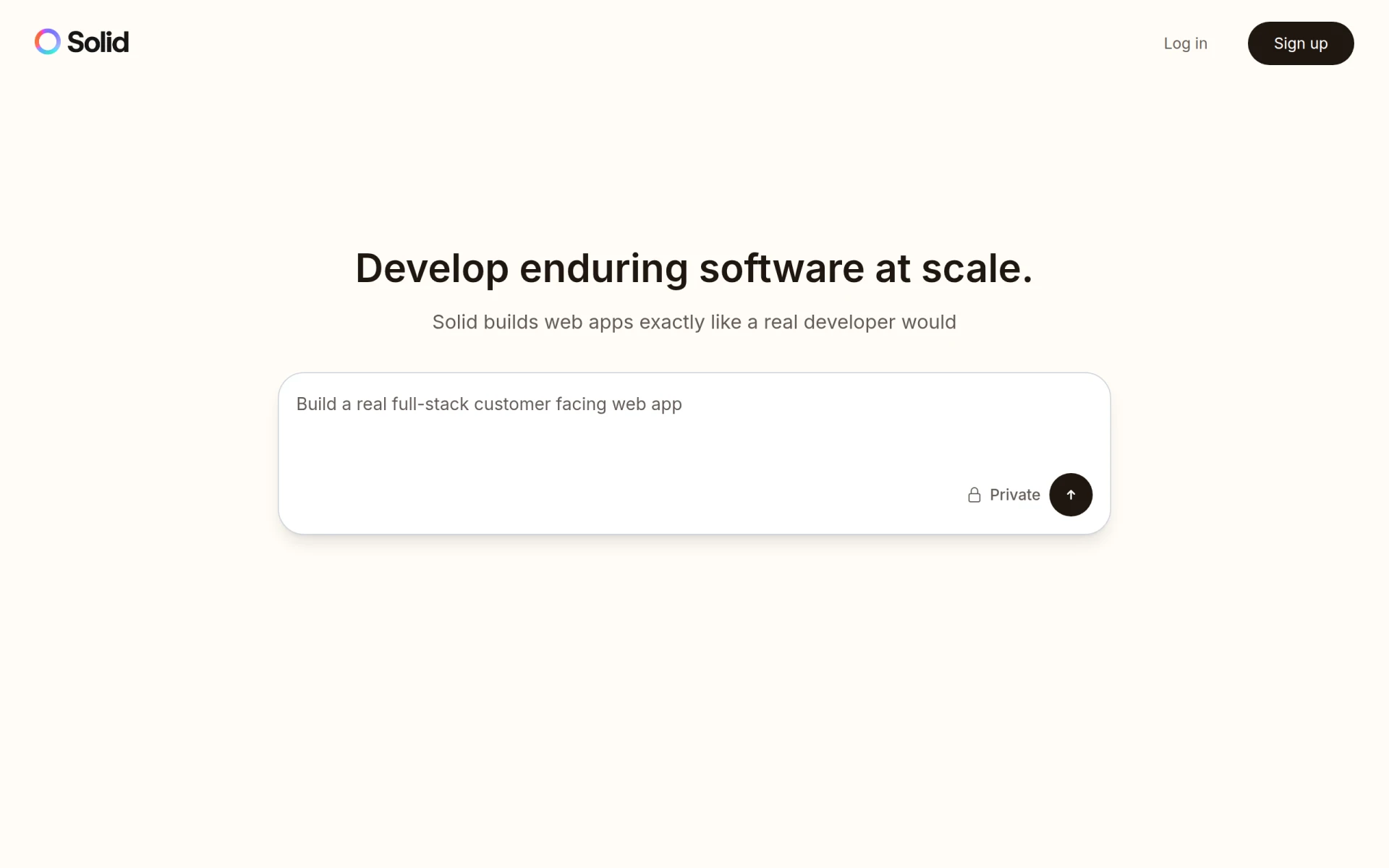 is an AI-powered app builder that transforms descriptions into production-ready web applications quickly and efficiently. Unlike KlavisAI, which is primarily focused on AI training, Solid provides a streamlined platform for web application development, making it ideal for teams looking to launch products swiftly. This tool is particularly beneficial for startups and small businesses that need to get their ideas to market without extensive development resources.
The standout feature of Solid is its ability to convert user input into functional applications, significantly reducing the time and effort involved in traditional development processes. This can be a game-changer for organizations that require fast prototyping and iteration, allowing them to respond to market demands more effectively than with KlavisAI's specific focus on AI training environments. For teams looking to innovate quickly, Solid presents a compelling alternative.
- Key Strength: Rapid conversion of descriptions into web applications.
- Key Strength: Streamlined process for quick product launches.
- Key Strength: Ideal for startups needing fast prototyping.
- Limitation: Limited customization options for complex applications.
Pricing: Contact for pricing details. Best for: Startups and businesses seeking rapid web application development.
PASSR - Best for Continuous Code Quality Monitoring
PASSR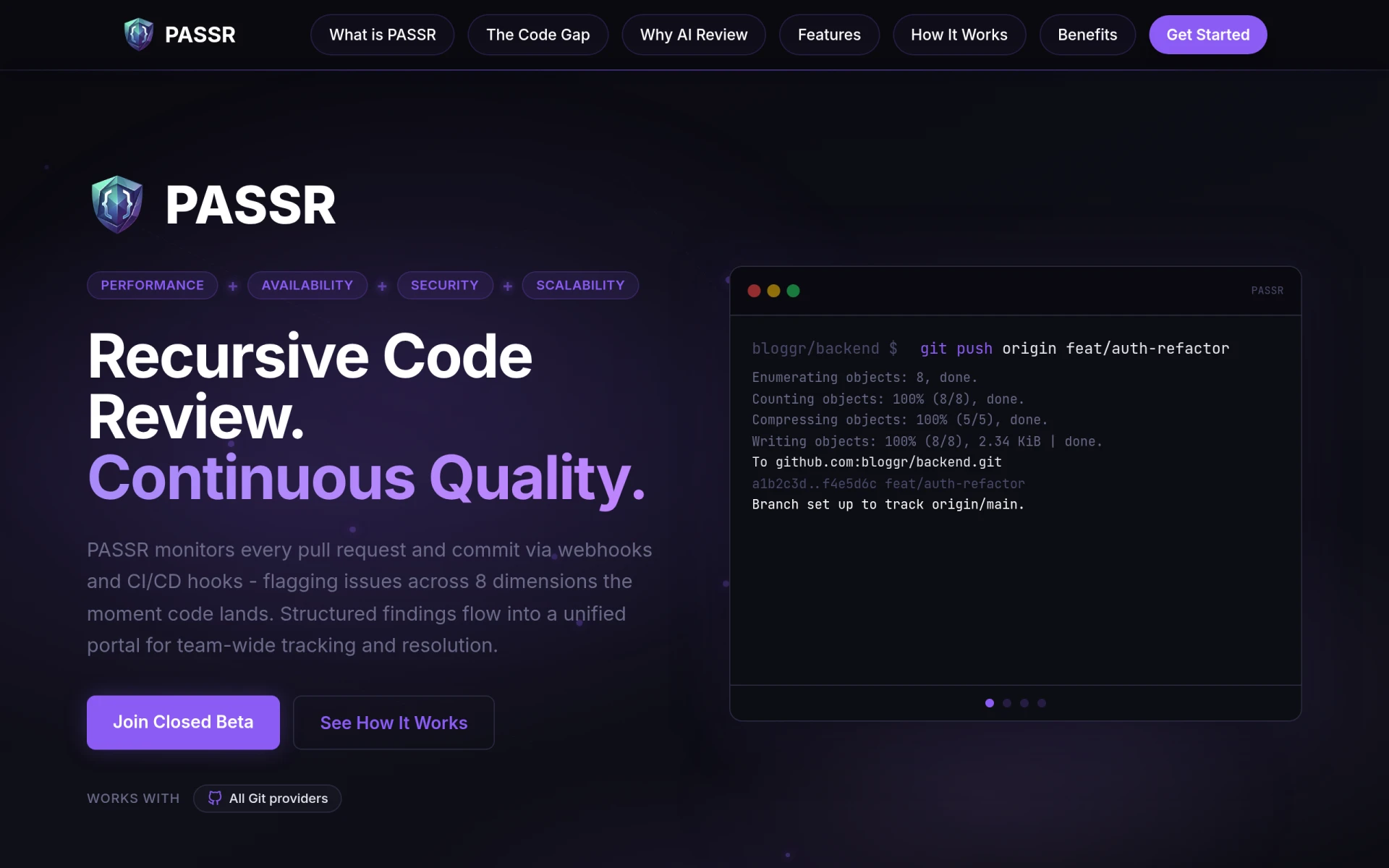 is an engineering intelligence platform that enhances code quality through continuous monitoring and issue detection. Unlike KlavisAI, which is centered on AI agent training, PASSR focuses on ensuring that the codebase remains clean and maintainable over time. This makes it an excellent alternative for development teams that prioritize long-term software quality and sustainability.
One of PASSR's key features is its proactive monitoring, which allows teams to detect issues before they escalate into significant bugs or performance bottlenecks. This capability is crucial for organizations that want to maintain high standards of code quality throughout the development lifecycle. For teams that find KlavisAI lacking in terms of quality assurance and monitoring, PASSR offers a targeted solution that enhances overall software reliability.
- Key Strength: Continuous monitoring of code quality.
- Key Strength: Proactive issue detection prevents major bugs.
- Key Strength: Focused on long-term code sustainability.
- Limitation: May require integration with existing development tools.
Pricing: Contact for pricing details. Best for: Development teams prioritizing code quality and monitoring.
Aporia - Best for Software Performance Monitoring
Aporia is an observability tool designed to enhance software performance and reliability through real-time monitoring and insights. Unlike KlavisAI, which is tailored for AI training, Aporia focuses on providing organizations with the necessary tools to understand and optimize their software performance. This makes it a suitable alternative for teams that need to ensure their applications run smoothly under various conditions.
The platform's strengths lie in its ability to provide actionable insights into software performance, helping teams identify bottlenecks and areas for improvement. Aporia's observability features enable organizations to maintain high levels of reliability and performance, which is critical for user satisfaction and business success. For teams looking for a tool that complements their development efforts by focusing on performance optimization, Aporia represents a strong alternative to KlavisAI.
- Key Strength: Real-time performance monitoring and insights.
- Key Strength: Actionable data for optimizing software performance.
- Key Strength: Enhances overall application reliability.
- Limitation: Requires a certain level of technical expertise to fully leverage.
Pricing: Contact for pricing details. Best for: Teams focused on software performance and reliability.
Pie - Best for User Interaction Testing
Pie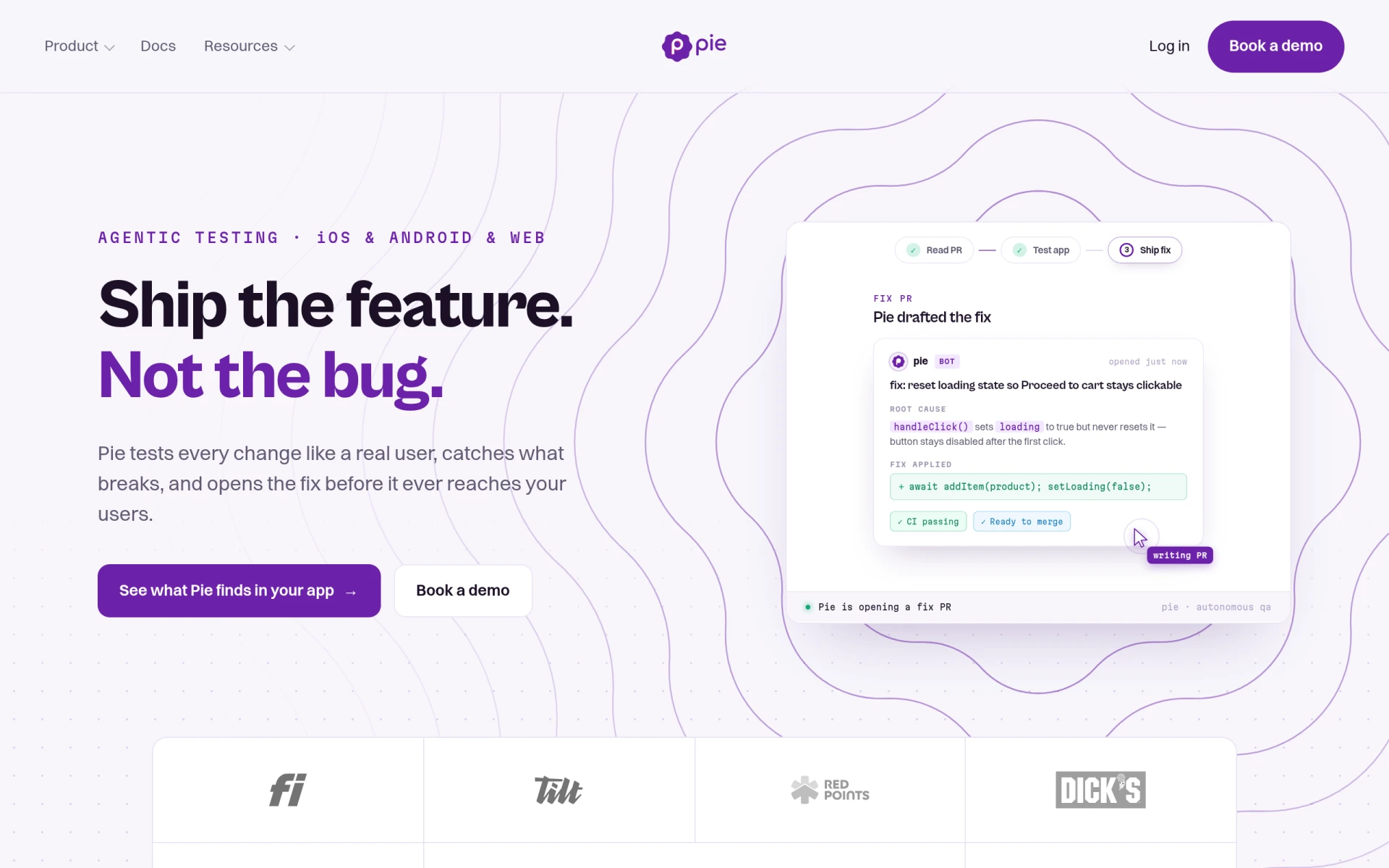 automates testing by simulating real user interactions to catch bugs before they reach end users. Unlike KlavisAI, which is focused on training AI agents, Pie provides a specialized solution for ensuring that applications function correctly from the user's perspective. This makes it particularly valuable for teams looking to enhance user experience through thorough testing processes.
One of Pie's significant advantages is its ability to replicate user behavior accurately, allowing teams to identify issues that may not be visible through traditional testing methods. This focus on real user interactions enables teams to deliver more polished products, reducing the likelihood of bugs affecting end users. For organizations that prioritize user experience, Pie offers a compelling alternative to KlavisAI, which does not provide the same level of testing tailored to user interactions.
- Key Strength: Simulates real user interactions for thorough testing.
- Key Strength: Focused on enhancing user experience.
- Key Strength: Proactive bug detection before product release.
- Limitation: May require adjustments for non-standard applications.
Pricing: Contact for pricing details. Best for: Teams focused on ensuring quality user interactions.
G2Q Computing - Best for Hybrid Quantum-Classical Solutions
G2Q Computing offers hybrid quantum-classical software solutions for optimization and machine learning tasks. Unlike KlavisAI, which is primarily aimed at training AI agents, G2Q Computing provides tools that leverage the unique capabilities of quantum computing to tackle complex problems faster and more efficiently. This makes it an attractive option for organizations looking to explore cutting-edge technologies in AI development.
One of the standout features of G2Q Computing is its ability to integrate quantum algorithms into existing machine learning workflows, enabling teams to solve problems that were previously infeasible with classical computing alone. This can significantly enhance performance in areas such as optimization, resource allocation, and data analysis. For teams interested in leveraging quantum computing to advance their AI initiatives, G2Q Computing represents a compelling alternative to KlavisAI, particularly in research and high-tech industries.
- Key Strength: Integration of quantum algorithms into classical workflows.
- Key Strength: Enhanced performance for complex optimization problems.
- Key Strength: Focus on cutting-edge quantum computing technologies.
- Limitation: Still in early stages; may lack comprehensive support.
Pricing: Contact for pricing details. Best for: Organizations looking to explore hybrid quantum-classical solutions.
Kusho - Best for Continuous Software Maintenance
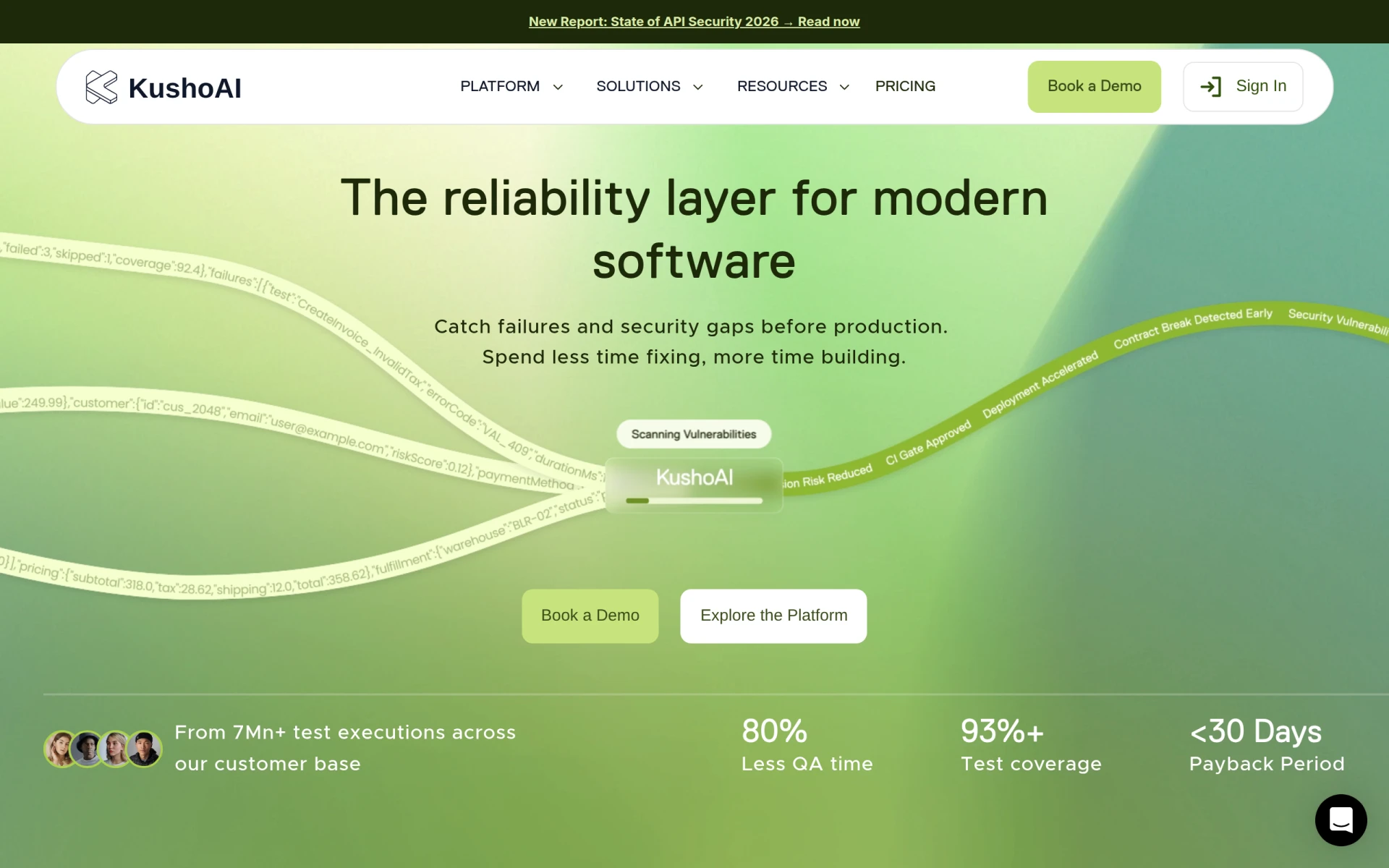
KushoAI provides AI-driven infrastructure for continuous software maintenance, focusing on testing, healing, and monitoring. Unlike KlavisAI, which specializes in AI agent training, KushoAI addresses the ongoing needs of software applications, making it an excellent alternative for organizations that prioritize long-term software reliability and maintenance.
The platform's proactive approach to software maintenance allows teams to identify and resolve issues before they escalate, ensuring that applications remain operational and efficient over time. This focus on continuous monitoring and healing is a significant advantage for organizations that cannot afford downtime or performance degradation. For teams seeking a solution that enhances the longevity and reliability of their software products, KushoAI offers a viable alternative to KlavisAI.
- Key Strength: AI-driven infrastructure for continuous maintenance.
- Key Strength: Proactive issue resolution enhances software reliability.
- Key Strength: Focus on long-term application performance.
- Limitation: May require integration with existing systems.
Pricing: Contact for pricing details. Best for: Teams focused on continuous software maintenance and reliability.
Feature Comparison Table
| Tool | Best For | Starting Price | Free Plan | Standout Feature |
|---|
| KlavisAI | AI agent training | Contact for pricing | No | Live environments for training |
| Blinq | Automated testing | Contact for pricing | No | Autonomous test code generation |
| Series AI | Game development | Contact for pricing | No | Generative AI for game content |
| Rebellions.ai | AI workloads | Contact for pricing | No | Specialized AI hardware |
| LanceDB | Data management | Contact for pricing | No | Multimodal data handling |
| QualGent | Quality assurance | Contact for pricing | No | AI-driven testing methodologies |
| Regression | Game agent development | Contact for pricing | No | Real-time bot development |
| Quilter | PCB design | Contact for pricing | No | Automated PCB design |
| OutSystems | Enterprise applications | Contact for pricing | No | Low-code development |
| Modl | Game testing | Contact for pricing | No | Automated QA for games |
| Solid | Web application development | Contact for pricing | No | Rapid app building |
| PASSR | Code quality monitoring | Contact for pricing | No | Continuous code monitoring |
| Aporia | Performance monitoring | Contact for pricing | No | Real-time insights |
| Pie | User interaction testing | Contact for pricing | No | Simulated user interactions |
| G2Q Computing | Quantum-classical solutions | Contact for pricing | No | Hybrid optimization |
| Kusho | Software maintenance | Contact for pricing | No | Continuous software maintenance |
How to Choose the Right Alternative to KlavisAI
When considering alternatives to KlavisAI, it is essential to evaluate your specific needs and use cases. If your primary focus is on automated testing, tools like Blinq or QualGent may be better suited for your requirements, as they offer specialized features that enhance testing efficiency and accuracy. For teams working within the gaming industry, both Series AI and Regression provide tailored solutions that integrate seamlessly with game development workflows, ensuring a more coherent development process.
On the other hand, if your organization is more data-centric, tools like LanceDB or Rebellions.ai could be more beneficial, offering advanced data management and optimization capabilities. For enterprises looking for a low-code solution to accelerate application development, OutSystems is an excellent choice, while those needing continuous software maintenance might find KushoAI to be the ideal fit. It's important to assess each option's unique features, limitations, and how they align with your team's workflow and project goals.
Final Verdict
In conclusion, while KlavisAI offers a robust framework for training AI agents, its limitations in testing and broader application development can drive users to explore alternatives. For automated testing, Blinq is a strong choice, while Series AI and Regression excel in gaming development. For data management, LanceDB stands out, and for enterprises, OutSystems offers a flexible low-code solution. Ultimately, the best alternative will depend on your specific needs, but the options presented here can help any team enhance their development processes effectively.