Why Look for Alternatives to Kusho?
While KushoAI offers a robust AI-driven infrastructure for continuous software maintenance, it has limitations that may prompt users to seek alternatives. One notable concern is the lack of transparent pricing information, which can hinder budgeting and planning for teams considering adopting the tool. Organizations need to assess their cost structures, and the absence of clear pricing can create uncertainty about the total investment required in KushoAI. Users also report that while Kusho excels in automated testing and monitoring, it lacks certain advanced features seen in its competitors, such as more comprehensive user interaction simulations and real-time performance analytics.
Another common pain point is that Kusho's focus is primarily on testing and healing, which may not cater to all software development needs. For instance, teams looking for extensive observability or data engineering capabilities might find Kusho lacking in those areas. Additionally, some users express a desire for a more user-friendly interface and better customer support, which can be critical during the initial setup and integration phases. As the software development landscape evolves, the need for tools that are flexible and feature-rich becomes paramount, driving users to explore alternatives that offer a more holistic solution.
Best Alternatives to Kusho in 2026
Blinq - Best for Automated Testing
Blinq is an innovative AI-driven automated testing platform that stands out for its ability to autonomously generate and maintain test automation code. Unlike Kusho, which requires more manual input in maintaining test cases, Blinq uses advanced algorithms to streamline this process, making it an excellent choice for teams looking to enhance their testing efficiency without additional overhead. The platform's ability to create test cases based on application behavior allows developers to focus on coding rather than the intricacies of test maintenance.
For teams that prioritize speed and agility in their development cycles, Blinq offers a significant advantage over Kusho. It reduces the time developers spend on creating and updating test scripts, enabling faster deployment cycles. This platform is particularly beneficial for agile teams that must adapt quickly to changes and continuously deliver high-quality software. However, it is essential to note that Blinq's focus on testing means it may not provide the same level of monitoring and healing features that Kusho offers.
- Key Strength: Autonomous generation and maintenance of test automation code.
- Key Strength: Accelerates testing processes, enhancing team productivity.
- Key Strength: Ideal for agile teams needing quick adaptations.
- Limitation: Lacks comprehensive monitoring features present in Kusho.
Pricing: Contact for details. Best for: Teams seeking enhanced automated testing capabilities.
Aporia - Best for Observability and Performance Monitoring
Aporia is an observability tool that excels in providing real-time monitoring and insights into software performance and reliability. For organizations that require deep visibility into their applications, Aporia is a compelling alternative to Kusho. While Kusho focuses on software maintenance, Aporia enables teams to proactively identify performance bottlenecks and address issues before they impact end users. This tool is particularly useful for teams that prioritize user experience and application reliability.
One of Aporia's standout features is its ability to provide detailed analytics and visualization capabilities. This allows developers to understand application behavior in real time, facilitating informed decision-making. In contrast to Kusho, which may not offer the same level of granular insights, Aporia helps teams to optimize their applications continuously. However, users should be aware that Aporia's robust features may come with a steeper learning curve, potentially requiring more time to master.
- Key Strength: Real-time performance monitoring and analytics.
- Key Strength: Detailed visualizations that aid in understanding application behavior.
- Key Strength: Proactive issue detection to enhance user experience.
- Limitation: May require additional training to fully leverage its capabilities.
Pricing: Contact for details. Best for: Teams needing comprehensive application observability.
QualGent - Best for Quality Assurance in AI Software
QualGent is a quality assurance tool designed specifically for AI-built software, making it a strong contender for teams focused on managing bugs and improving testing processes. Unlike Kusho, which provides a more generalized approach to software maintenance, QualGent offers tailored solutions for AI applications. This specialization can significantly enhance the testing process for organizations deploying AI technologies, ensuring that the software performs as intended under various scenarios.
The platform facilitates effective bug management and allows teams to streamline their testing workflows, which can be particularly beneficial in the fast-paced AI development environment. QualGent’s focus on quality assurance means it includes features that help in identifying and resolving issues specific to AI algorithms, something Kusho may not address as thoroughly. However, users should consider that QualGent’s niche focus may limit its applicability to non-AI projects.
- Key Strength: Tailored QA solutions for AI software development.
- Key Strength: Streamlined bug management and testing workflows.
- Key Strength: Enhanced reliability for AI applications.
- Limitation: Limited applicability for traditional software projects.
Pricing: Contact for details. Best for: Teams developing AI software needing specialized QA.
Pie - Best for User Interaction Simulation
Pie is an automated testing tool that focuses on simulating real user interactions to catch bugs before they reach end users. This feature sets it apart from Kusho, which primarily addresses backend testing and monitoring. By mimicking how actual users interact with software, Pie ensures that applications are user-friendly and robust, making it an excellent choice for teams that prioritize user experience. The platform enables developers to identify potential issues from a user’s perspective, ensuring a smoother rollout of software updates.
The ability to test applications in a real-world scenario allows teams to gather valuable insights into user behavior and application performance, something that Kusho may not emphasize as much. Pie is particularly valuable for teams working in sectors where user experience is critical, as it enables proactive issue detection and resolution. However, teams should be aware that while Pie excels in user interaction simulation, it may not provide the same level of comprehensive monitoring that Kusho offers.
- Key Strength: Real user interaction simulation for effective testing.
- Key Strength: Focus on user experience and usability testing.
- Key Strength: Proactive identification of user-facing issues.
- Limitation: Limited backend monitoring capabilities compared to Kusho.
Pricing: Contact for details. Best for: Teams focused on enhancing user experience through testing.
OutSystems - Best for Enterprise Application Development
OutSystems is an AI development platform tailored for enterprises that need to create and manage applications efficiently. Unlike Kusho, which specializes in maintenance and testing, OutSystems offers a comprehensive solution that covers the entire application development lifecycle. This platform enables organizations to build applications quickly while ensuring they are scalable and maintainable. For teams looking to streamline their development processes while leveraging AI capabilities, OutSystems presents a viable alternative.
One of the key advantages of OutSystems is its flexibility in pricing models, which can be tailored to specific organizational needs. This feature allows teams to align their investment with their usage and requirements effectively. Additionally, OutSystems provides extensive support for integrating AI agents into applications, enabling businesses to take advantage of advanced technologies without the steep learning curve typically associated with them. However, enterprises should consider that the platform may require a more significant commitment in terms of time and resources compared to Kusho.
- Key Strength: Comprehensive application development lifecycle support.
- Key Strength: Flexible pricing models tailored to organizational needs.
- Key Strength: Strong integration capabilities with AI technologies.
- Limitation: May require more time and resources for implementation.
Pricing: Contact for details. Best for: Enterprises needing a robust application development platform.
Ascend.io - Best for Data Engineering
Ascend.io provides a unified platform for data engineering, focusing on streamlining data ingestion, transformation, and orchestration. For teams that prioritize data workflows, Ascend.io offers a compelling alternative to Kusho, which does not specialize in data engineering. The platform's ability to automate complex data pipelines allows organizations to manage their data more efficiently, ensuring they can focus on generating insights rather than managing data processes manually.
What sets Ascend.io apart is its emphasis on unifying various data tasks, enabling teams to improve productivity and reduce errors. This is particularly beneficial for organizations that handle large volumes of data and need to ensure accuracy and reliability throughout their data workflows. However, users should be aware that Ascend.io is currently winding down operations, which may limit the long-term viability of using this platform as a sustainable solution.
- Key Strength: Streamlined automation of data ingestion and transformation.
- Key Strength: Unified platform for overseeing complex data workflows.
- Key Strength: Reduces manual errors, enhancing data reliability.
- Limitation: Currently winding down operations, which may affect future support.
Pricing: Contact for details. Best for: Teams focusing on efficient data engineering workflows.
G2Q Computing - Best for Hybrid Quantum-Classical Solutions
G2Q Computing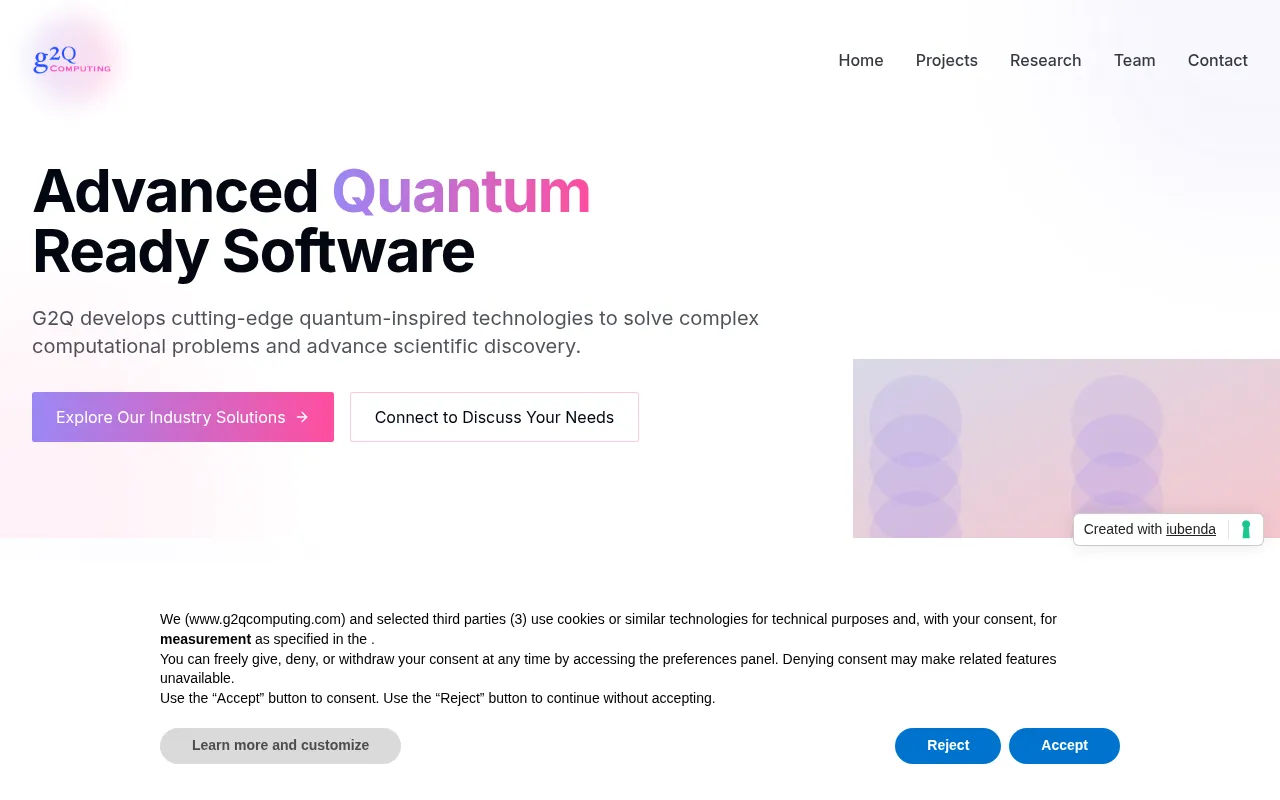 offers innovative hybrid quantum-classical software solutions tailored for optimization and machine learning tasks. This platform stands out for organizations exploring cutting-edge technologies that go beyond traditional software maintenance and testing solutions provided by Kusho. G2Q Computing's unique approach allows teams to tackle complex optimization problems that may be infeasible for classical computing alone, making it an attractive option for research and development teams in advanced computing fields.
One of the key strengths of G2Q Computing is its capability to integrate quantum computing principles into existing workflows, providing teams with a competitive edge in solving complex challenges. This ability can significantly enhance performance and efficiency in tasks that involve large datasets or require sophisticated modeling techniques. However, organizations should be aware that the niche focus on quantum-classical solutions may limit the platform's applicability for more general software development needs.
- Key Strength: Unique hybrid quantum-classical optimization capabilities.
- Key Strength: Enhances performance for complex machine learning tasks.
- Key Strength: Competitive edge in advanced computing applications.
- Limitation: Limited applicability for standard software development projects.
Pricing: Contact for details. Best for: Research teams focused on quantum computing applications.
PASSR - Best for Continuous Code Quality Monitoring
PASSR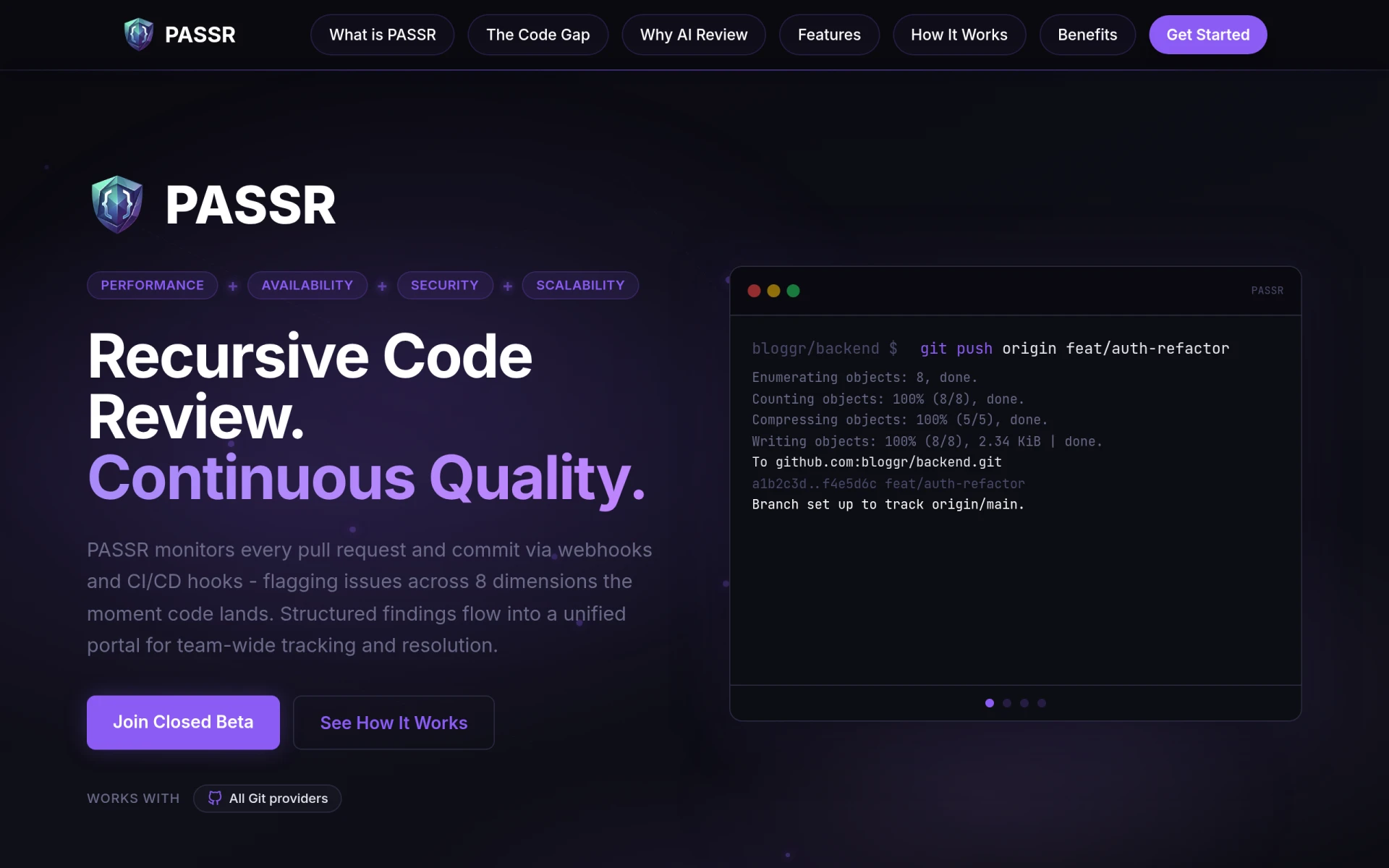 is an engineering intelligence platform that enhances code quality through continuous monitoring and issue detection. For teams that prioritize maintaining high code quality standards, PASSR presents a strong alternative to Kusho, which primarily focuses on testing and healing rather than ongoing code quality assessments. PASSR enables developers to identify potential problems in their codebase proactively, ensuring that issues are addressed before they escalate into more significant challenges.
One of the standout features of PASSR is its ability to provide real-time feedback on code changes, allowing teams to maintain high-quality standards throughout the development process. This continuous monitoring approach is particularly beneficial for organizations practicing agile methodologies, as it ensures that code quality is not compromised during rapid iterations. However, teams should consider that PASSR's specialized focus on code quality might not provide the same breadth of testing and healing features that Kusho offers.
- Key Strength: Continuous monitoring for proactive code quality management.
- Key Strength: Real-time feedback on code changes.
- Key Strength: Supports agile methodologies through ongoing assessments.
- Limitation: Limited feature set compared to comprehensive tools like Kusho.
Pricing: Contact for details. Best for: Teams focused on maintaining high code quality standards.
Series AI - Best for Game Development
Series AI empowers developers to create immersive gaming experiences through generative AI technology. This platform is ideal for teams in the gaming industry looking for advanced tools that facilitate the development of engaging and interactive experiences. Unlike Kusho, which focuses on software maintenance, Series AI specifically targets the unique needs of game developers, providing them with the resources to harness AI in their game design and development processes.
The generative AI capabilities of Series AI enable developers to create dynamic content and responsive gameplay elements, significantly enhancing the user experience. This technology allows for more personalized gaming experiences, which can lead to higher user engagement and retention rates. However, it is essential to keep in mind that Series AI’s specialized focus may not cater to developers outside the gaming industry, limiting its appeal to a broader audience.
- Key Strength: Advanced generative AI capabilities for immersive gaming experiences.
- Key Strength: Tailored for the unique needs of game developers.
- Key Strength: Enhances user engagement through dynamic content creation.
- Limitation: Limited applicability for non-gaming software development.
Pricing: Contact for details. Best for: Game developers seeking to leverage AI in their projects.
LanceDB - Best for AI Data Management
LanceDB is a multimodal lakehouse designed specifically for AI applications, enabling efficient data management and retrieval. It provides a robust alternative to Kusho for teams that need to handle large datasets effectively while ensuring quick access to data for AI-driven applications. The lakehouse architecture of LanceDB allows organizations to integrate various data types seamlessly, making it suitable for diverse AI projects that require flexible data handling capabilities.
The platform's strength lies in its ability to support both structured and unstructured data, which is often a challenge in traditional data management systems. This feature allows teams to harness the full potential of their data, enabling more effective training of AI models. However, users should be cautious as LanceDB's specialized focus on AI data management may not provide the broad functionalities offered by Kusho in terms of testing and monitoring.
- Key Strength: Multimodal lakehouse architecture for flexible data management.
- Key Strength: Supports both structured and unstructured data types.
- Key Strength: Enables efficient data retrieval for AI applications.
- Limitation: Limited functionalities beyond data management.
Pricing: Contact for details. Best for: Teams working on AI applications requiring efficient data management.
Modl - Best for Game Testing
Modl is an AI-driven game testing tool that automates quality assurance processes, enabling developers to identify bugs and performance issues efficiently. For teams in the gaming industry, Modl presents a powerful alternative to Kusho, which does not specialize in the unique testing requirements of games. The platform automates repetitive testing tasks, allowing developers to focus on improving gameplay and user experience.
One of Modl's key strengths is its ability to simulate various gaming scenarios, ensuring that games perform well under different conditions. This capability helps teams deliver polished products that meet user expectations. However, organizations should note that Modl's niche focus on gaming may not provide the same breadth of testing features applicable to a wider range of software development projects, such as those addressed by Kusho.
- Key Strength: Automation of game testing processes.
- Key Strength: Simulates various gaming scenarios for thorough testing.
- Key Strength: Enables developers to focus on gameplay improvement.
- Limitation: Limited applicability for non-gaming software testing.
Pricing: Contact for details. Best for: Game developers seeking efficient automated testing solutions.
Rebellions.ai - Best for AI Workloads in Data Centers
Rebellions.ai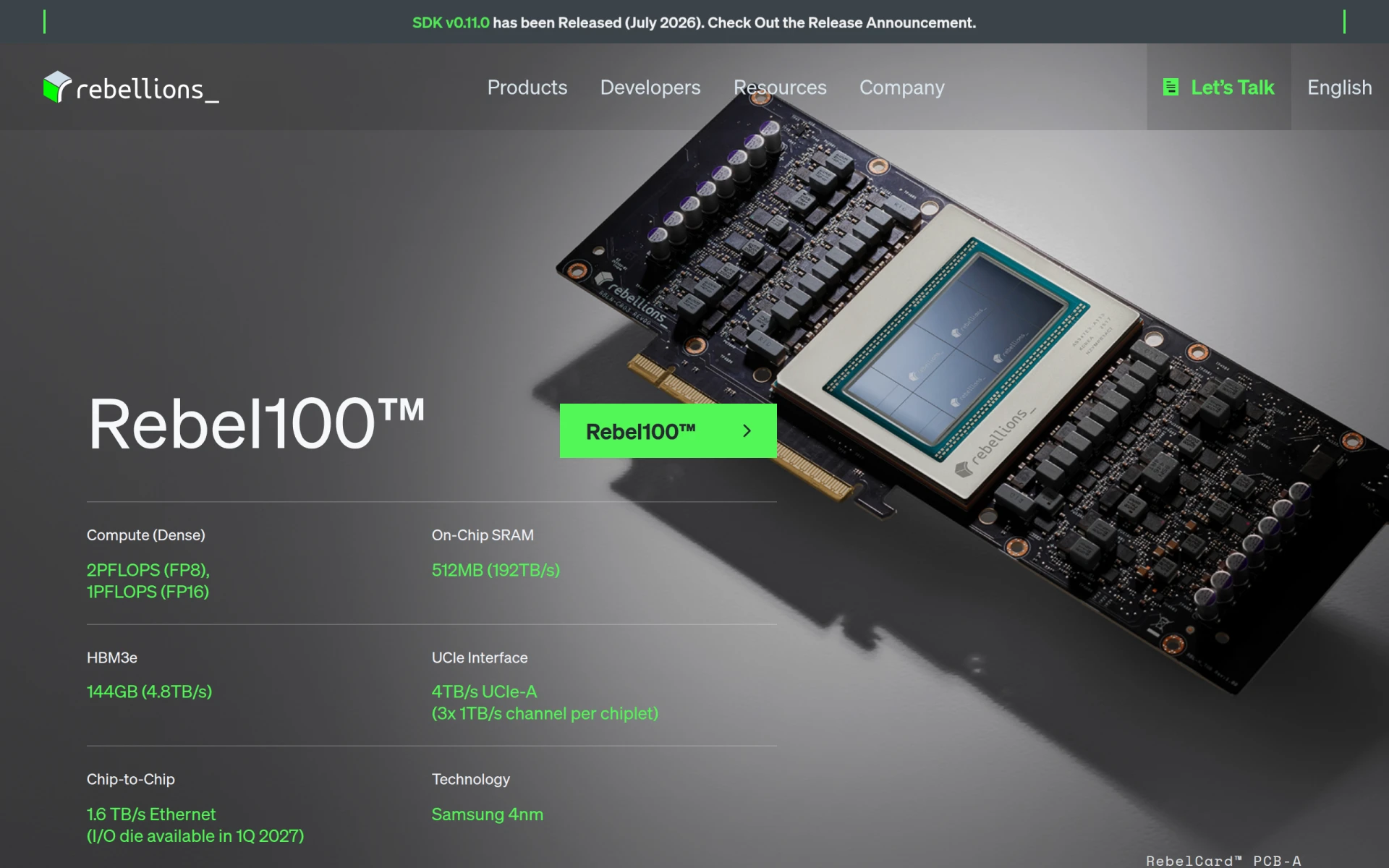 provides specialized AI hardware and software solutions designed to enhance AI workloads and performance in data centers. This platform is particularly relevant for organizations handling extensive AI operations, offering capabilities that go beyond what Kusho provides in terms of software maintenance and testing. Rebellions.ai focuses on optimizing the infrastructure required to support demanding AI applications, making it an excellent choice for enterprise-level deployments.
One of the standout features of Rebellions.ai is its ability to integrate seamlessly with existing data center architectures, ensuring minimal disruption during implementation. This capability allows organizations to enhance their AI capabilities without overhauling their current systems. However, teams should be aware that the focus on AI workloads may not cater to all software development needs, limiting its applicability for more traditional development projects.
- Key Strength: Optimizes AI workloads in data center environments.
- Key Strength: Seamless integration with existing infrastructures.
- Key Strength: Tailored for enterprise-level AI applications.
- Limitation: Limited applicability for non-AI software development.
Pricing: Contact for details. Best for: Enterprises focusing on enhancing AI capabilities in data centers.
Regression - Best for Real-Time Bot Development
Regression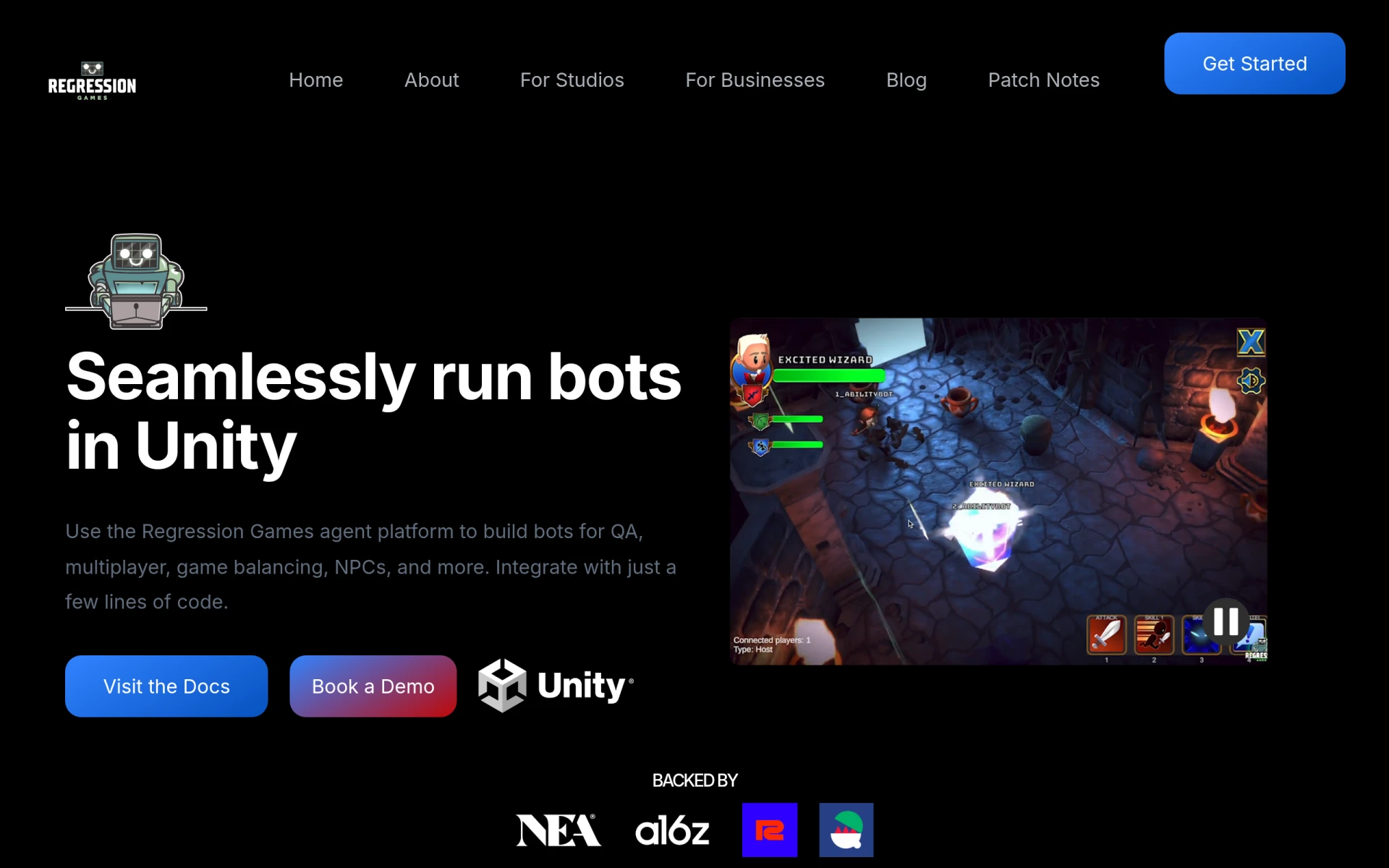 is an AI agent development platform designed for Unity, enabling seamless integration and real-time bot development. This tool is particularly valuable for teams engaged in game development or interactive applications, providing functionalities that Kusho does not address. By focusing on real-time interactions, Regression empowers developers to create responsive and intelligent bots that enhance user engagement and gameplay.
The platform's integration with Unity allows for efficient development workflows, enabling teams to implement complex behaviors and interactions without extensive coding. This capability can significantly accelerate the development process for projects involving AI agents. However, organizations should consider that Regression's focus on Unity and AI agents may limit its applicability for broader software development needs.
- Key Strength: Real-time bot development for Unity applications.
- Key Strength: Seamless integration with existing Unity projects.
- Key Strength: Accelerates development of intelligent game features.
- Limitation: Limited applicability for non-Unity projects.
Pricing: Contact for details. Best for: Game developers focusing on AI agent integration in Unity.
KlavisAI - Best for Long-Horizon AI Training
KlavisAI offers live environments for training AI agents, focusing on long-horizon tasks and programmatic verification. This platform is tailored for organizations looking to push the boundaries of AI training beyond typical use cases, making it a compelling alternative to Kusho for teams working on advanced AI projects. KlavisAI provides developers with the tools necessary to create sophisticated training scenarios that challenge AI agents over extended periods.
One of the key advantages of KlavisAI is its focus on long-horizon tasks, allowing teams to evaluate and improve the performance of AI agents in complex environments. This capability is particularly important for projects that require sustained decision-making capabilities over time. However, potential users should note that the specialized nature of KlavisAI may limit its applicability for teams seeking more general software maintenance and testing solutions.
- Key Strength: Focus on long-horizon AI training tasks.
- Key Strength: Programmatic verification for AI performance.
- Key Strength: Supports complex training scenarios for advanced AI agents.
- Limitation: Limited applicability for general software development projects.
Pricing: Contact for details. Best for: Teams focused on advanced AI training and verification.
Quilter - Best for PCB Design Acceleration
Quilter is an AI-driven PCB design tool that accelerates the design process and reduces validation time for electronic hardware projects. This platform serves as an excellent alternative to Kusho for teams engaged in hardware development, providing unique capabilities that streamline the PCB design process. Unlike Kusho, which focuses on software maintenance, Quilter is tailored for hardware engineers seeking to optimize their design workflows.
One of Quilter's key strengths is its ability to automate various aspects of the PCB design process, allowing engineers to focus on creativity and innovation rather than repetitive tasks. This feature can significantly reduce the time to market for new electronic products, giving teams a competitive edge. However, users should be mindful that Quilter's focus on hardware design may limit its use for teams primarily engaged in software development.
- Key Strength: Accelerates PCB design processes through automation.
- Key Strength: Reduces validation time for electronic projects.
- Key Strength: Tailored specifically for hardware engineers.
- Limitation: Limited applicability for software-focused teams.
Pricing: Contact for details. Best for: Hardware engineers seeking to optimize PCB design workflows.
Feature Comparison Table
| Tool | Best For | Starting Price | Free Plan | Standout Feature |
|---|
| Kusho | Continuous software maintenance | Contact for details | No | AI-driven testing and healing |
| Blinq | Automated testing | Contact for details | No | Autonomous test code generation |
| Aporia | Observability and performance monitoring | Contact for details | No | Real-time performance analytics |
| QualGent | Quality assurance for AI software | Contact for details | No | AI-focused bug management |
| Pie | User interaction simulation | Contact for details | No | Real user interaction testing |
| OutSystems | Enterprise application development | Contact for details | No | Comprehensive development lifecycle support |
| Ascend.io | Data engineering | Contact for details | No | Unified data workflow management |
| G2Q Computing | Hybrid quantum-classical solutions | Contact for details | No | Quantum optimization capabilities |
| PASSR | Continuous code quality monitoring | Contact for details | No | Proactive code quality feedback |
| Series AI | Game development | Contact for details | No | Generative AI for immersive gaming |
| LanceDB | AI data management | Contact for details | No | Multimodal lakehouse architecture |
| Modl | Game testing | Contact for details | No | Automated game QA processes |
| Rebellions.ai | AI workloads in data centers | Contact for details | No | Optimization for AI workloads |
| Regression | Real-time bot development | Contact for details | No | Seamless Unity integration |
| KlavisAI | Long-horizon AI training | Contact for details | No | Advanced programmatic verification |
| Quilter | PCB design acceleration | Contact for details | No | AI-driven PCB design automation |
How to Choose the Right Alternative to Kusho
When selecting an alternative to Kusho, it is essential to consider your specific needs and organizational goals. If your primary focus is on automated testing, platforms like Blinq or Pie may serve you better due to their specialized capabilities in generating and maintaining test automation code and simulating user interactions, respectively. These tools streamline testing processes, allowing your team to enhance the overall quality of software without dedicating excessive time to manual testing tasks.
For organizations emphasizing observability and performance monitoring, Aporia is a strong contender, providing real-time insights that enhance user experience and application reliability. In contrast, if you are involved in data engineering, Ascend.io can offer a unified platform to manage your data workflows efficiently. Ultimately, it is crucial to assess the unique features and strengths of each tool in relation to your specific use case, ensuring that you choose a solution that aligns with your operational requirements and long-term objectives.
Final Verdict
In conclusion, the best alternative to Kusho depends on your organization’s specific needs. For teams focused on automated testing, Blinq and Pie stand out as excellent choices, while Aporia is ideal for those in need of comprehensive performance monitoring. For enterprises developing applications, OutSystems provides a robust platform, whereas Ascend.io excels in data engineering. Evaluate these options carefully to find the solution that best meets your development and maintenance requirements.