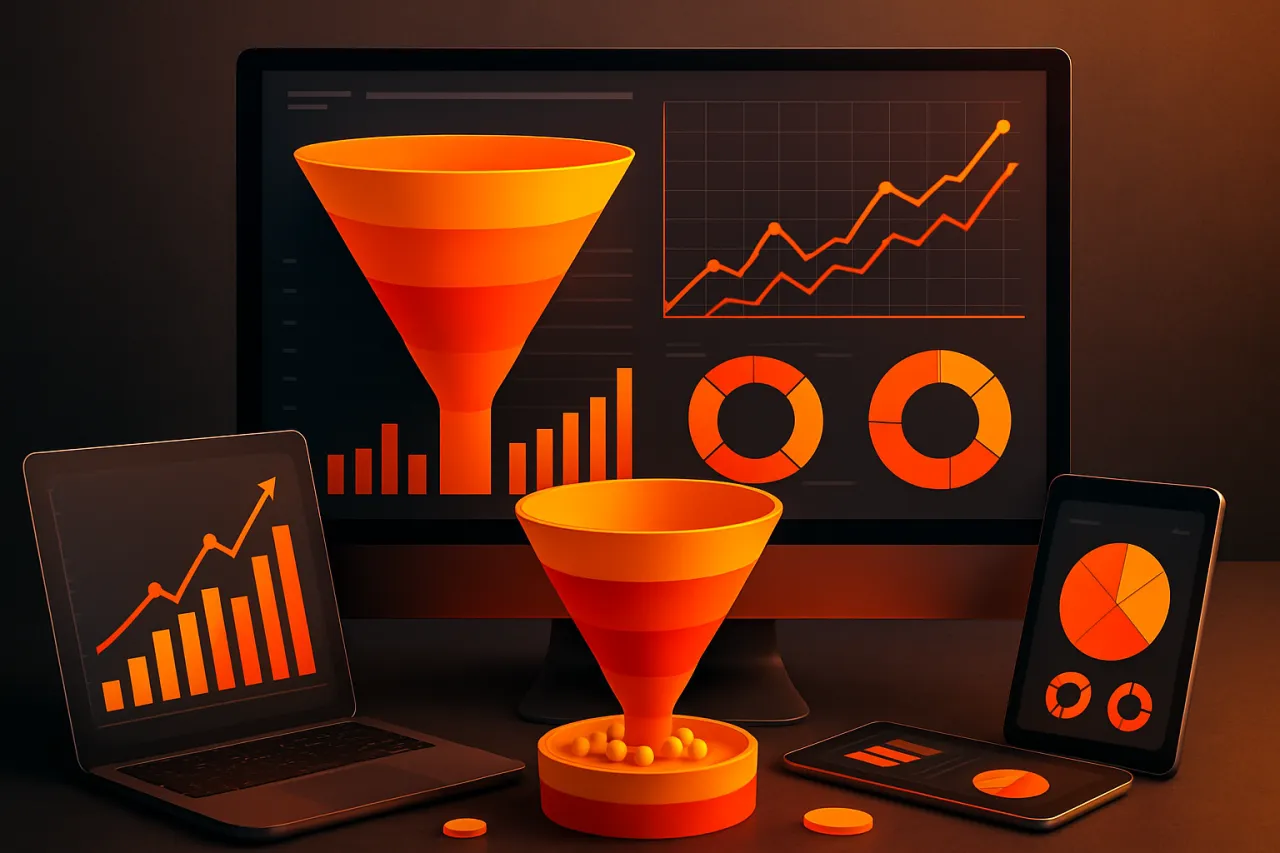
How to Optimize Your Sales Funnel with Analytics Tools
Introduction
In today's competitive business landscape, optimizing your sales funnel is essential for maximizing conversions and driving revenue growth. A well-structured sales funnel not only guides potential customers through the purchasing process but also identifies areas for improvement. Analytics tools play a crucial role in understanding buyer behavior and funnel performance, enabling businesses to make data-driven decisions that enhance their sales process.
This article will explore how you can leverage analytics tools to optimize your sales funnel. We will cover key metrics to monitor, compare various analytics tools, and provide actionable strategies for enhancement.
What Is Sales Funnel Optimization
Sales funnel optimization refers to the systematic process of analyzing and improving each stage of a sales funnel to increase conversion rates. The sales funnel typically consists of several stages, including awareness, interest, consideration, and decision. By utilizing analytics tools, businesses can track how potential customers progress through these stages and identify bottlenecks that hinder conversions.
Optimizing your sales funnel involves not only understanding where customers drop off but also what influences their journey from the initial point of contact to the final purchase. This insight allows businesses to create targeted strategies for each stage of the funnel, ultimately leading to improved sales outcomes.
Why It Matters
Understanding and optimizing your sales funnel can significantly impact your bottom line. A well-optimized funnel reduces customer acquisition costs and increases the likelihood of repeat purchases. Furthermore, with the right analytics tools, businesses can gain insights into customer preferences and behaviors, enabling personalized marketing strategies that resonate with their target audience.
In essence, sales funnel optimization is not just about increasing numbers; it's about creating a more effective and efficient sales process that meets the needs of your customers while driving business growth.
Best Software / Methods / Strategies
Google Analytics
- Overview: Google Analytics is a powerful web analytics tool that provides in-depth insights into website traffic and user behavior.
- Strengths: Offers detailed reports on user demographics, behavior, and conversion tracking, allowing businesses to see how visitors interact with their sales funnel.
- Limitations: May require a steep learning curve for beginners; can overwhelm users with data if not properly configured.
- Best for: Businesses looking for a comprehensive free solution to track website performance and user engagement.
- Pricing overview: Free for most features; premium version available for larger enterprises.
Hotjar
- Overview: Hotjar is a user behavior analytics tool that provides heatmaps, session recordings, and feedback tools to understand user interactions.
- Strengths: Visual representation of user behavior helps identify pain points in the sales funnel; easy to implement.
- Limitations: Limited features in the free plan; may not provide as much quantitative data as other tools.
- Best for: Businesses wanting qualitative insights into user behavior alongside quantitative data.
- Pricing overview: Free basic plan; paid plans start at $39/month.
Mixpanel
- Overview: Mixpanel is an advanced product analytics tool focused on tracking user interactions with web and mobile applications.
- Strengths: Allows for detailed tracking of user actions, enabling businesses to analyze conversion rates at various funnel stages.
- Limitations: Higher cost compared to other analytics tools; requires some technical knowledge to set up effectively.
- Best for: Tech-savvy businesses that need in-depth analysis of user engagement.
- Pricing overview: Free for up to 100,000 monthly tracked users; paid plans start at $89/month.
Airbook
- Overview: Airbook is a versatile sales analytics tool designed to streamline the management of sales funnels and track performance metrics.
- Strengths: User-friendly interface and comprehensive reporting features; integrates well with other tools.
- Limitations: May not have as many advanced features as some competitors; pricing may be a consideration for smaller businesses.
- Best for: Small to medium-sized businesses that require a straightforward solution for sales funnel management. Learn more about Airbook.
- Pricing overview: Starts at $29/month with tiered pricing based on features.
How to Choose the Right Solution
When evaluating analytics tools for sales funnel optimization, consider the following criteria:
- Ease of Use: Choose a tool that is intuitive and matches your team's technical expertise.
- Integration Capabilities: Ensure the tool can integrate seamlessly with your existing systems, such as CRM and email marketing platforms.
- Key Features: Identify the specific features you need, such as heatmaps, funnel analysis, or user segmentation.
- Cost: Consider your budget and the tool's pricing structure; some tools offer free trials or basic plans.
Common Mistakes
- Ignoring Data Overload: Failing to focus on key metrics can lead to confusion. Prioritize the most relevant data for your sales funnel.
- Neglecting A/B Testing: Not testing different versions of landing pages or sales strategies can hinder your optimization efforts.
- Overlooking Customer Feedback: Customer insights are invaluable. Regularly solicit feedback to understand pain points and areas for improvement.
Frequently Asked Questions
-
What are the key metrics to monitor for sales funnel optimization?
Focus on conversion rates, drop-off rates, and customer acquisition costs for each stage of the funnel. -
How often should I analyze my sales funnel?
Regular analysis is recommended, ideally quarterly or monthly, depending on the volume of leads. -
Can I use multiple analytics tools simultaneously?
Yes, using a combination of tools can provide a more comprehensive view of your sales performance. -
What is the role of A/B testing in sales funnel optimization?
A/B testing allows you to experiment with different strategies to see which performs better, improving overall conversion rates. -
How can customer feedback improve my sales funnel?
Customer feedback helps identify pain points and areas for enhancement, leading to a more effective sales process.
Conclusion
Optimizing your sales funnel with analytics tools is a critical step toward improving your sales process and maximizing conversions. By monitoring key metrics and leveraging insights from various tools, you can make informed decisions that enhance each stage of your funnel. Remember to avoid common pitfalls, such as data overload and neglecting customer feedback, to ensure a streamlined and effective sales approach. With the right strategies in place, your business can navigate the complexities of the sales process and achieve sustainable growth.
About the Author
Tech Blogger
A seasoned tech blogger, Adam Adams focuses on making tech accessible to everyday users. He covers Productivity tools, comparisons, and buying guides on Softedin.