Overview
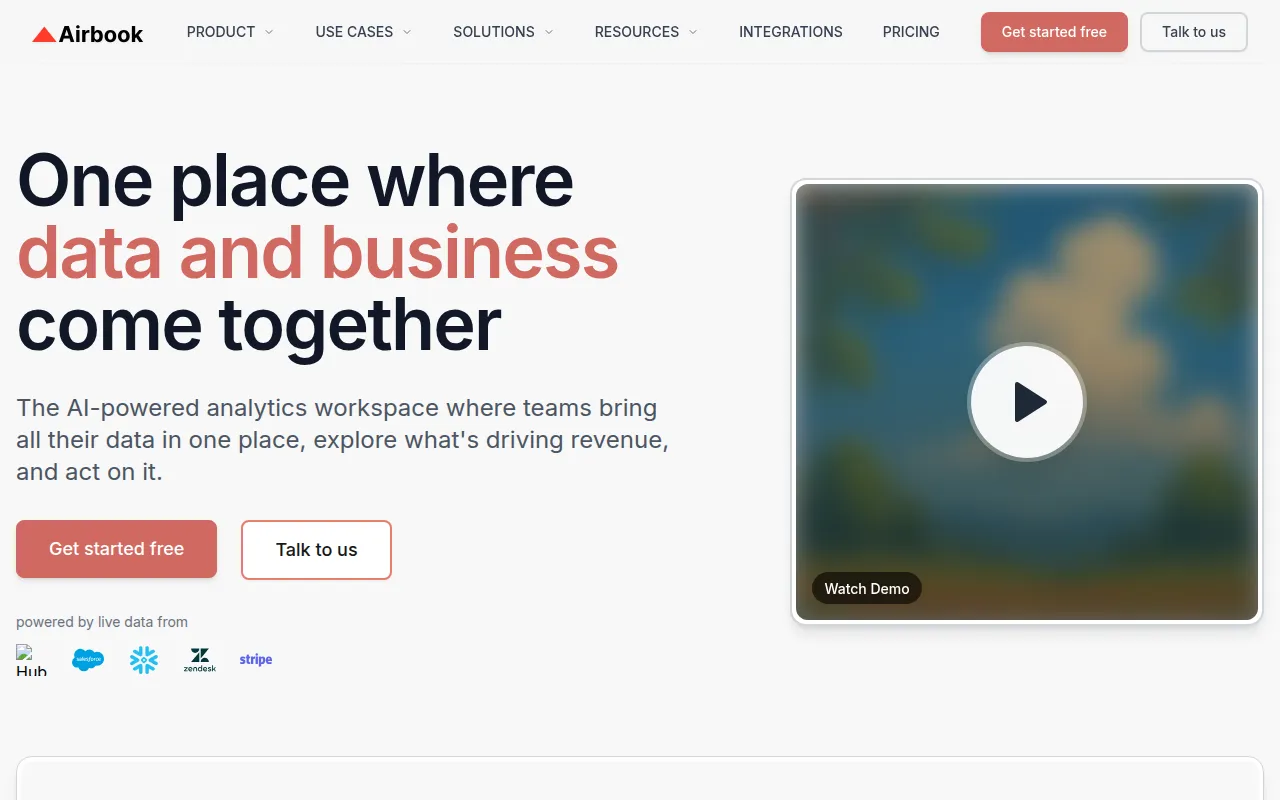
Airbook is a specialized analytics platform designed for go-to-market (GTM) teams, integrating data, analytics, and workflows in one centralized location. Its primary purpose is to help operations and GTM teams uncover insights that drive revenue growth and facilitate informed decision-making. By connecting disparate data sources, Airbook addresses the common challenges of data silos and inefficient analytics processes, enabling teams to act quickly on insights derived from their data.
Key Features
- Centralized data management
- AI-powered analytics capabilities
- Seamless integration with CRMs and other business tools
- Instant insights from complex analytical queries
- SQL query support for advanced users
- User-friendly interface for data exploration
- Customizable dashboards for visual reporting
- Scalability to accommodate growing data needs
Benefits
Using Airbook provides several practical advantages for businesses. Teams can save time by eliminating the need for complex engineering to unify data sources. The AI capabilities allow users to extract insights from their data without extensive technical knowledge, making analytics accessible to non-technical team members. Additionally, the transparency in pricing helps organizations manage budgets effectively, avoiding unexpected costs associated with data analytics tools.
Common Use Cases
Airbook is particularly useful in scenarios where teams need to quickly access and analyze data from various sources. For instance, a sales operations team may use Airbook to consolidate data from their CRM and marketing platforms to identify sales trends and optimize campaign performance. Similarly, revenue operations teams can utilize the platform to create a single source of truth for their GTM stack, ensuring all departments work with the same data set. Another common use case involves individual analysts who need to perform ad-hoc analysis using SQL or AI without requiring engineering support.
Who Should Use It
Airbook is ideal for data-driven teams, such as sales operations, marketing analytics, and revenue operations. It caters well to organizations seeking to enhance their analytics capabilities without extensive engineering resources. However, it may not be the best fit for very small teams or startups that require minimal data analytics and rely on basic reporting tools.
Pricing Overview
Airbook offers a freemium model that allows users to start for free and scale as needed, with no hidden fees. Users can access 10 AI requests per month with one analyst seat and a database connection.
Conclusion
Airbook provides a robust platform for GTM analytics, offering a comprehensive solution for teams needing to connect data and derive actionable insights. While it presents several advantages, including ease of use and transparent pricing, potential users should assess their specific needs to determine if it aligns with their analytics requirements.