

Abby vs Abridge
Discover the differences between Abby and Abridge in 2026. Explore features and benefits to choose the best AI tool for your needs.
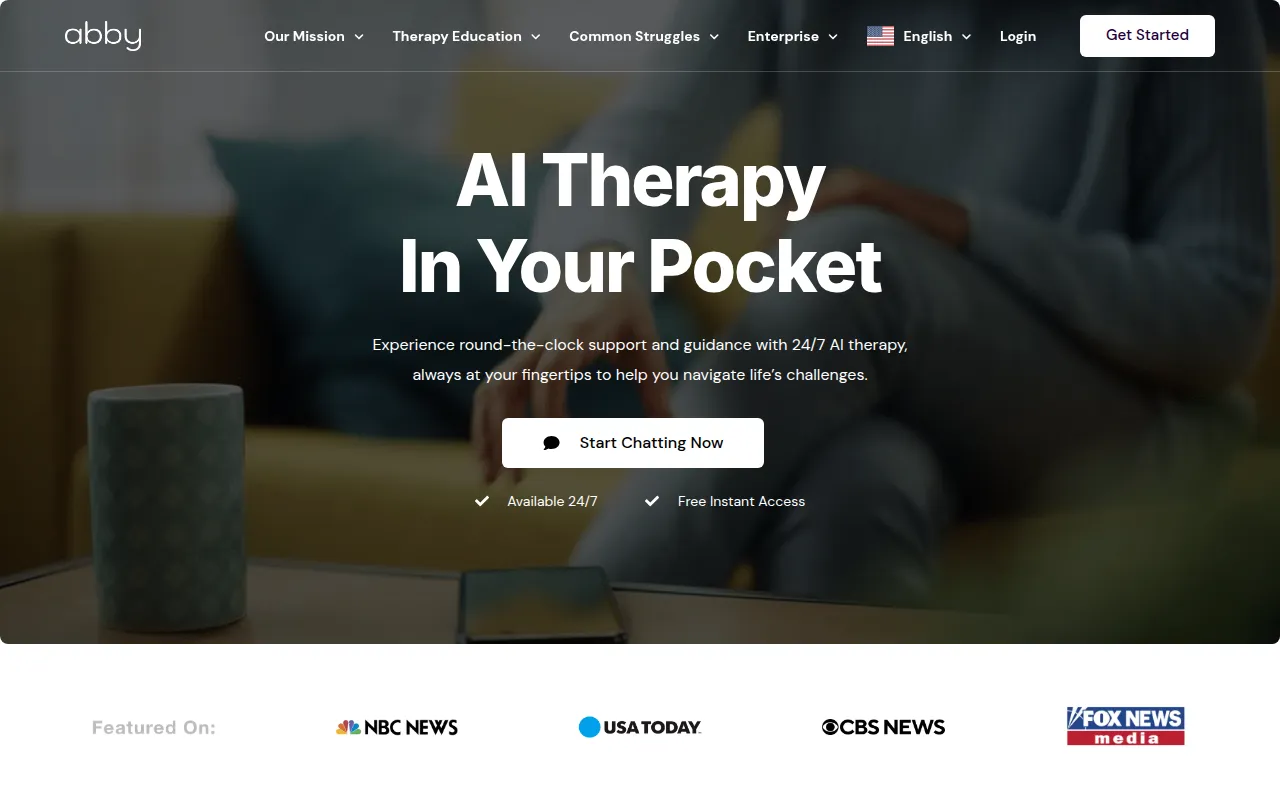
Abby
Abby is an AI-driven therapy tool designed to provide mental health support and guidance, available 24/7.
View Profile →

Abridge
Abridge provides generative AI solutions for healthcare documentation, enhancing clinical conversations and automating administrative tasks.
View Profile →Overview
This comparison article explores two innovative AI tools, Abby and Abridge, each serving distinct user needs. Abby targets individuals seeking mental health support with its AI-driven therapy capabilities, while Abridge focuses on healthcare professionals aiming to streamline documentation and improve clinical conversations. By examining both tools, we aim to help potential users make informed decisions based on their specific requirements.
Abby Overview
Abby is an AI-driven therapy tool designed to provide mental health support and guidance to users 24/7. This platform caters primarily to individuals who may not have immediate access to traditional therapy services or those seeking supplemental mental health support. Abby utilizes advanced algorithms to engage users in therapeutic conversations, offering coping strategies and emotional support tailored to individual needs. The user-friendly interface and accessibility make it an appealing option for anyone dealing with anxiety, depression, or general stress, especially in today's fast-paced world.
One of Abby's most notable strengths is its round-the-clock availability, ensuring that users can seek help whenever they need it, regardless of time or location. Additionally, by employing AI technology, Abby provides personalized responses based on user inputs, creating a more tailored experience compared to generic self-help resources. For example, a user dealing with work-related stress can receive specific advice on managing their workload and coping techniques that resonate with their unique circumstances. This capability positions Abby as a valuable resource for mental health support in an increasingly digital age.
Abridge Overview
Abridge is a generative AI solution tailored for healthcare documentation, designed to enhance clinical conversations and automate various administrative tasks. This tool primarily serves healthcare professionals, including doctors, nurses, and administrative staff, by reducing the burden of paperwork and allowing them to focus more on patient care. Abridge utilizes natural language processing to transcribe and summarize patient interactions, ensuring that essential information is accurately captured and easily accessible.
One of the standout features of Abridge is its ability to integrate seamlessly with existing electronic health record (EHR) systems, which can significantly streamline workflows for healthcare providers. For instance, a physician can engage in a detailed conversation with a patient, and Abridge will automatically document key points and relevant medical history, thus minimizing the time spent on administrative tasks. This allows healthcare professionals to improve their efficiency while enhancing the quality of patient interactions, ultimately leading to better healthcare outcomes.
Feature Comparison
| Feature | Abby | Abridge |
|---|---|---|
| Target Audience | Individuals seeking mental health support | Healthcare professionals and administrators |
| Availability | 24/7 access | Integration with scheduling systems |
| Core Functionality | AI-driven therapy conversations | Generative AI for documentation |
| User Interface | User-friendly, accessible on mobile | Integrated into EHR systems |
| Personalization | Tailored therapeutic responses | Customizable documentation templates |
| Support Resources | Self-help articles and resources | Training for healthcare staff |
| Data Security | Privacy-focused, but specifics not disclosed | Compliant with healthcare regulations |
| Language Support | Primarily English | Multilingual capabilities available |
| Offline Access | No | Dependent on EHR system capabilities |
| User Feedback Mechanism | Real-time user feedback feature | Clinical feedback loop for improvements |
Pricing Comparison
When it comes to pricing, both Abby and Abridge adopt a model that lacks publicly available specifics, making it challenging for potential users to gauge the financial commitment upfront. Abby offers a free trial, allowing users to test the platform without any immediate financial obligation. This approach is particularly beneficial for individuals who may be hesitant about investing in a mental health tool without experiencing its value first. However, details on any paid tiers or subscription models remain elusive, leaving users without a clear understanding of potential costs.
Abridge, on the other hand, operates on a contact basis for pricing, suggesting that potential customers need to reach out to the company for a custom quote. This usually indicates a more tailored approach suited for larger healthcare organizations or practices that require specific features or integrations. While this might be a common practice in the healthcare industry, it can be a barrier for smaller practices or independent providers who may need clearer pricing structures to make informed decisions.
In terms of value for money, individuals seeking mental health support may find Abby’s free trial a compelling advantage, allowing them to explore its therapeutic capabilities risk-free. Conversely, healthcare professionals considering Abridge might appreciate the potential for improved efficiency and documentation accuracy, although they will need to weigh this against the unknown costs of implementation.
Pros and Cons
Abby Pros and Cons
- Pro: 24/7 availability allows users to access support whenever needed.
- Pro: Tailored therapeutic responses cater to individual user needs.
- Pro: Free trial provides an opportunity to test the tool without commitment.
- Con: Limited information on pricing can lead to uncertainty for potential users.
- Con: May not replace the need for traditional therapy for severe mental health issues.
Abridge Pros and Cons
- Pro: Enhances clinical conversations and reduces administrative burden.
- Pro: Seamless integration with existing EHR systems improves workflow.
- Pro: Customizable documentation templates cater to diverse healthcare needs.
- Con: Pricing details are not publicly available, requiring potential users to inquire.
- Con: Dependent on EHR systems for full functionality, which may limit usability.
Which Should You Choose?
If you are an individual seeking mental health support, Abby may be the ideal choice for you. Its 24/7 accessibility and user-friendly interface offer a convenient way to engage with mental health resources without the stigma or barriers associated with traditional therapy. The free trial allows you to explore its capabilities before making any financial commitment, making it a great option for those new to mental health tools.
On the other hand, if you are a healthcare professional or part of a medical practice looking to enhance clinical documentation and reduce administrative tasks, Abridge is likely the better fit. Its ability to integrate with existing EHR systems can significantly streamline workflows, allowing you to focus more on patient care. While the pricing may be a consideration, the potential for improved efficiency and patient interaction quality can justify the investment.
Moreover, if you are part of a mental health organization looking to provide tools for your clients, Abby can be integrated into your service offerings to provide ongoing support to those you serve. Conversely, if you work in a healthcare setting that deals with high volumes of patient interactions, Abridge can help you maintain accurate records and free up time for more meaningful patient engagement.
Conclusion
In summary, both Abby and Abridge present unique advantages tailored to their respective audiences. Abby excels in providing accessible mental health support for individuals, while Abridge streamlines healthcare documentation for professionals. Depending on your specific needs, either tool could significantly enhance your mental health or healthcare experience, making it essential to evaluate your requirements carefully before making a decision.
Frequently Asked Questions
The choice between Abby and Abridge depends on your specific needs. Abby excels in providing mental health support through AI-driven therapy, while Abridge is tailored for healthcare professionals looking to enhance clinical documentation. If you need emotional guidance, Abby is superior; for medical documentation efficiency, Abridge stands out.
Abby's pricing typically includes subscription plans that vary based on features and access levels for therapy sessions. Abridge, on the other hand, offers pricing that is often tiered based on the volume of documentation processed or the number of users. It's essential to compare the specific pricing structures based on your usage needs.
Abby is best suited for individuals seeking mental health assistance, providing support for anxiety, depression, and emotional wellness. Abridge is designed for healthcare professionals, helping them document clinical conversations and streamline workflows, making it ideal for doctors and therapists focused on patient care.
When transitioning to Abby, users typically don't require data migration, as it's a standalone tool for personal use. However, Abridge may require some migration of existing documentation systems, so healthcare professionals should assess compatibility with their current EHRs or other documentation tools.
Abby may offer a free trial or limited access to its therapy services, allowing users to experience its features before committing. Abridge might provide a free tier that includes basic documentation tools, but users may need to upgrade for advanced features. It's important to evaluate what each free plan offers to determine which tool meets your needs.
A crucial tie-breaker is whether you prioritize personal mental health support or the efficiency of clinical documentation. If your primary focus is improving mental wellness, Abby is the better choice; if you're a healthcare professional focused on improving patient interactions and documentation, Abridge will serve you better.