

AI Home Design vs Figma
Discover the key differences between AI Home Design and Figma in 2026. Find out which design tool suits your needs best!

AI Home Design
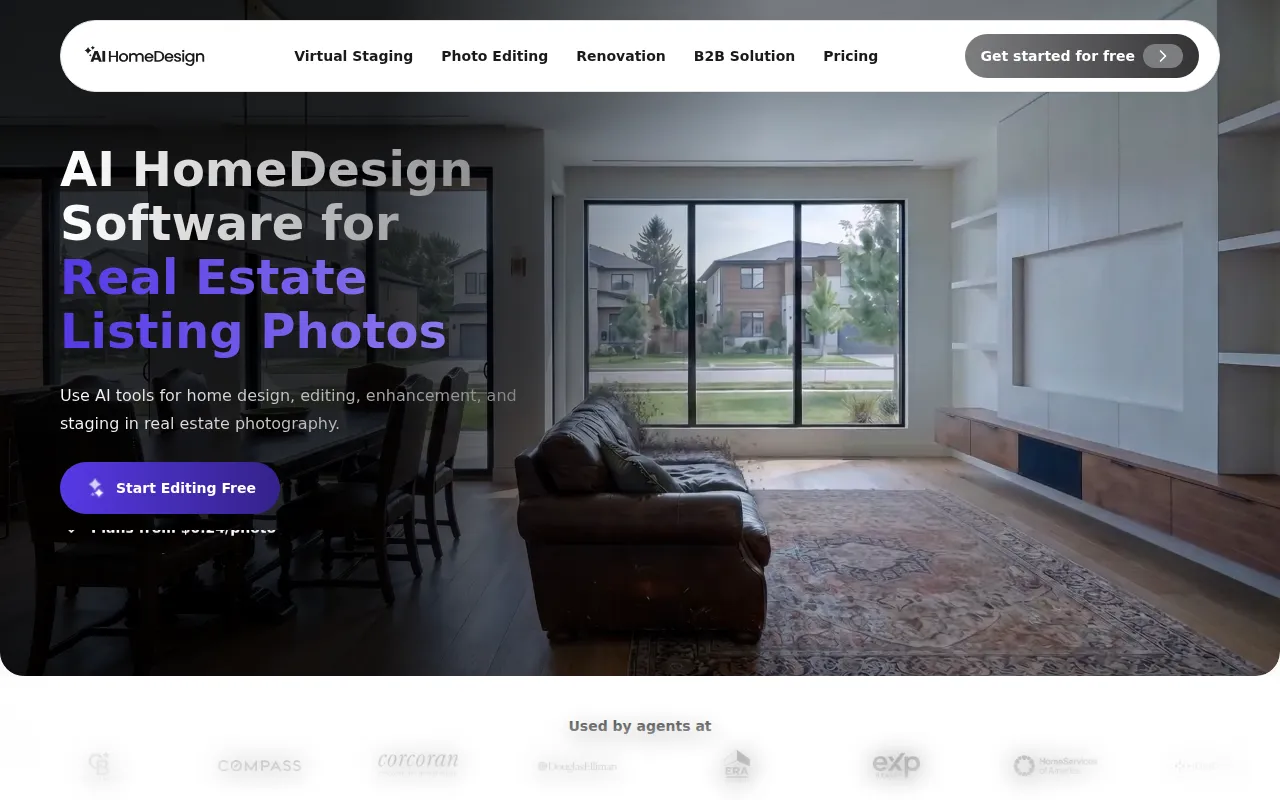
AI Home Design offers virtual staging and editing tools for real estate listing photos, enhancing property appeal quickly and affordably.
View Profile →
Figma
The collaborative design tool for teams. Design, prototype, and collaborate on UI/UX in real-time.
View Profile →Overview
In the realm of design tools, AI Home Design and Figma serve distinct user groups with unique needs. AI Home Design caters primarily to real estate professionals and property owners looking to enhance their property listings through virtual staging and photo editing. On the other hand, Figma is tailored for design teams and UX/UI professionals who require a collaborative environment for designing and prototyping digital products. This comparison will help users identify which tool aligns better with their specific design requirements.
AI Home Design Overview
AI Home Design is a cutting-edge tool that focuses on virtual staging and photo editing for real estate listings. Its primary use case is to make properties more appealing to potential buyers through enhanced visuals. The platform allows users to take ordinary photos of properties and transform them into stunning visuals that highlight the best features of each space. This is particularly valuable for real estate agents looking to attract buyers without the high costs associated with traditional staging. The user-friendly interface ensures that even those with minimal design experience can effectively enhance their listings.
One of the standout strengths of AI Home Design is its affordability and flexibility. With a freemium model, users can start with a free trial to test the waters before committing to paid services. Pricing starts at a mere $0.24 per photo, making it an attractive option for real estate professionals who may be working with tight marketing budgets. The speed of the editing process is another notable advantage; users can quickly enhance their photos and upload them to listings without significant delays, allowing for a more agile marketing strategy.
Figma Overview
Figma is a powerful collaborative design tool that caters to teams working on UI/UX projects. It allows users to design, prototype, and iterate in real-time, making it an essential platform for designers who prioritize teamwork and feedback. The core use case for Figma is to streamline the design process by enabling multiple users to work on the same project simultaneously, which fosters creativity and accelerates project timelines. Its web-based interface ensures accessibility, allowing team members to collaborate from different locations without the need for software installations.
One of Figma's most notable strengths is its prototyping capabilities. Designers can create interactive prototypes that simulate user experiences, making it easier to gather feedback and make necessary adjustments before final development. Additionally, Figma's extensive library of plugins and integrations enhances its functionality, providing users with tools for everything from accessibility checks to design system management. This versatility makes Figma a favorite among UX/UI professionals who require a comprehensive tool to manage the entire design workflow.
Feature Comparison
| Feature | AI Home Design | Figma |
|---|---|---|
| Virtual Staging | Yes, provides virtual staging options | No |
| Photo Editing Tools | Comprehensive editing features for real estate photos | Basic image manipulation features |
| Collaboration | Limited; primarily single-user focus | Real-time collaboration for multiple users |
| Prototyping | No | Advanced prototyping capabilities |
| Pricing Structure | Freemium, starting at $0.24 per photo | Freemium, free for 3 projects; paid plans available |
| User Interface | Simple and user-friendly | Sophisticated but requires learning curve |
| Integration with Other Tools | Some integrations available | Wide range of plugins and integrations |
| Target Users | Real estate professionals | Design teams and UX/UI professionals |
| Mobile Access | No mobile app | Mobile-friendly interface available |
| Templates and Assets | Limited templates for staging | Extensive library of design templates |
Pricing Comparison
When it comes to pricing, AI Home Design offers a straightforward freemium model that starts at $0.24 per photo after a free trial. This pricing structure is particularly appealing for real estate professionals who may only need to stage a few photos at a time, allowing them to control costs while still enhancing their listings. For those who frequently require virtual staging, purchasing credits in bulk may lead to additional savings. The transparency in pricing makes it easy for users to understand their potential expenses without hidden fees.
In contrast, Figma also employs a freemium model, allowing users to work on up to three projects for free. For larger teams or more complex projects, the pricing escalates to $15 per editor per month for the Professional plan and $45 per editor per month for the Organization plan. While Figma's pricing may seem higher, the value lies in its extensive collaboration features, advanced prototyping capabilities, and integration options that can significantly enhance the design workflow for teams. For companies looking to streamline their design processes and improve team collaboration, the investment may be justified.
Pros and Cons
AI Home Design Pros and Cons
- Pro: Affordable pricing structure, starting at $0.24 per photo, making it budget-friendly for real estate professionals.
- Pro: User-friendly interface that allows even those with minimal design skills to enhance property photos effectively.
- Pro: Quick turnaround time for photo enhancements, enabling rapid marketing of properties.
- Con: Limited collaborative features, which may not be ideal for teams needing to work together on projects.
- Con: Lacks advanced design features like prototyping and extensive editing tools found in more comprehensive design software.
Figma Pros and Cons
- Pro: Excellent real-time collaboration features that allow multiple users to work on the same design simultaneously.
- Pro: Advanced prototyping capabilities that facilitate user testing and feedback collection before development.
- Pro: Extensive library of plugins and integrations, enhancing functionality for design teams.
- Con: Higher pricing tiers that may be a barrier for freelancers or small teams on a tight budget.
- Con: The learning curve associated with its sophisticated features may be challenging for new users.
Which Should You Choose?
If you are a real estate agent or property owner looking to enhance listing photos quickly and affordably, AI Home Design is the obvious choice. Its focus on virtual staging and photo editing directly addresses the needs of real estate professionals, allowing you to showcase properties in the best light without significant investment or time commitment. The straightforward pricing and user-friendly interface make it accessible for individuals who may not have extensive design experience.
On the other hand, if you are part of a design team working on UI/UX projects, Figma is the superior option. Its collaborative capabilities enable seamless teamwork and feedback integration, essential for creating effective digital products. The advanced prototyping features allow your team to test user interactions and gather insights before the development phase, saving time and resources in the long run. The extensive library of design resources further enhances its value for professionals in the design field.
For freelancers who may work in both real estate and design, considering your primary focus will guide your decision. If your work leans more towards real estate marketing, AI Home Design will serve you better. However, if you find yourself frequently collaborating on design projects, investing in Figma could be worthwhile despite its higher price point. Ultimately, aligning your choice with your specific needs will lead to more effective outcomes.
Conclusion
In summary, both AI Home Design and Figma offer unique strengths tailored to different user needs. AI Home Design excels in virtual staging for real estate, while Figma shines in collaborative design for UX/UI projects. Depending on your primary focus, one will undoubtedly serve you better than the other, so assess your needs carefully before making a decision.
Frequently Asked Questions
The better tool depends on your specific needs. AI Home Design excels for real estate professionals focused on virtual staging, while Figma is ideal for collaborative digital product design.
AI Home Design typically offers a subscription model tailored for individual users or businesses, while Figma provides a free tier with limited features and paid plans that scale based on team size and needs.
AI Home Design is best for real estate staging and property enhancement, whereas Figma is suited for UI/UX design, allowing teams to collaborate on interfaces and prototypes.
When migrating, assess the compatibility of your existing projects, the learning curve for your team, and whether the new tool offers features that enhance your workflow compared to your current setup.
Figma offers a robust free plan that allows for collaborative editing and prototyping, while AI Home Design might have limited free trials or features, making Figma more advantageous for trying out collaborative tools.
Consider your primary design focus and try out both tools with their free trials or plans. Evaluate which tool aligns better with your specific workflow and project requirements.