

Google Analytics vs AI Trip Planner
Discover the key differences between Google Analytics and AI Trip Planner in 2026. Find out which tool suits your analytics needs best!
Google Analytics
Free and powerful web analytics. Track website traffic, user behavior, conversions, and marketing performance.
View Profile →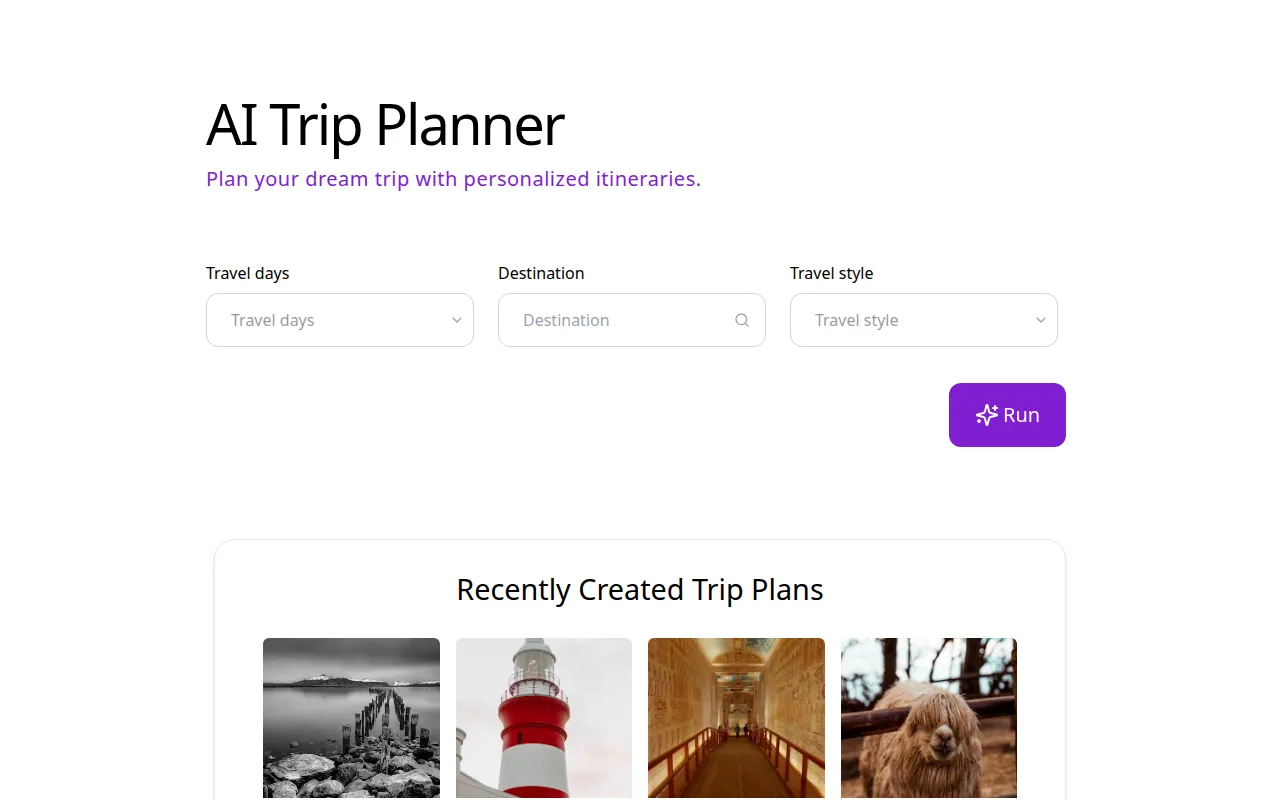
AI Trip Planner
AI Trip Planner is a productivity tool designed to help users plan trips efficiently using artificial intelligence.
View Profile →Overview
This comparison is tailored for users seeking effective tools for analytics and trip planning. Google Analytics serves businesses and marketers looking to track and analyze website performance, user behavior, and marketing effectiveness. In contrast, AI Trip Planner caters to travelers who want to streamline their trip planning process using artificial intelligence, making it easier to craft itineraries and manage bookings efficiently.
Google Analytics Overview
Google Analytics is a robust and free web analytics platform that enables users to track and analyze their website's traffic, user behavior, and conversion rates. Designed primarily for marketers, business owners, and webmasters, it provides deep insights into how users interact with websites. The tool's core use case revolves around understanding audience demographics, engagement metrics, and conversion goals, allowing businesses to adjust their strategies effectively. With features like real-time tracking, goal setting, and detailed reporting, Google Analytics empowers users to make data-driven decisions to enhance their online presence.
AI Trip Planner Overview
AI Trip Planner is an innovative productivity tool that leverages artificial intelligence to assist users in planning their travels efficiently. It is designed for travelers who seek to minimize the complexities of itinerary creation, hotel bookings, and activity scheduling. The tool's core use case revolves around using AI algorithms to suggest optimal travel routes, accommodations, and activities based on user preferences, budgets, and time constraints. By automating the planning process, AI Trip Planner helps users save time and reduce stress associated with trip organization.
One of the most significant strengths of AI Trip Planner is its personalized approach. The tool analyzes user input, such as preferred destinations and interests, to generate custom itineraries that cater to individual tastes. For example, a traveler interested in art history can receive suggestions for museums and galleries tailored to their interests, along with practical travel logistics. Moreover, the AI Trip Planner can adapt to changing circumstances, offering real-time adjustments based on weather conditions or unforeseen delays, ensuring a smooth travel experience.
Feature Comparison
| Feature | Google Analytics | AI Trip Planner |
|---|---|---|
| Primary Use Case | Website traffic and user behavior analysis | Trip planning and itinerary management |
| Integration Capabilities | Seamless integration with Google services | Limited third-party integrations |
| User Interface | Comprehensive dashboard with advanced features | User-friendly interface for easy navigation |
| Real-time Data | Offers real-time tracking of website performance | Provides real-time updates for travel plans |
| Customization Options | Highly customizable reports and dashboards | Personalized itineraries based on user preferences |
| Pricing Model | Free with optional enterprise solutions | Freemium model with no clear pricing |
| Analytics Depth | In-depth analytics with segmentation and reporting | Basic analytics focused on trip efficiency |
| Support | Extensive documentation and community support | Limited support resources available |
| Mobile Accessibility | Mobile-friendly interface with app support | Mobile app for on-the-go planning |
| User Target | Businesses, marketers, and webmasters | Travelers and trip planners |
Pricing Comparison
Google Analytics is known for its cost-effectiveness, as it is completely free for users, with the option of Google Analytics 360 available for enterprises seeking advanced features and support. The free version provides comprehensive tools for tracking website performance and user engagement, making it accessible to small businesses and individual marketers alike. The added features in Google Analytics 360 include more extensive data processing capabilities and enhanced support, which can be beneficial for larger organizations with complex analytical needs.
On the other hand, AI Trip Planner operates on a freemium pricing model, although specific pricing tiers are not explicitly listed on its website. This ambiguity could be a drawback for potential users seeking clarity on subscription costs. While the free version may offer basic functionalities, the lack of transparency regarding premium features can make it challenging to assess the tool's value for money. Users might find themselves needing to upgrade to unlock essential features, but without clear pricing, it is difficult to gauge the total cost of ownership.
Pros and Cons
Google Analytics Pros and Cons
- Pro: Completely free to use with robust features suitable for businesses of all sizes.
- Pro: Extensive integration capabilities with other Google tools enhance marketing efforts.
- Pro: Offers in-depth analytics and customizable reporting options for detailed insights.
- Con: The learning curve may be steep for beginners without prior analytics experience.
- Con: Real-time data can sometimes be delayed, impacting immediate decision-making.
AI Trip Planner Pros and Cons
- Pro: Uses artificial intelligence to create personalized travel itineraries efficiently.
- Pro: User-friendly interface makes trip planning straightforward and accessible.
- Pro: Provides real-time updates and adjustments, enhancing the travel experience.
- Con: Lacks clear pricing information, making it difficult to evaluate overall costs.
- Con: Limited integrations with other travel-related services may hinder its effectiveness.
Which Should You Choose?
If you are a digital marketer or business owner seeking to optimize your online presence, Google Analytics is your best choice. It provides powerful tools to analyze and enhance website performance, helping you make informed decisions based on user behavior. Its comprehensive analytics features will allow you to track conversions and assess the effectiveness of marketing campaigns, ultimately driving your business growth.
On the other hand, if you are a frequent traveler or an individual planning a vacation, AI Trip Planner would be more beneficial. This tool simplifies the trip planning process by using AI to generate tailored itineraries based on your preferences, saving you time and effort. The ability to receive real-time updates as you travel can significantly enhance your experience, making it easier to adapt plans on the go.
For small businesses or freelancers with limited budgets, Google Analytics is a more cost-effective option. Its free version offers extensive features that can help you track and improve your online performance without incurring additional costs. Meanwhile, if you are a travel agency or someone managing multiple trips simultaneously, investing in a premium version of AI Trip Planner may be worthwhile, provided the pricing aligns with your budget and needs.
Conclusion
In conclusion, both Google Analytics and AI Trip Planner serve distinct purposes and cater to different user needs. Google Analytics is a powerful tool for businesses aiming to optimize their online performance, while AI Trip Planner is ideal for travelers looking to streamline their trip planning. Ultimately, the choice between these tools should be guided by your specific objectives—whether enhancing website analytics or simplifying travel itineraries.
Frequently Asked Questions
The choice between Google Analytics and AI Trip Planner largely depends on your objectives. Google Analytics excels in providing detailed insights into website performance and user behavior, making it invaluable for businesses. On the other hand, AI Trip Planner is designed specifically for travelers, offering tailored solutions for itinerary creation and booking management.
Google Analytics offers a free tier with extensive features suitable for many users, while a premium version exists for enterprises needing advanced data analysis. AI Trip Planner may have subscription-based pricing with varying tiers based on features, but specifics can vary by provider.
Google Analytics is ideal for marketers and businesses looking to optimize their websites and track campaign performance. In contrast, AI Trip Planner is perfect for travelers who want to automate their trip planning, allowing them to create personalized itineraries and manage travel logistics easily.
When considering migration, assess your data needs and how transitioning will impact your workflow. Moving from Google Analytics to AI Trip Planner may require a shift in focus from data analysis to travel logistics, while the reverse could mean adapting to more analytical tasks.
Google Analytics offers a comprehensive free plan that includes a wide range of features for tracking and analysis. AI Trip Planner's free offerings may be limited and vary by provider, so it's important to compare the features available in each free plan to see which meets your needs.
Consider the primary goal of your project. If your focus is on website performance and marketing insights, Google Analytics is the clear choice. However, if your priority is to simplify travel planning and manage itineraries more effectively, then AI Trip Planner would be better suited for your needs.