

Mailchimp vs Notion
Discover the key differences between Mailchimp and Notion in 2026. Find out which marketing tool suits your needs best!

Mailchimp
The leading email marketing platform. Create, send, and analyze email campaigns with powerful automation.
View Profile →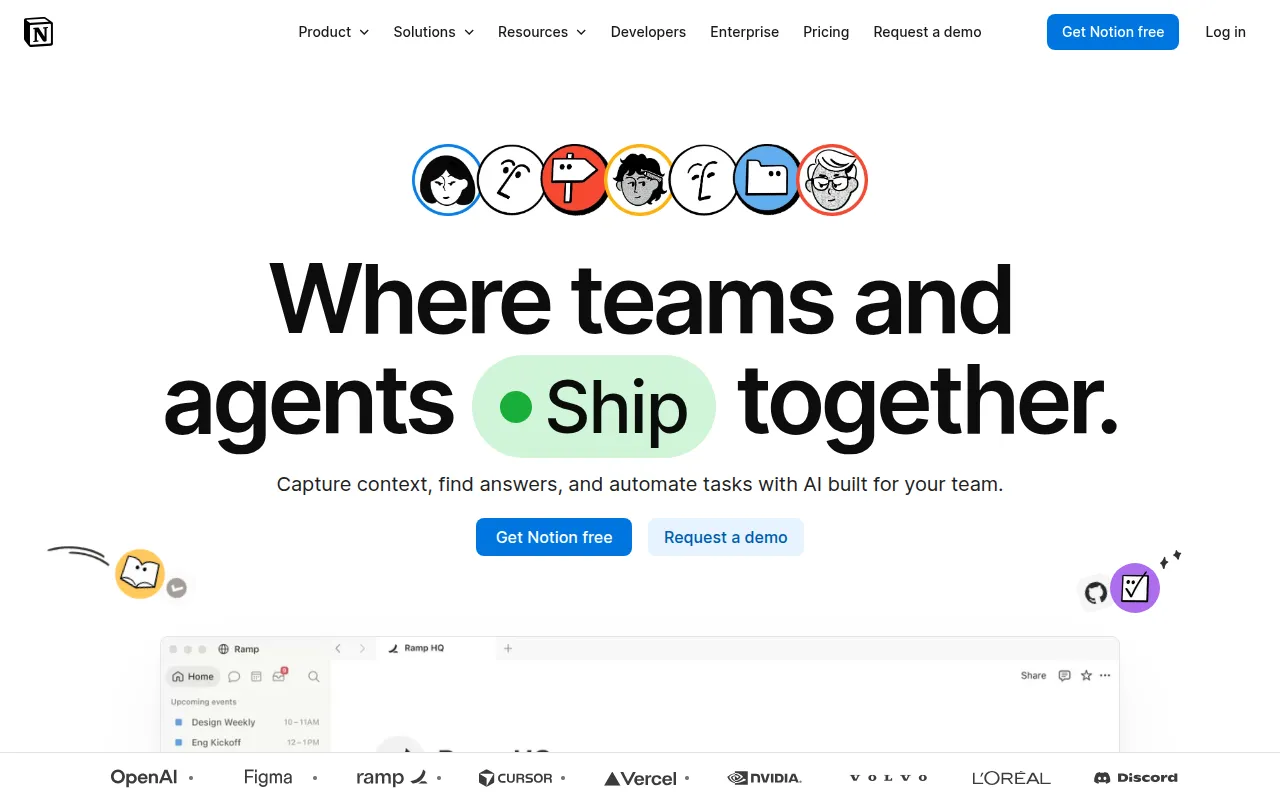
Notion
All-in-one workspace for notes, tasks, wikis, and databases. The best tool for personal productivity and team collaboration.
View Profile →Overview
This comparison article explores two powerful tools: Mailchimp and Notion. While Mailchimp serves those in need of email marketing solutions, Notion is tailored for users looking to enhance personal productivity and team collaboration. Understanding the differences between these platforms will help users choose the right tool based on their specific needs.
Mailchimp Overview
Mailchimp is a leading email marketing platform designed for businesses and individuals who want to create, send, and analyze email campaigns with ease. It provides a robust suite of tools aimed at automating marketing workflows, making it particularly useful for marketers, small business owners, and content creators looking to engage their audience effectively. One of its most notable strengths is its user-friendly interface, which allows even those with minimal technical skills to create visually appealing emails and landing pages. Additionally, Mailchimp offers advanced analytics that helps users track the performance of their campaigns, enabling data-driven decision-making.
With features such as customizable email templates, automation workflows, and A/B testing capabilities, Mailchimp empowers users to optimize their marketing efforts. The platform also integrates seamlessly with various third-party applications, enhancing its functionality and making it a versatile choice for different marketing needs. For instance, a small business owner can easily set up automated welcome emails for new subscribers, ensuring consistent engagement from the start. Overall, Mailchimp stands out as a comprehensive solution for anyone looking to harness the power of email marketing.
Notion Overview
Notion is an all-in-one workspace that combines notes, tasks, wikis, and databases into a single platform. It is particularly designed for individuals and teams looking to boost productivity and streamline collaboration. With its flexible structure, users can create custom workflows that suit their specific needs, making it an ideal choice for project managers, students, and creative teams. Notion's strength lies in its ability to adapt to various use cases, from simple note-taking to complex project management.
One of Notion's standout features is its capability to create interconnected databases, allowing users to organize information in a way that makes sense for them. For instance, a team can create a project tracker that links to relevant documents and tasks, providing a comprehensive view of their progress. Additionally, Notion's collaborative features enable real-time editing and commenting, making it easy for teams to work together efficiently. Overall, Notion serves as a powerful tool for anyone looking to enhance their organizational skills and improve team collaboration.
Feature Comparison
| Feature | Mailchimp | Notion |
|---|---|---|
| Email Campaign Creation | Easy-to-use drag-and-drop editor with customizable templates | N/A |
| Automated Workflows | Advanced automation for follow-ups and segmented campaigns | Automations for task reminders and notifications |
| Analytics and Reporting | Detailed reports on open rates, click rates, and engagement | Basic analytics on page views and task completion |
| Integrations | Wide range of integrations with e-commerce, CRMs, and social media | Integrates with various productivity tools, but less extensive |
| Templates | Numerous email templates available | Customizable templates for notes, wikis, and databases |
| Collaboration Features | Limited collaboration features for team members | Real-time collaboration and commenting capabilities |
| Task Management | Basic task management through email reminders | Comprehensive task management with kanban boards and calendars |
| Mobile App | Robust mobile app for managing campaigns on the go | Fully functional mobile app for productivity tasks |
| Free Plan | Free for up to 500 contacts with limited features | Free for personal use with basic features |
| Pricing Flexibility | Multiple pricing tiers based on features and contact lists | Flexible plans based on users with collaborative features |
Pricing Comparison
Both Mailchimp and Notion offer freemium models, allowing users to start without upfront costs. Mailchimp's free plan is available for up to 500 contacts, providing essential email marketing features. For those looking for more advanced capabilities, the Essentials plan starts at $13 per month, while the Standard plan begins at $20 per month, each offering progressively more features tailored for growing businesses. This tiered pricing structure accommodates users at different stages of their marketing journey, making it accessible for small startups as well as larger enterprises.
Notion also has a free plan tailored for personal use, which includes basic functionalities that are sufficient for individual productivity. For teams, the Plus plan costs $10 per month, while the Team plan is priced at $15 per user per month, offering enhanced collaborative features and administrative controls. Notion's pricing model is particularly advantageous for teams, as it scales with the number of users rather than the features, providing a cost-effective solution for organizations looking to improve collaboration and efficiency.
Pros and Cons
Mailchimp Pros and Cons
- Pro: Intuitive interface that simplifies email campaign creation.
- Pro: Advanced automation features that enhance marketing efficiency.
- Pro: Comprehensive analytics for tracking campaign success.
- Con: Higher pricing tiers can be costly for larger contact lists.
- Con: Limited collaboration features for teams compared to other tools.
Notion Pros and Cons
- Pro: Highly customizable workspace that adapts to various needs.
- Pro: Excellent collaboration features for team projects.
- Pro: Comprehensive task management capabilities.
- Con: Can be overwhelming for new users due to its flexibility.
- Con: Limited built-in analytics compared to dedicated marketing tools.
Which Should You Choose?
If you are a small business owner focused on email marketing, choose Mailchimp. Its user-friendly design and powerful automation features will help you engage your audience effectively and drive conversions. With its comprehensive analytics, you can easily track the success of your campaigns and make data-driven adjustments.
If you are a student or a freelancer who needs a tool for personal organization, Notion is the better choice. Its flexibility allows you to create a tailored workspace that caters to your unique needs, whether you are taking notes, managing tasks, or collaborating on projects. The real-time collaboration features are especially beneficial for team projects.
For teams working on collaborative projects, Notion stands out due to its excellent team collaboration features. The ability to create interconnected databases and shared workspaces can significantly enhance productivity and communication among team members. If your focus is on project management and organization rather than marketing, Notion will serve you better.
Ultimately, if you require both email marketing and productivity tools, consider using both platforms in conjunction. Mailchimp can handle your marketing needs, while Notion can facilitate your organizational tasks. This combination can provide a comprehensive solution for your business or personal projects.
Conclusion
In conclusion, both Mailchimp and Notion serve distinct purposes and excel in their respective areas. If your primary objective is to implement effective email marketing campaigns, Mailchimp is the clear choice. Conversely, if you are looking to boost your personal productivity or enhance team collaboration, Notion is the way to go. Assess your specific needs to make an informed decision that aligns with your goals.
Frequently Asked Questions
It depends on your goals. Mailchimp excels in email marketing with advanced automation and analytics features, while Notion offers versatile tools for project management and collaboration. If your focus is on marketing, Mailchimp is likely the better choice; for productivity and organization, Notion stands out.
Mailchimp offers a tiered pricing model based on the number of subscribers and features, starting with a free plan for small lists. Notion, on the other hand, provides a free version with limited features and a monthly subscription for advanced capabilities. Depending on your needs, one may be more cost-effective than the other.
Mailchimp is ideal for businesses looking to run targeted email campaigns, manage mailing lists, and analyze customer engagement. In contrast, Notion is perfect for teams and individuals wanting to create collaborative documents, manage tasks, and track projects all in one place.
When migrating from Mailchimp to Notion or vice versa, consider the type of data you have and how it will be used in the new platform. For example, if you're moving from Mailchimp, you'll need to export your email lists and campaign data, while transitioning to Notion may involve rethinking how you organize and collaborate on your projects.
Mailchimp's free plan allows for up to 500 subscribers and basic email functionalities, making it suitable for small businesses starting out. Notion's free plan provides users with unlimited pages and blocks but limits certain features, making it ideal for personal use or small teams. Evaluating your needs will help determine which free plan is more beneficial.
Ask yourself: 'Do I prioritize effective email communication and marketing strategies, or do I need an all-in-one workspace for notes, tasks, and collaboration?' This fundamental question can guide your decision based on your core requirements.