Overview
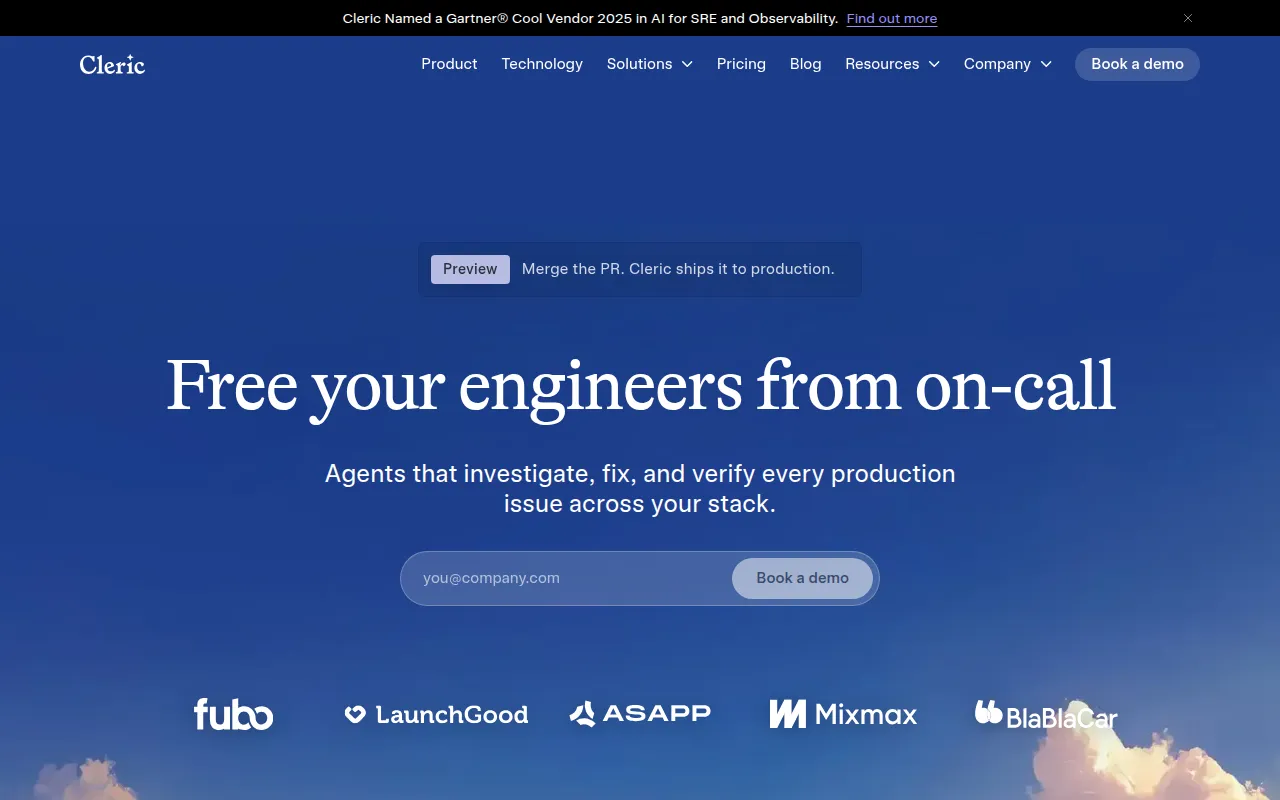
Cleric is an innovative AI-driven Site Reliability Engineering (SRE) tool designed to enhance incident management and resolution processes within engineering teams. Its primary purpose is to capture and utilize operational knowledge, enabling teams to resolve production issues more efficiently. By learning from past incidents, Cleric builds a knowledge graph that reflects the unique behaviors and failure modes of an organization’s systems, making future investigations faster and more effective. This addresses the common challenges of knowledge retention and incident resolution in fast-paced production environments.
Key Features
- Self-learning AI SRE that captures tribal knowledge from incidents
- Investigates production issues and creates a knowledge graph
- Provides structured investigations from alerts and support tickets
- Proposes fixes and manages the deployment process to production
- Reflects on investigations to enhance operational memory
- Reduces time to root cause significantly
- Offers actionable insights with a high percentage of findings
- Designed for seamless integration into existing workflows and tools
Benefits
Cleric provides significant practical advantages for engineering teams. By automating the incident investigation process, it reduces the workload on engineers, allowing them to focus on proactive engineering tasks rather than reactive issue resolution. The self-learning capability of Cleric means that the tool continuously improves its efficiency, leading to quicker resolutions and less downtime. Additionally, the operational memory feature ensures that valuable knowledge is not lost but rather built upon, fostering a culture of learning within teams.
Common Use Cases
Cleric is particularly useful in scenarios where engineering teams frequently encounter production incidents. For example, a software development team managing a complex cloud-based application can utilize Cleric to streamline their incident management process, ensuring that repeated issues are resolved faster. Another use case is in organizations that experience high alert volumes, where Cleric can help filter out noise and focus on critical incidents needing attention. Teams looking to improve their incident response times while accumulating knowledge for future situations will find Cleric beneficial.
Who Should Use It
Cleric is ideal for medium to large engineering teams who face challenges with incident management and knowledge retention. It is particularly suited for organizations that prioritize operational excellence and are looking for ways to enhance their SRE capabilities. However, smaller teams or those with limited production incidents may find the tool's capabilities excessive for their needs, making simpler solutions more appropriate.
Pricing Overview
Cleric follows a unique pricing model where users pay based on the work completed rather than on tokens or subscriptions, ensuring that costs align with actual usage. Specific pricing details are available on the Cleric website.
Conclusion
In summary, Cleric offers a robust solution for engineering teams seeking to improve their incident management processes through AI-driven insights and operational memory. While it provides many advantages, its suitability depends on the size and needs of the organization. Teams facing frequent production issues will likely find significant value in adopting Cleric to enhance their responsiveness and learn from past incidents.