Why Look for Alternatives to Cranium?
Despite being a notable player in the AI security and governance arena, Cranium has garnered some criticism from users regarding its pricing structure and feature limitations. Currently, pricing information for Cranium remains unavailable on their website, which can be a significant deterrent for organizations looking to budget effectively for security tools. Furthermore, potential users have reported that Cranium might not cover certain specific use cases effectively, particularly in areas requiring deep integration with existing enterprise systems. This lack of clarity around cost and functionality can lead organizations to seek out alternatives that provide more transparent pricing and tailored solutions.
Additionally, while Cranium excels in managing AI risks, it may fall short in specialized domains such as data security and vendor risk management. Users who require comprehensive solutions that span multiple facets of security governance often find themselves needing more robust capabilities than what Cranium offers. This has led many businesses to explore alternatives that can better address their unique compliance needs, data protection requirements, and the complexity of managing third-party vendor risks. In this evolving landscape, organizations are increasingly prioritizing tools that not only deliver on core governance features but also integrate seamlessly with other security measures.
Best Alternatives to Cranium in 2026
Zenity - Best for Secure AI Governance
Zenity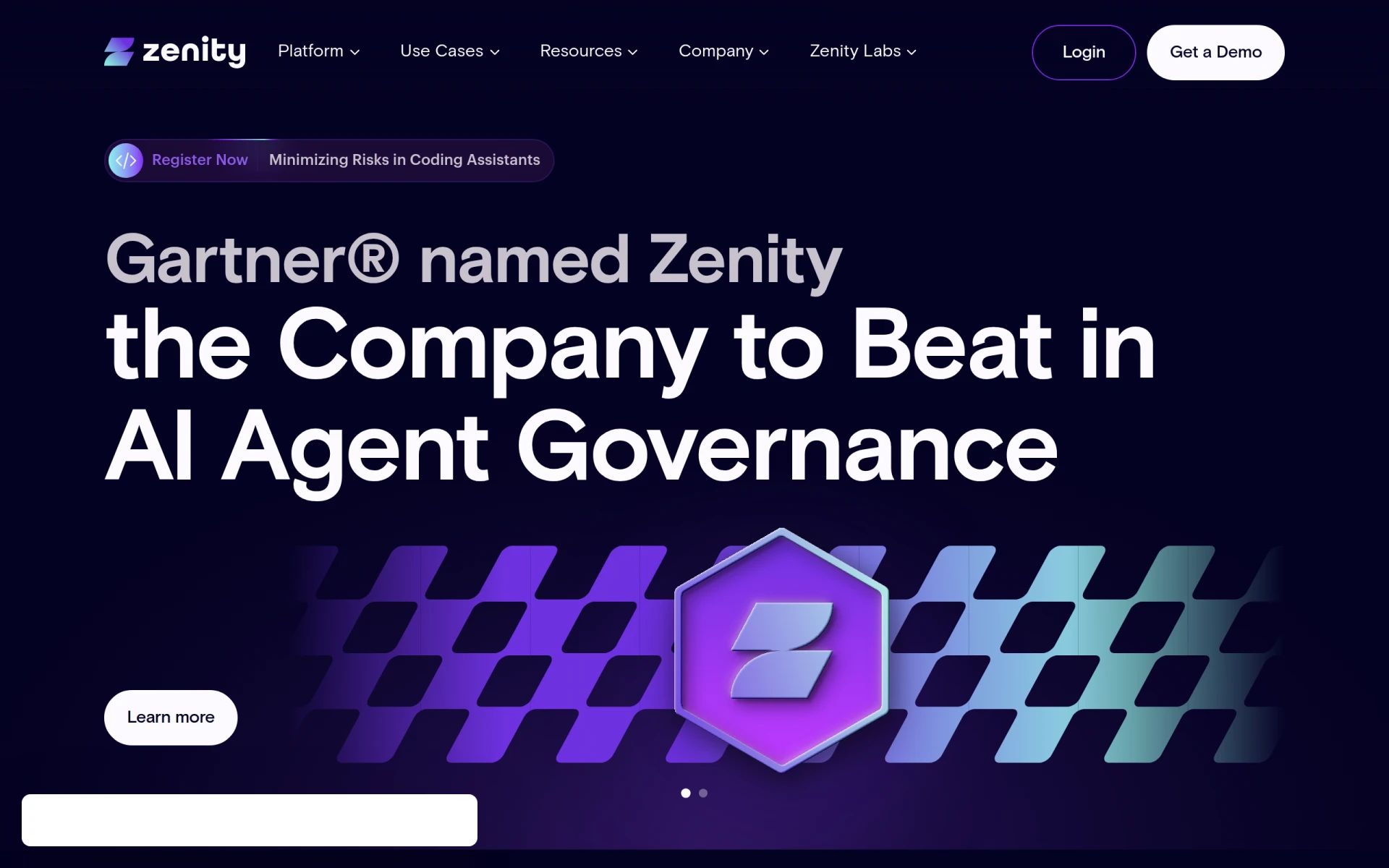 is a formidable alternative to Cranium, particularly for organizations focused on secure AI governance. Unlike Cranium, which primarily emphasizes risk management, Zenity offers comprehensive tools that minimize risks associated with AI applications while enhancing decision-making processes within enterprises. This makes it an ideal choice for organizations that rely heavily on AI technologies and need a governance platform that can adapt to their evolving needs. Zenity’s focus on automated compliance and risk minimization can significantly streamline operations, providing users with a clearer understanding of their AI governance landscape.
Organizations that choose Zenity will benefit from its intuitive user interface and straightforward integration capabilities, which allow for easy deployment across existing systems. The platform's unique features, such as real-time monitoring and customizable risk frameworks, enable organizations to oversee their AI agents effectively, ensuring compliance with industry standards. This level of oversight is something Cranium struggles to match, making Zenity a compelling option for businesses seeking a robust AI governance solution.
- Key Strength: Real-time monitoring of AI agents enhances compliance oversight.
- Key Strength: Customizable risk frameworks tailored to specific enterprise needs.
- Key Strength: Smooth integration with existing enterprise systems.
- Limitation: Limited customer support options reported by some users.
Pricing: Contact for details. Best for: Enterprises focused on AI governance and compliance.
Privacera - Best for Data Security and Governance
Privacera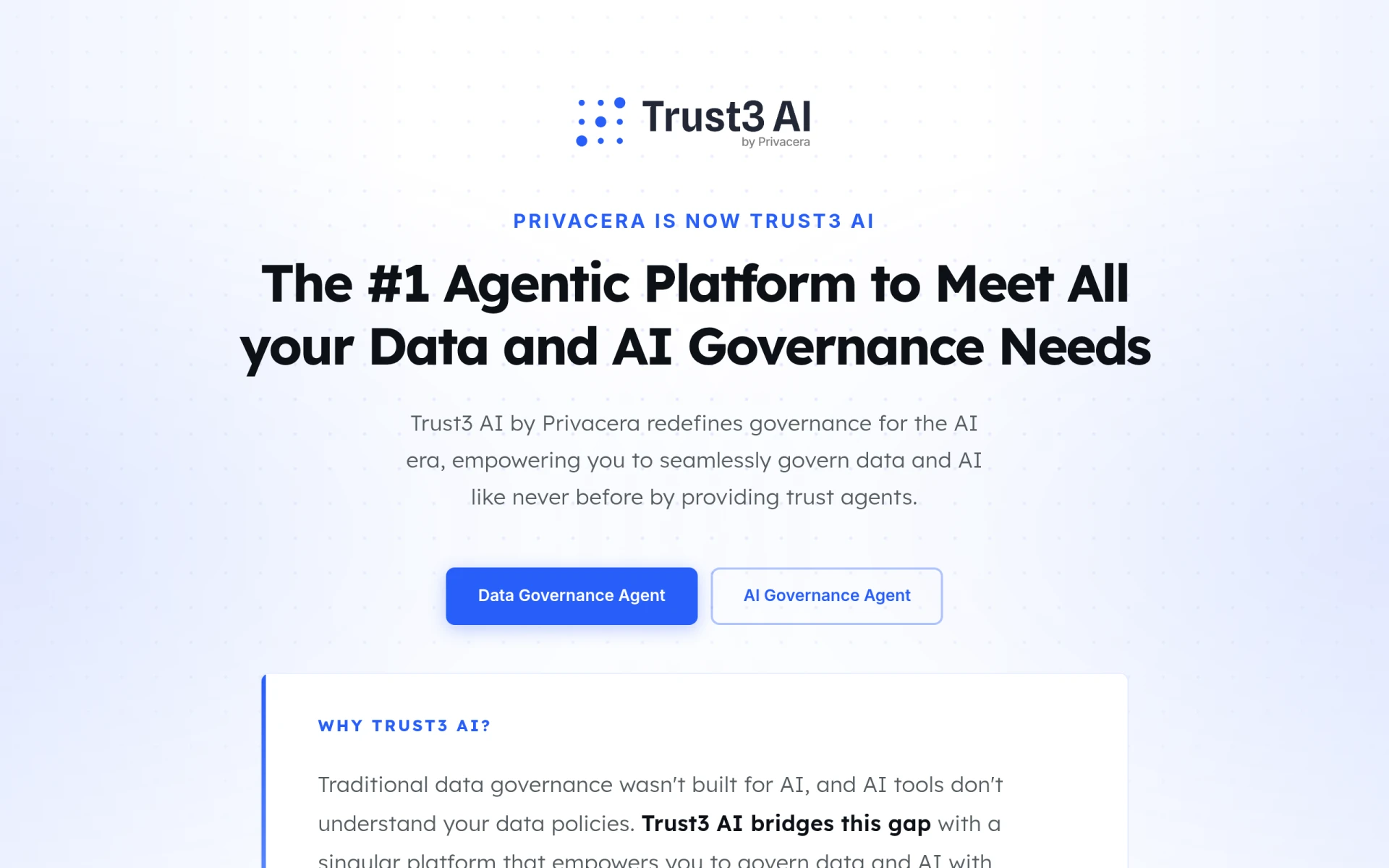 stands out as an excellent alternative to Cranium, especially for organizations prioritizing data security and access governance. With its advanced Trust3 AI technology, Privacera excels at protecting sensitive data across cloud environments, making it particularly suitable for companies that manage vast amounts of data and require stringent governance measures. Unlike Cranium, which provides a more generalized approach to AI risks, Privacera's focus on data-centric security enables organizations to implement precise controls and policies tailored to their specific requirements.
Furthermore, Privacera's capabilities extend beyond simple governance; it provides automated compliance reporting and auditing features. This means that organizations can not only enforce data access policies but also easily demonstrate compliance with regulatory standards. For businesses that face stringent data protection regulations, this feature is invaluable. Comparatively, Cranium may not offer the same depth of data-centric governance, making Privacera a superior choice for organizations with complex data environments that require enhanced security protocols.
- Key Strength: Advanced Trust3 AI technology for data protection.
- Key Strength: Automated compliance reporting and auditing capabilities.
- Key Strength: Tailored data access policies for sensitive information.
- Limitation: Pricing information is not readily available, requiring direct inquiry.
Pricing: Contact for details. Best for: Organizations needing robust data security and compliance solutions.
Vendict - Best for Vendor Risk Management
Vendict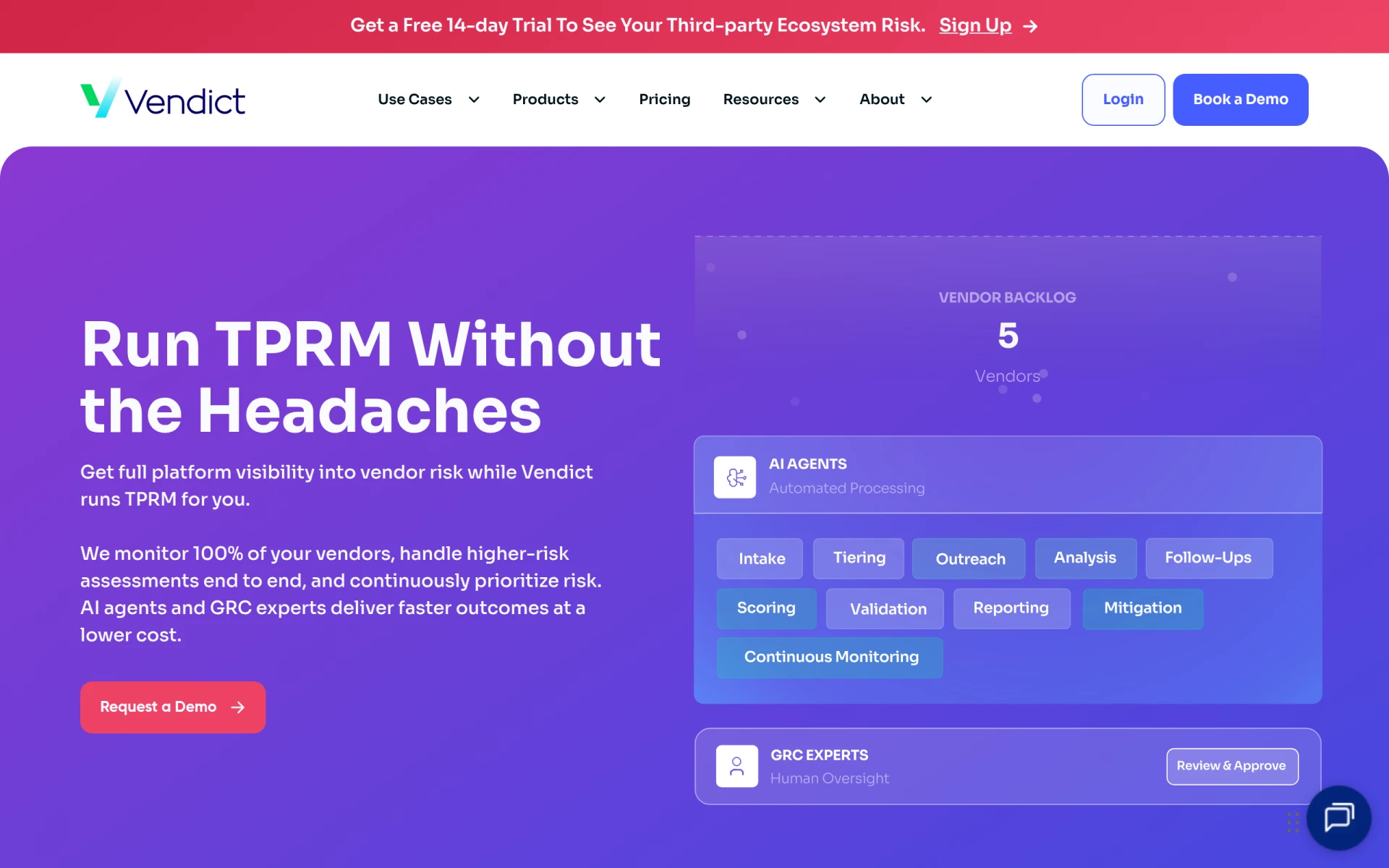 emerges as a strong alternative for organizations looking to enhance their vendor risk management capabilities. Specifically designed for managing third-party vendor risks, Vendict provides a comprehensive framework for conducting security compliance reviews. Unlike Cranium, which primarily focuses on AI risk management, Vendict offers specialized tools that allow organizations to assess and mitigate risks associated with their vendor relationships, making it an essential tool for businesses that rely heavily on third-party services.
What sets Vendict apart is its AI-native platform that automates the vendor risk assessment process, reducing the time and resources needed to perform thorough compliance checks. This efficiency is vital for organizations that face a multitude of vendor partnerships and need to ensure that each one meets their security standards. Cranium may not provide the same level of granularity in vendor risk management, making Vendict a superior choice for organizations looking to enhance their overall security posture through improved vendor oversight.
- Key Strength: Automated vendor risk assessment processes save time and resources.
- Key Strength: Comprehensive compliance review tools tailored for vendors.
- Key Strength: Strong focus on third-party risk management.
- Limitation: Requires a demo to access pricing information.
Pricing: Contact for details. Best for: Organizations with extensive third-party vendor relationships.
Nullify AI - Best for Autonomous Security Solutions
Nullify AI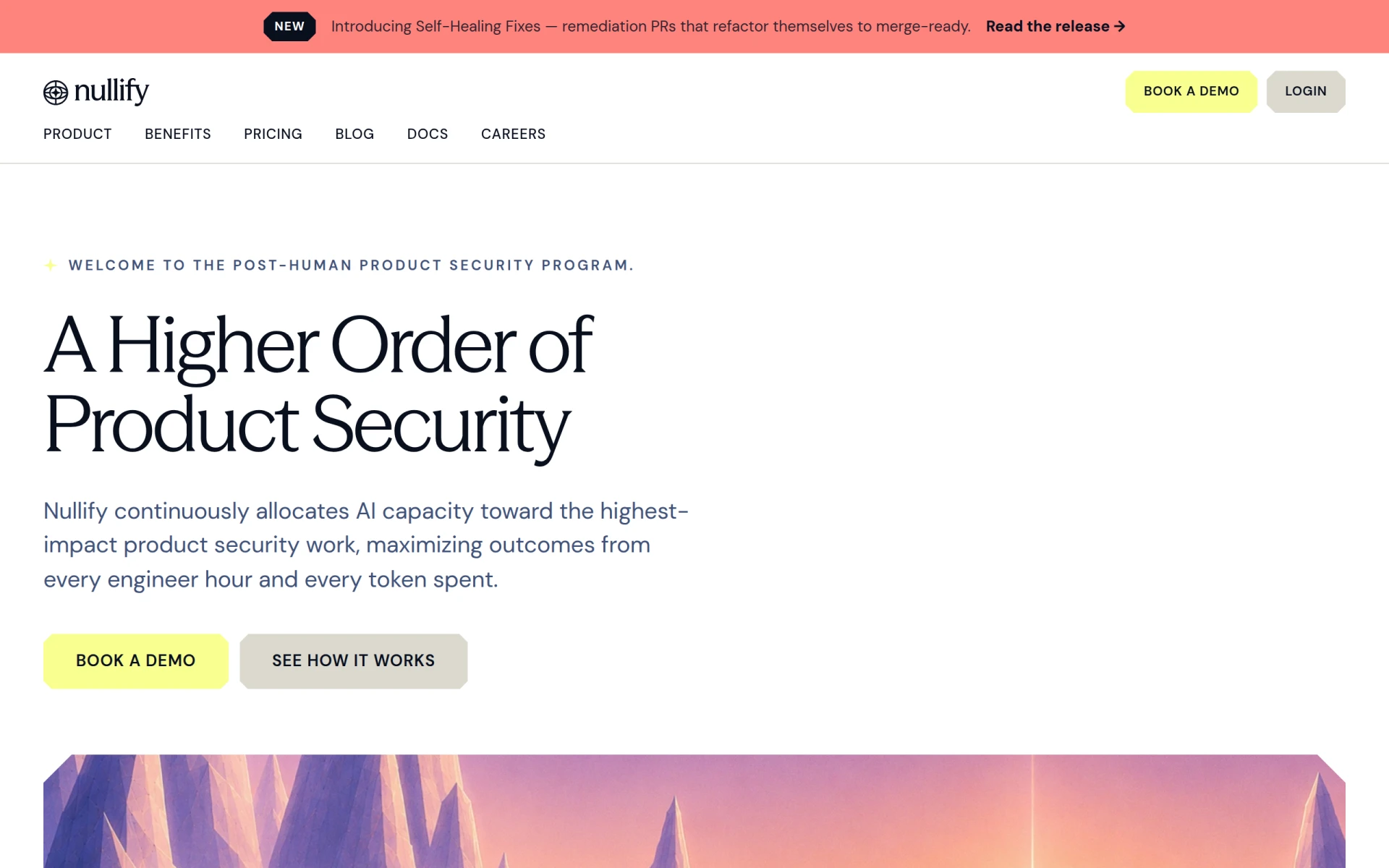 positions itself as an excellent alternative for organizations seeking autonomous product security solutions. Through its innovative approach, Nullify AI streamlines remediation processes, enhancing overall security efficiency. This focus on automation sets it apart from Cranium, which may not provide the same level of automation in security workflows. For organizations that deal with complex security environments and require quick remediation of vulnerabilities, Nullify AI presents a compelling solution.
Moreover, Nullify AI’s autonomous features not only improve efficiency but also reduce the potential for human error in security processes. This is particularly beneficial in high-stakes environments where security lapses can lead to significant consequences. Cranium's offerings may not include such advanced automation, making Nullify AI an attractive option for businesses looking to enhance their security operations with cutting-edge technology.
- Key Strength: Streamlined remediation processes through automation.
- Key Strength: Enhanced overall security efficiency and reduced human error.
- Key Strength: Innovative autonomous security features.
- Limitation: Pricing information is not available publicly.
Pricing: Contact for details. Best for: Organizations seeking advanced autonomous security solutions.
PVML - Best for AI-Ready Data Management
PVML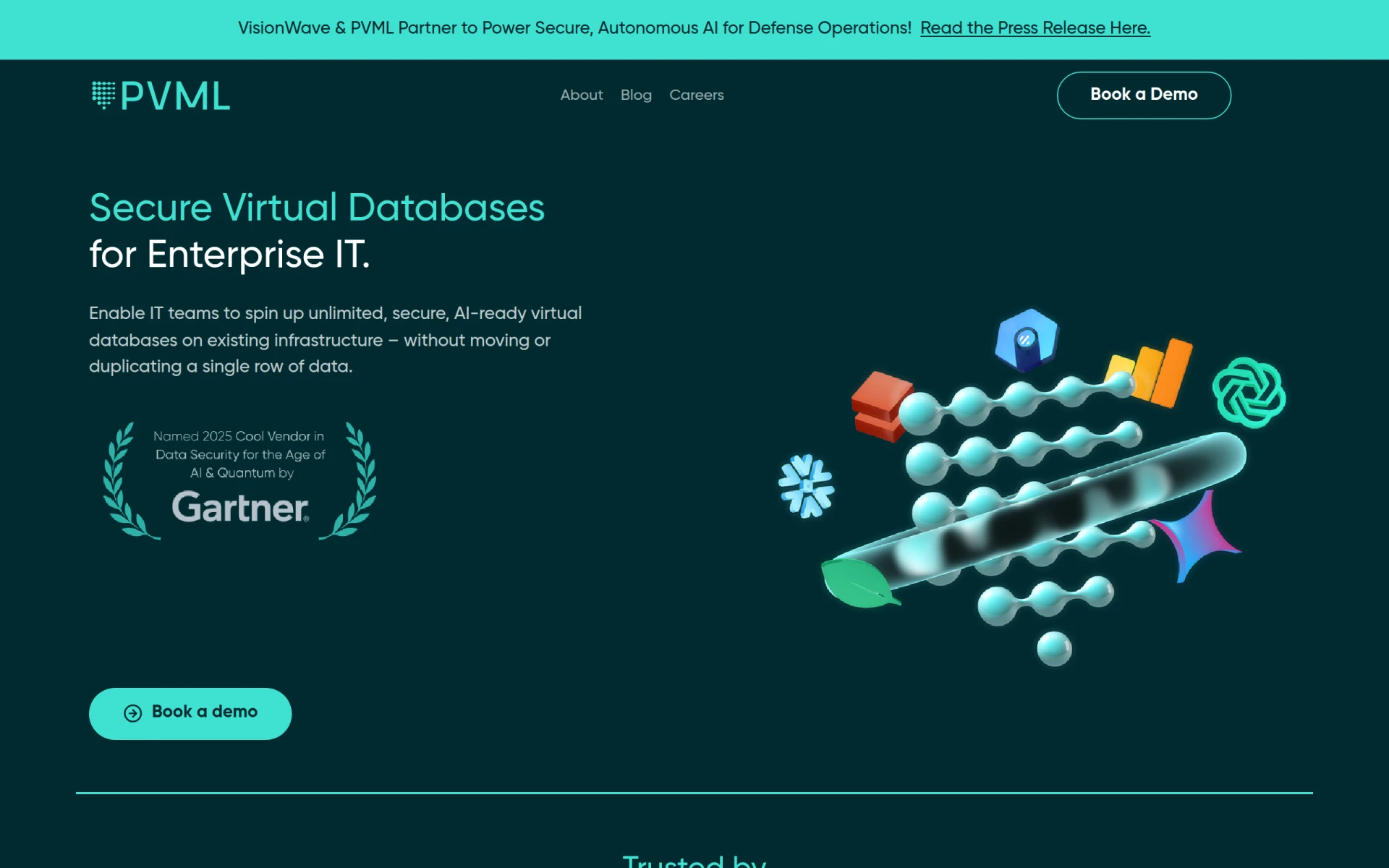 offers a unique angle in the realm of AI security tools, specializing in providing secure, AI-ready virtual databases. This capability is particularly important for organizations looking to manage data access without the complexities of moving or duplicating data. In contrast to Cranium, which primarily focuses on governance and risk management, PVML emphasizes efficient data management tailored for AI applications. This makes it an ideal choice for organizations that require secure data operations without compromising accessibility.
The ability to manage data access seamlessly allows organizations to maintain operational efficiency while ensuring data security, a feature that many users have found lacking in Cranium’s offerings. By opting for PVML, organizations can leverage a more flexible and secure data management approach, which is essential for businesses that prioritize data integrity and security in their AI initiatives.
- Key Strength: Secure, AI-ready virtual databases for data management.
- Key Strength: No need for data movement or duplication.
- Key Strength: Enhanced operational efficiency in data access.
- Limitation: Users must contact for pricing details.
Pricing: Contact for details. Best for: Organizations focused on secure data management for AI.
Bricklayer AI - Best for Coordinated Security Operations
Bricklayer AI offers a coordinated AI workforce that significantly enhances security operations centers (SOCs). This platform is ideal for organizations looking to bolster their threat management and incident response capabilities. Unlike Cranium, which may not provide the level of operational coordination needed for effective SOC operations, Bricklayer AI focuses on integrating various security elements into a cohesive strategy. This makes it a top choice for companies that require a more synchronized approach to security management.
The platform's ability to streamline communication and processes within security teams allows organizations to respond more effectively to incidents and threats. By fostering greater collaboration, Bricklayer AI enhances the overall security posture of organizations, making it a valuable alternative for businesses that prioritize comprehensive security operations. This level of integration and operational efficiency might not be fully realized with Cranium, further highlighting Bricklayer AI's strengths.
- Key Strength: Coordinated AI workforce enhances SOC effectiveness.
- Key Strength: Streamlined communication for improved incident response.
- Key Strength: Comprehensive approach to threat management.
- Limitation: Pricing information is not publicly available.
Pricing: Contact for details. Best for: Organizations seeking enhanced threat management through SOC coordination.
Picogrid - Best for Integrated Security Systems
Picogrid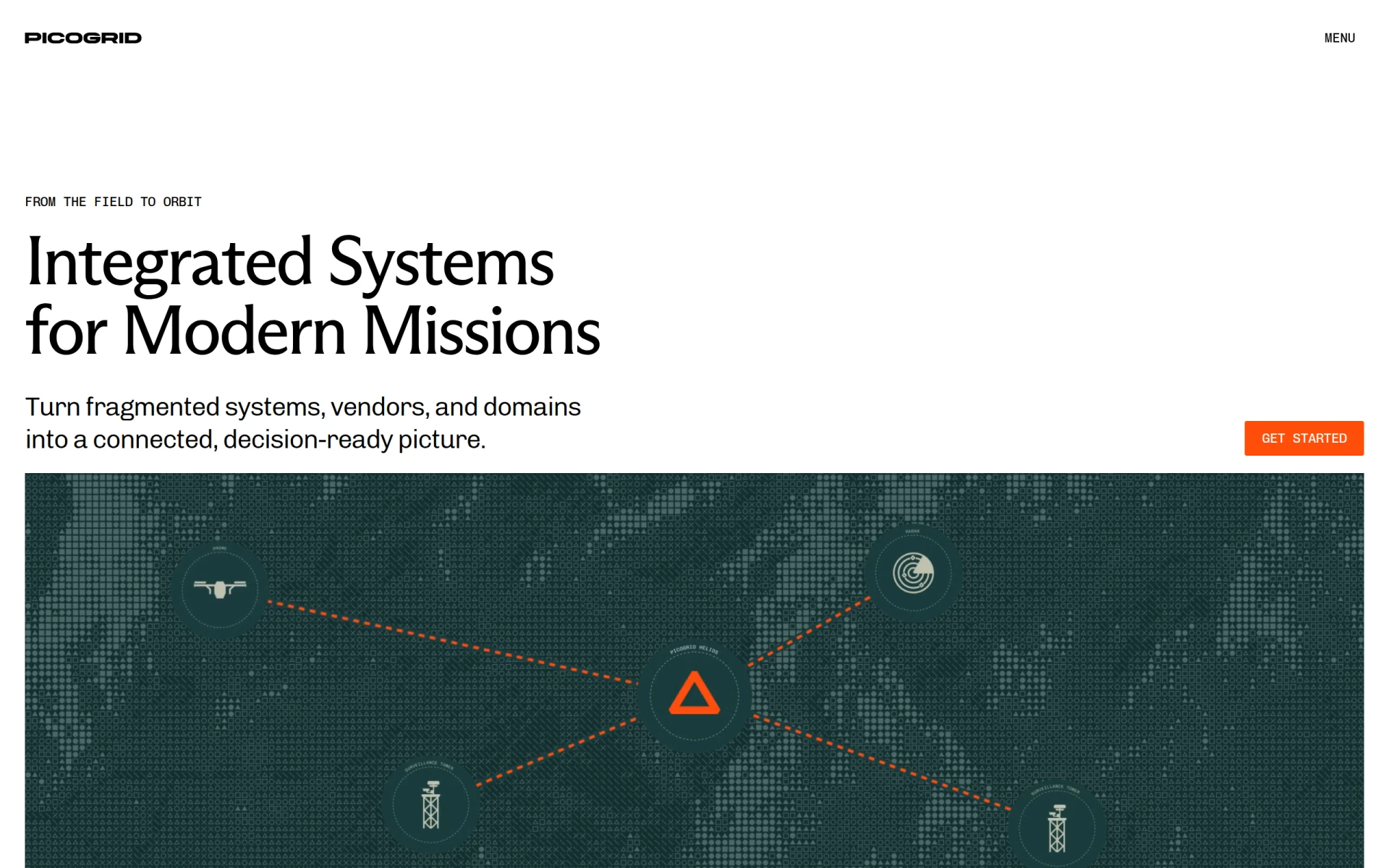 distinguishes itself by offering integrated systems that connect sensors, platforms, and operators across various domains for enhanced security operations. This makes it an excellent alternative for organizations needing a holistic approach to security. Unlike Cranium, which emphasizes AI governance, Picogrid focuses on creating a unified security ecosystem, allowing for better data flow and real-time insights. Organizations that require comprehensive security integration will find Picogrid's offerings particularly beneficial.
Moreover, Picogrid’s ability to facilitate cross-domain communication ensures that security operations are not siloed, leading to a more effective response to potential threats. This integrated approach can significantly improve situational awareness and decision-making, aspects that may not be as fully developed in Cranium. For businesses looking to enhance their security operations through integration and collaboration, Picogrid offers a compelling solution.
- Key Strength: Integrated systems for connecting multiple security domains.
- Key Strength: Enhanced real-time insights through cross-domain communication.
- Key Strength: Holistic approach to security operations.
- Limitation: Pricing information is not readily available.
Pricing: Contact for details. Best for: Organizations seeking integrated security solutions across various domains.
Seal Security - Best for Open Source Vulnerability Management
Seal Security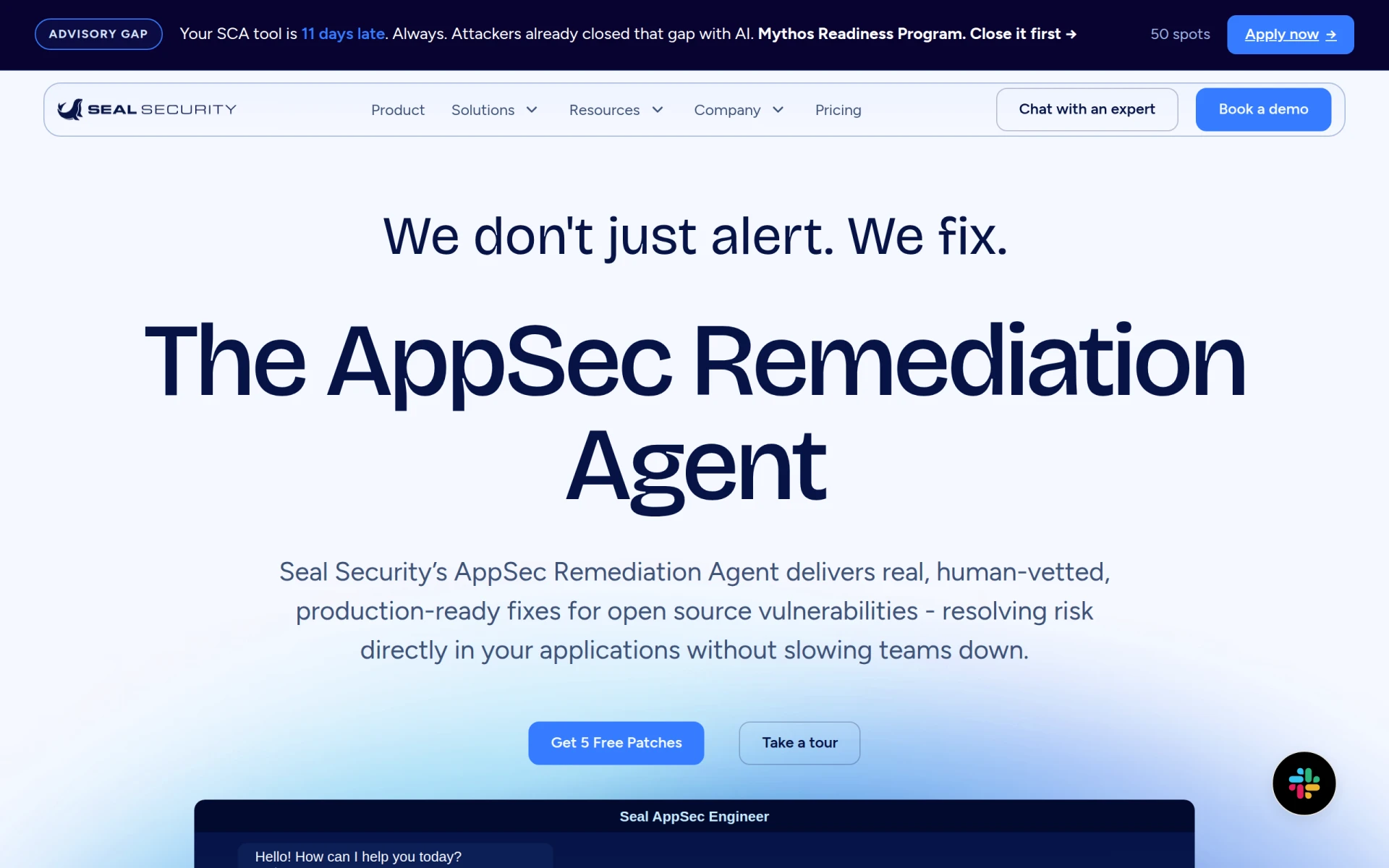 specializes in application security by providing an AppSec Remediation Agent that delivers production-ready fixes for open-source vulnerabilities. This focus on vulnerability management sets it apart from Cranium, which may not offer the same level of depth in application security. For organizations that rely on open-source components within their applications, Seal Security provides a tailored approach to ensuring safety and compliance. This is crucial for businesses that must navigate the complexities of open-source software security.
Moreover, Seal Security's proactive remediation capabilities allow organizations to address vulnerabilities before they can be exploited, significantly enhancing application safety. This level of proactive management is something that many users have found lacking in Cranium's offerings, making Seal Security a strong contender for businesses focused on application security. By opting for Seal Security, organizations can ensure that their applications remain secure, compliant, and resilient against threats.
- Key Strength: Production-ready fixes for open-source vulnerabilities.
- Key Strength: Proactive remediation capabilities enhance application safety.
- Key Strength: Tailored approach to application security.
- Limitation: Pricing information requires direct inquiry.
Pricing: Contact for details. Best for: Organizations utilizing open-source components in their applications.
Fortra - Best for Password Management
Fortra is a specialized security tool that excels in password management, making it a great alternative for organizations looking to enhance user access security. Unlike Cranium, which focuses on AI governance and risk management, Fortra provides dedicated tools for managing passwords and ensuring secure user access. This is particularly important for organizations that handle sensitive information and need to enforce strict access controls. With its focus on password management, Fortra allows organizations to streamline their security protocols effectively.
Additionally, Fortra’s features include strong password policies, automated password resets, and comprehensive access controls. This level of functionality is crucial for organizations that want to minimize the risk of unauthorized access. Cranium may not provide the same depth in user access management, making Fortra an attractive alternative for businesses prioritizing user security and access management. By integrating Fortra into their security strategy, organizations can significantly enhance their overall security posture.
- Key Strength: Comprehensive password management features.
- Key Strength: Automated password resets reduce administrative burden.
- Key Strength: Strong access controls to minimize unauthorized access.
- Limitation: Pricing information is not publicly available.
Pricing: Contact for details. Best for: Organizations focused on enhancing password and user access security.
Lockchain.ai - Best for Crypto Risk Management
Lockchain.ai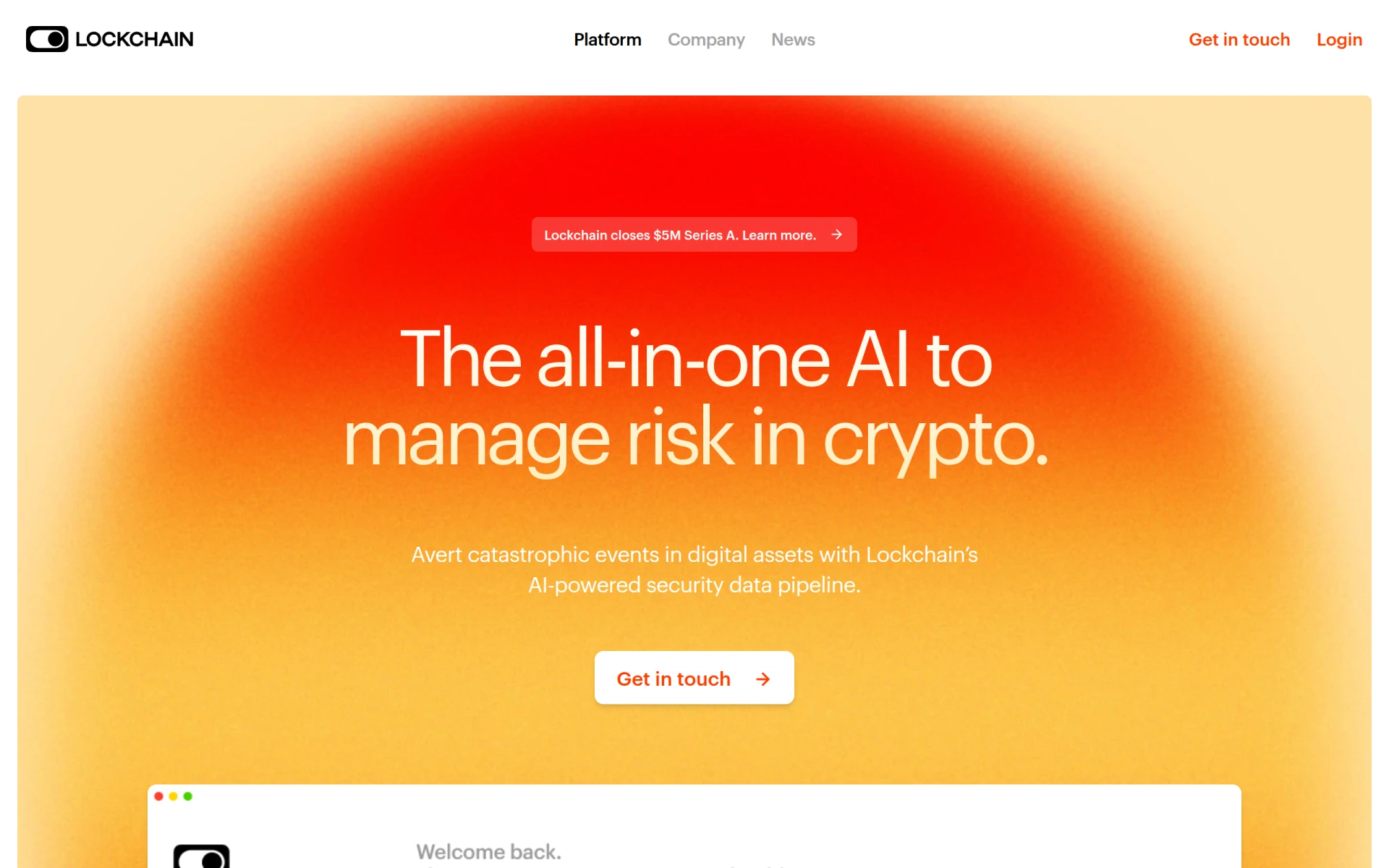 serves as an innovative alternative for organizations focused on managing risks associated with digital assets and cryptocurrencies. With its AI-powered risk management platform, Lockchain.ai enables users to monitor and secure their crypto investments efficiently. This specialized focus on digital assets differentiates it from Cranium, which may not address the unique challenges posed by the cryptocurrency landscape. Organizations that invest in crypto assets will find Lockchain.ai particularly valuable in navigating the complexities of risk management in this volatile environment.
Furthermore, Lockchain.ai offers real-time monitoring and analytics capabilities, allowing organizations to stay ahead of potential risks associated with their digital investments. This proactive approach to risk management is essential for safeguarding assets in an ever-evolving market. For businesses heavily involved in cryptocurrency, Lockchain.ai provides a tailored solution that ensures comprehensive oversight and risk mitigation, aspects that Cranium may not fully support.
- Key Strength: AI-powered risk management tailored for digital assets.
- Key Strength: Real-time monitoring of crypto investments.
- Key Strength: Comprehensive analytics capabilities for risk assessment.
- Limitation: Pricing information is not publicly available.
Pricing: Contact for details. Best for: Organizations investing in cryptocurrencies and digital assets.
Zama - Best for Confidential Transactions
Zama offers a unique solution in the cryptographic software space, enabling confidential transactions on public blockchains. This capability is particularly important for organizations looking to maintain privacy while leveraging the advantages of blockchain technology. Unlike Cranium, which focuses on AI governance, Zama emphasizes secure transaction management, making it a compelling alternative for businesses that prioritize confidentiality in their operations. Organizations that handle sensitive information on public blockchains will find Zama's offerings particularly beneficial.
Moreover, Zama's advanced encryption techniques allow organizations to conduct transactions securely without exposing sensitive data, a feature that can greatly enhance trust and compliance. This level of security is essential for businesses operating in industries where confidentiality is paramount. By opting for Zama, organizations can ensure that they are not only leveraging blockchain technology but doing so in a secure and compliant manner, an area that may not be fully addressed by Cranium.
- Key Strength: Advanced encryption for confidential transactions.
- Key Strength: Secure operation on public blockchains.
- Key Strength: Enhanced privacy for sensitive information.
- Limitation: Pricing information is not readily available.
Pricing: Contact for details. Best for: Organizations requiring confidentiality in blockchain transactions.
Andesite AI - Best for Human-Centric AI Operations
Andesite AI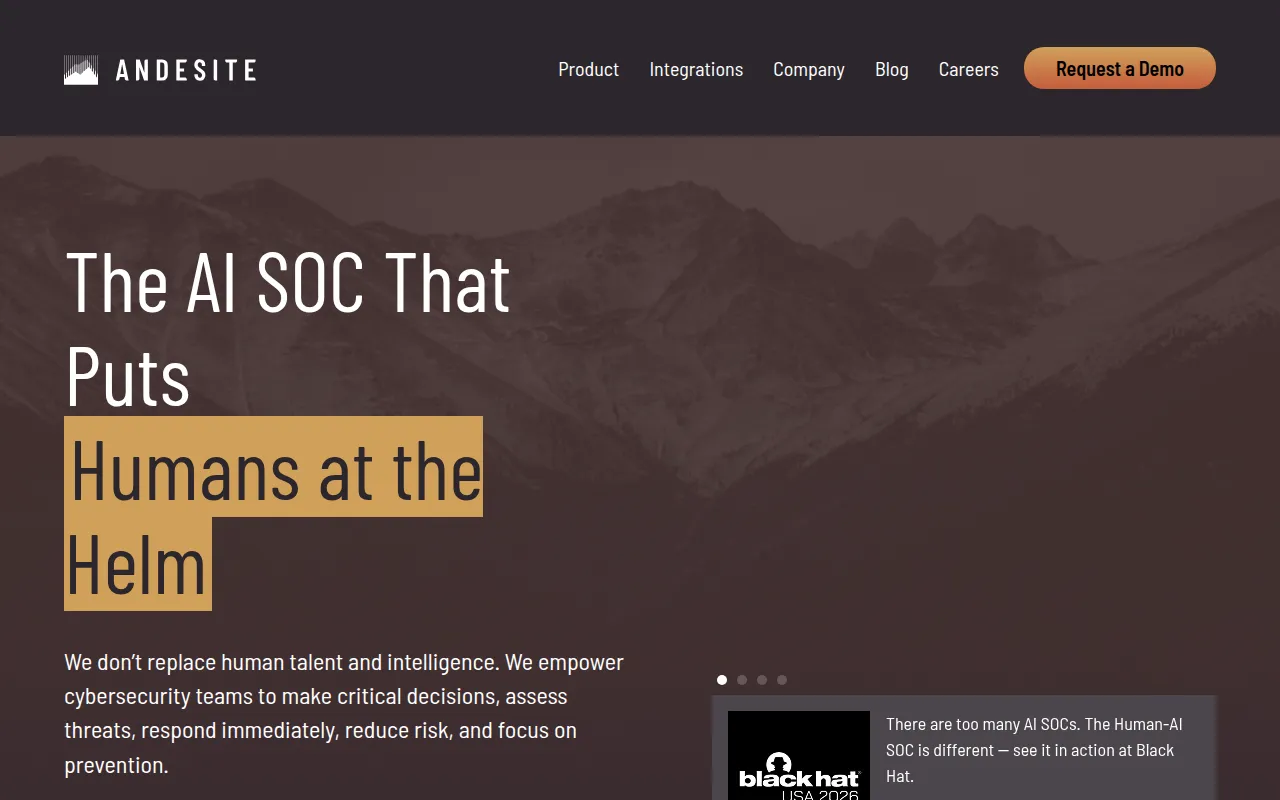 is designed to enhance cybersecurity team operations through automation and advanced threat response capabilities. This focus on human-centric AI makes it a compelling alternative for organizations looking to improve their cybersecurity posture. Unlike Cranium, which primarily focuses on governance, Andesite AI emphasizes the operational aspects of cybersecurity, making it an excellent choice for teams that need to respond rapidly to threats. Organizations that prioritize operational efficiency in their security teams will find Andesite AI particularly beneficial.
Furthermore, Andesite AI's advanced automation features allow organizations to streamline their cybersecurity operations, reducing the burden on human resources and improving response times to incidents. This can lead to a more agile security posture, enabling organizations to adapt quickly to new threats. For businesses that require a proactive approach to cybersecurity, Andesite AI provides a robust solution that effectively complements existing security measures, an area where Cranium may not excel.
- Key Strength: Advanced threat response capabilities enhance security operations.
- Key Strength: Streamlined operations through automation.
- Key Strength: Focus on human-centric AI for improved team performance.
- Limitation: Pricing information requires direct inquiry.
Pricing: Contact for details. Best for: Organizations seeking to enhance their cybersecurity operations through automation.
Amplifier Security - Best for Employee Engagement in Security
Amplifier Security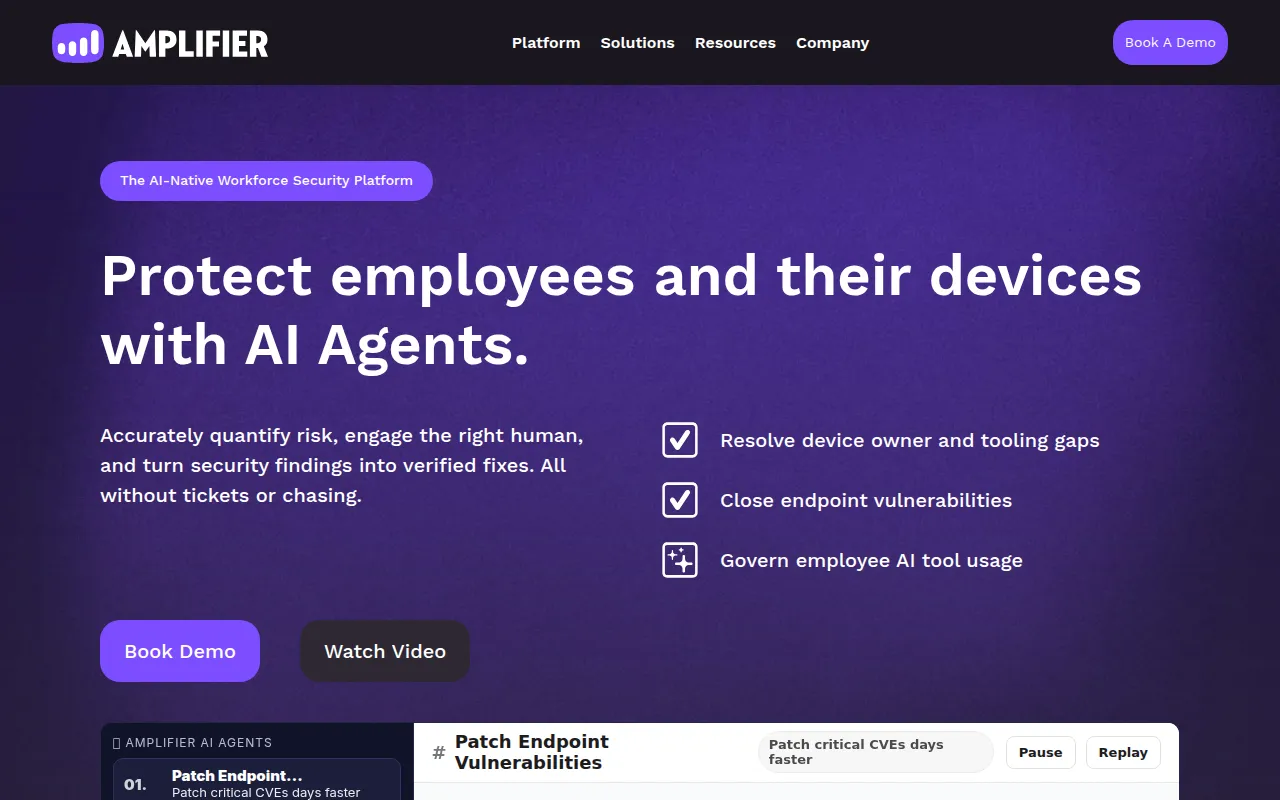 focuses on workforce security by engaging employees in the remediation of security risks. This approach is particularly beneficial for organizations looking to foster a security-first culture. Unlike Cranium, which primarily deals with governance and risk management, Amplifier Security emphasizes the human element in security. For organizations that want to empower their employees to take an active role in security practices, Amplifier Security provides the necessary tools and strategies to do so.
Additionally, Amplifier Security’s platform offers training and awareness programs that help employees recognize and respond to potential security threats effectively. This proactive approach to security training can significantly reduce the risk of breaches caused by human error, an area where Cranium may not provide sufficient focus. By adopting Amplifier Security, organizations can cultivate a more informed and engaged workforce, ultimately enhancing their overall security posture.
- Key Strength: Employee engagement in security remediation efforts.
- Key Strength: Comprehensive training and awareness programs.
- Key Strength: Focus on fostering a security-first culture.
- Limitation: Pricing information is not publicly available.
Pricing: Contact for details. Best for: Organizations wanting to enhance employee involvement in security practices.
IDfy - Best for Fraud Detection and Onboarding
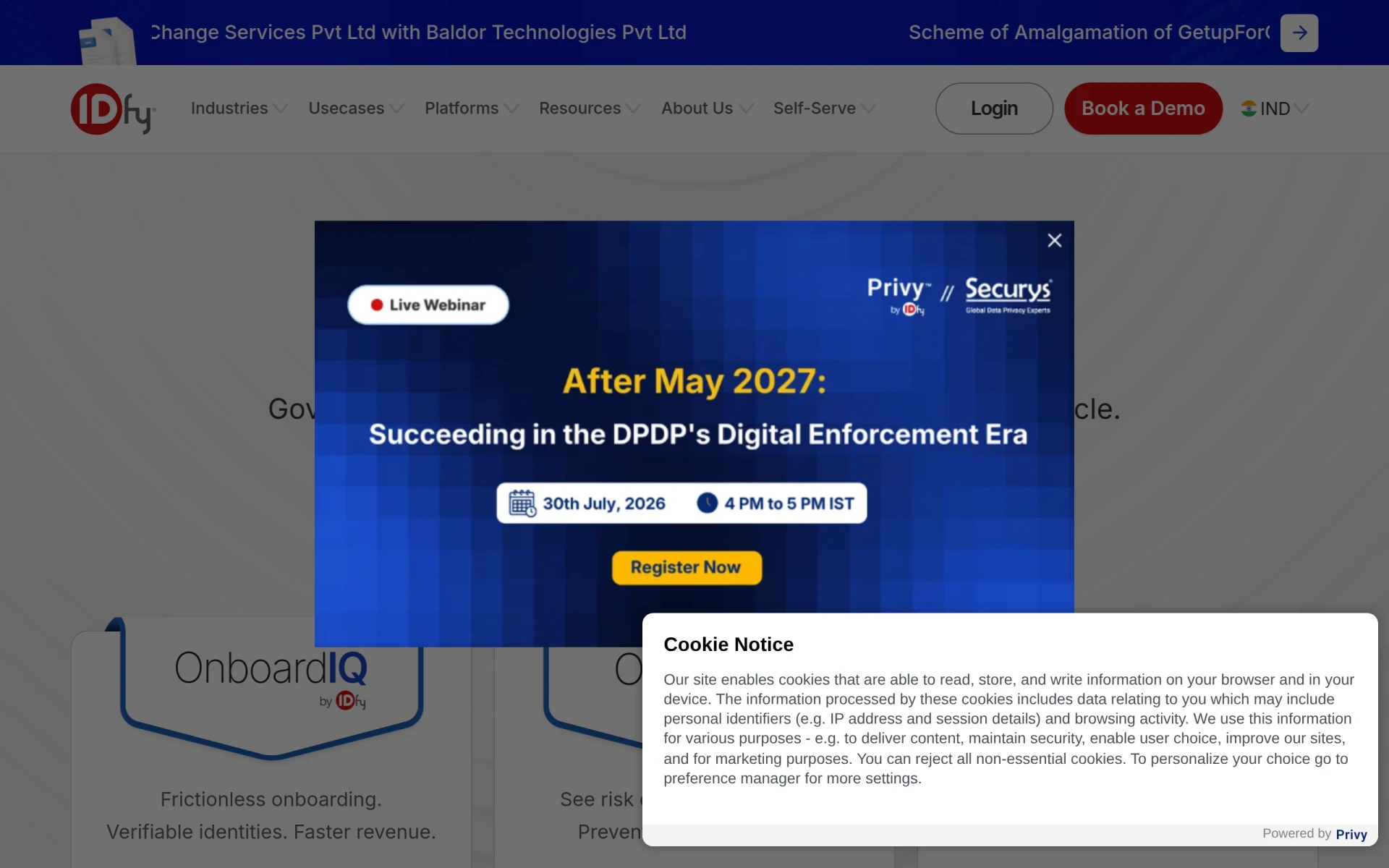
IDfy offers advanced fraud detection and secure customer onboarding solutions tailored for banks, e-commerce, and logistics sectors. This specialized focus makes it a strong alternative to Cranium for organizations needing robust identity verification and fraud prevention measures. While Cranium emphasizes AI risk management, IDfy’s unique capabilities in fraud detection and onboarding provide essential services that are critical for organizations handling sensitive customer information. This makes IDfy particularly valuable for businesses that require stringent identity verification processes.
Moreover, IDfy’s platform is designed to streamline the onboarding process while maintaining high security standards, allowing organizations to enhance customer experiences without compromising on safety. This dual focus on security and user experience is something that Cranium does not address as effectively, making IDfy a compelling choice for businesses looking to improve their customer onboarding processes without sacrificing security. By leveraging IDfy, organizations can ensure that they are better equipped to combat fraud and secure customer information.
- Key Strength: Advanced fraud detection capabilities tailored for various industries.
- Key Strength: Streamlined customer onboarding processes.
- Key Strength: Focus on identity verification and security.
- Limitation: Pricing information is not readily available.
Pricing: Contact for details. Best for: Organizations needing robust fraud detection and onboarding solutions.
Knostic - Best for Governance of AI Tools
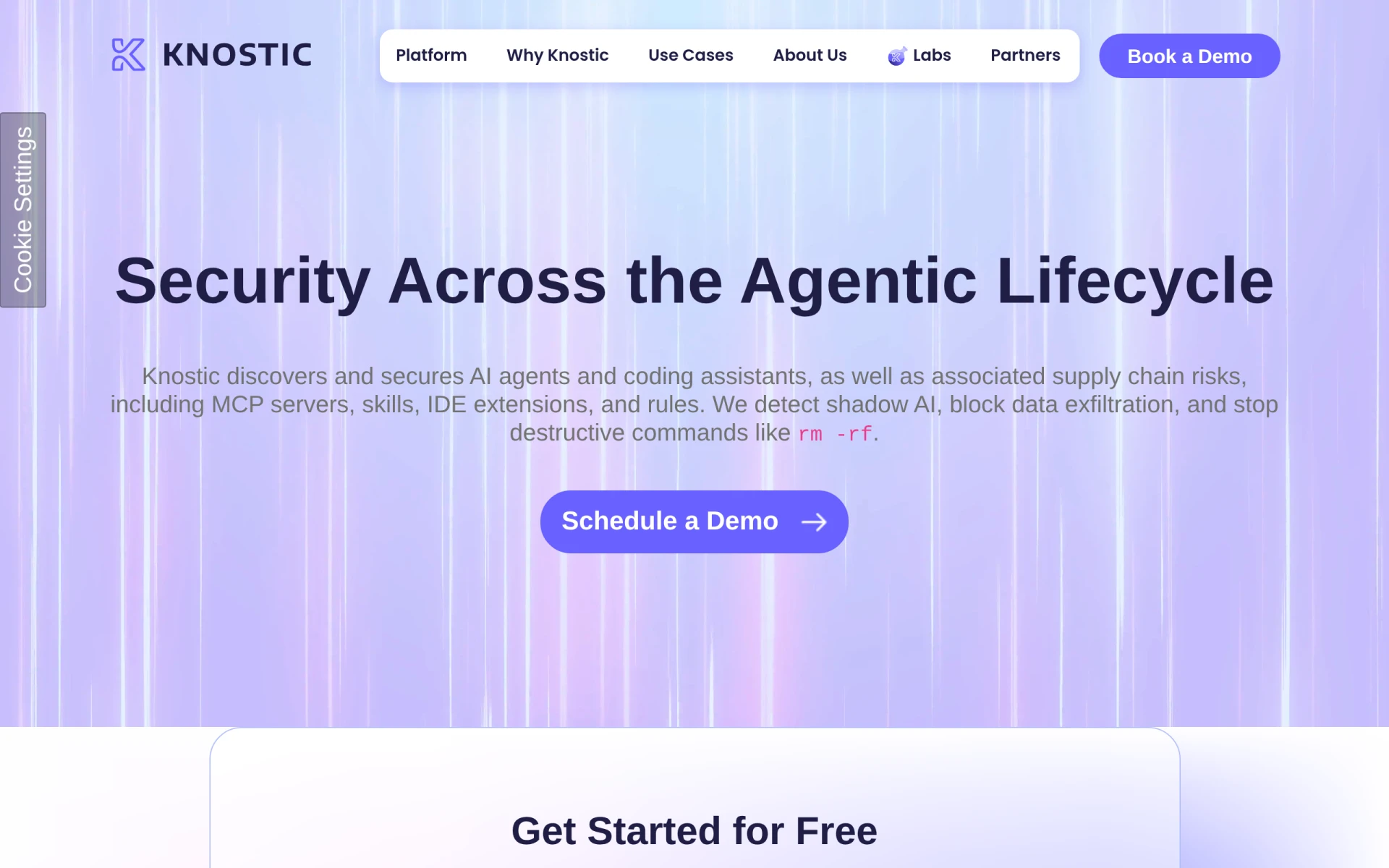
Knostic is an AI security platform focused on ensuring governance and protection for AI tools and data across enterprises. This makes it a strong alternative to Cranium for organizations that require a more specialized approach to AI governance. Knostic’s platform provides tools that help organizations manage and oversee their AI resources effectively, which is crucial for maintaining compliance and security in an environment increasingly dominated by AI technologies. This level of focus on AI governance is something that Cranium may not fully address.
Additionally, Knostic offers a freemium model that allows organizations to explore its capabilities before committing to a paid plan. This can be particularly beneficial for smaller organizations or those just starting their journey in AI governance. In contrast, Cranium's lack of transparent pricing and limited exploration options can be a barrier for potential users. By choosing Knostic, organizations can ensure they have the necessary tools to manage their AI governance needs comprehensively and effectively.
- Key Strength: Specialized governance tools for AI resources.
- Key Strength: Freemium model allows organizations to explore features.
- Key Strength: Focus on compliance and security in AI management.
- Limitation: Pricing information requires direct inquiry.
Pricing: Freemium. Best for: Organizations needing specialized governance for AI tools.
Feature Comparison Table
| Tool | Best For | Starting Price | Free Plan | Standout Feature |
|---|
| Cranium | AI risk management | Contact for details | No | AI risk governance |
| Zenity | Secure AI governance | Contact for details | No | Real-time monitoring |
| Privacera | Data security and governance | Contact for details | No | Trust3 AI technology |
| Vendict | Vendor risk management | Contact for details | No | Automated compliance reviews |
| Nullify AI | Autonomous security solutions | Contact for details | No | Streamlined remediation |
| PVML | AI-ready data management | Contact for details | No | Virtual databases |
| Bricklayer AI | Coordinated SOC operations | Contact for details | No | Integrated AI workforce |
| Picogrid | Integrated security systems | Contact for details | No | Cross-domain connectivity |
| Seal Security | Open source vulnerability management | Contact for details | No | Production-ready fixes |
| Fortra | Password management | Contact for details | No | Automated password resets |
| Lockchain.ai | Crypto risk management | Contact for details | No | AI-powered risk management |
| Zama | Confidential transactions | Contact for details | No | Advanced encryption |
| Andesite AI | Human-centric AI operations | Contact for details | No | Advanced threat response |
| Amplifier Security | Employee engagement in security | Contact for details | No | Employee training programs |
| IDfy | Fraud detection and onboarding | Contact for details | No | Advanced fraud detection |
| Knostic | Governance of AI tools | Freemium | Yes | Specialized governance tools |
How to Choose the Right Alternative to Cranium
When evaluating alternatives to Cranium, it’s crucial to consider your organization’s specific needs and priorities. If your primary focus is on AI governance, Zenity or Knostic may be the best fit due to their specialized tools designed for this purpose. Conversely, if you require comprehensive data security and access governance, Privacera would be a more suitable choice. For organizations with a significant reliance on third-party vendors, Vendict offers tailored solutions for managing vendor risks effectively.
Additionally, consider the operational aspects of your security needs. If your organization is looking for automation and enhanced efficiency, Nullify AI and Andesite AI are excellent alternatives that focus on streamlining security processes. For those involved in cryptocurrency, Lockchain.ai provides specific tools to manage digital asset risks effectively. Ultimately, aligning the features and strengths of these alternatives with your organization’s unique requirements will guide you toward the best choice.
Final Verdict
In conclusion, while Cranium offers valuable AI risk management capabilities, several alternatives provide specialized features that may better meet your organization’s specific needs. For AI governance, Zenity and Knostic stand out; for data security, Privacera is a top contender. Organizations focused on vendor management should consider Vendict, while those needing enhanced automation might prefer Nullify AI or Andesite AI. Carefully assess your priorities to make an informed choice that aligns with your security strategy.