Why Look for Alternatives to GPT Engineer?
While GPT Engineer is an innovative command-line interface designed to boost developer productivity through AI-driven code generation, it does have its limitations. One of the primary concerns for users is the lack of a user-friendly interface, as many developers prefer working with graphical user interfaces (GUIs) rather than command-line tools. This can be particularly challenging for less experienced developers who may not be comfortable navigating command-line environments. Additionally, the pricing information for GPT Engineer is not publicly disclosed, which can create uncertainty for users who want to assess its value compared to other tools in the market.
Another common pain point is that GPT Engineer primarily focuses on code generation, which may not cater to the comprehensive needs of modern developers. For instance, it lacks features for project management, code review, and collaboration, which are essential for teams working on complex applications. Consequently, many developers find themselves seeking alternatives that not only facilitate coding but also enhance teamwork, project oversight, and documentation.
Best Alternatives to GPT Engineer in 2026
ArchitectGPT - Best for Efficient Code and Documentation Generation
ArchitectGPT is a powerful AI writing tool tailored for developers, designed to streamline the process of generating code and documentation. Unlike GPT Engineer, which operates strictly from the command line, ArchitectGPT offers a more accessible interface that allows developers of all skill levels to create and manage their projects efficiently. This tool focuses on enhancing both code quality and documentation clarity, making it an excellent choice for teams that value clear communication and well-structured codebases.
What sets ArchitectGPT apart from GPT Engineer is its dual focus on both coding and documentation. While GPT Engineer excels in code generation, it doesn't provide extensive support for documentation, which is crucial for long-term project sustainability. ArchitectGPT allows developers to generate comprehensive documentation alongside code, helping teams maintain better project alignment and knowledge sharing. This makes it particularly appealing for larger teams or projects where documentation is a key component of the development workflow.
- Key Strength: Dual focus on code generation and documentation.
- Key Strength: User-friendly interface catering to all skill levels.
- Key Strength: Enhanced collaboration tools for team projects.
- Limitation: Pricing information is currently unavailable, which may deter some users.
Pricing: Freemium model available. Best for: Teams needing both coding and documentation support.
BashSenpai - Best for Streamlined Command Management
BashSenpai is a command line interface tool designed to enhance developer productivity through streamlined command management. It caters specifically to developers who frequently work within terminal environments, providing a more efficient way to manage commands and automate tasks. This focus on command management distinguishes BashSenpai from GPT Engineer, as it allows users to create custom command workflows that can save significant time and reduce errors during repetitive tasks.
Moreover, BashSenpai's simplicity and effectiveness in managing command-line operations make it an excellent alternative for developers who find GPT Engineer's interface cumbersome. With features such as command shortcuts and easy-to-use automation scripts, BashSenpai helps optimize the coding workflow, allowing developers to focus more on coding rather than on managing their terminal environment. This can be especially beneficial for solo developers or small teams working on tight deadlines.
- Key Strength: Custom command workflows that save time.
- Key Strength: User-friendly automation features for repetitive tasks.
- Key Strength: Lightweight tool that integrates well with existing workflows.
- Limitation: Limited to command management, lacking broader coding features.
Pricing: Free. Best for: Developers seeking a streamlined command-line experience.
Nimbalyst - Best for Collaborative Coding Projects
Nimbalyst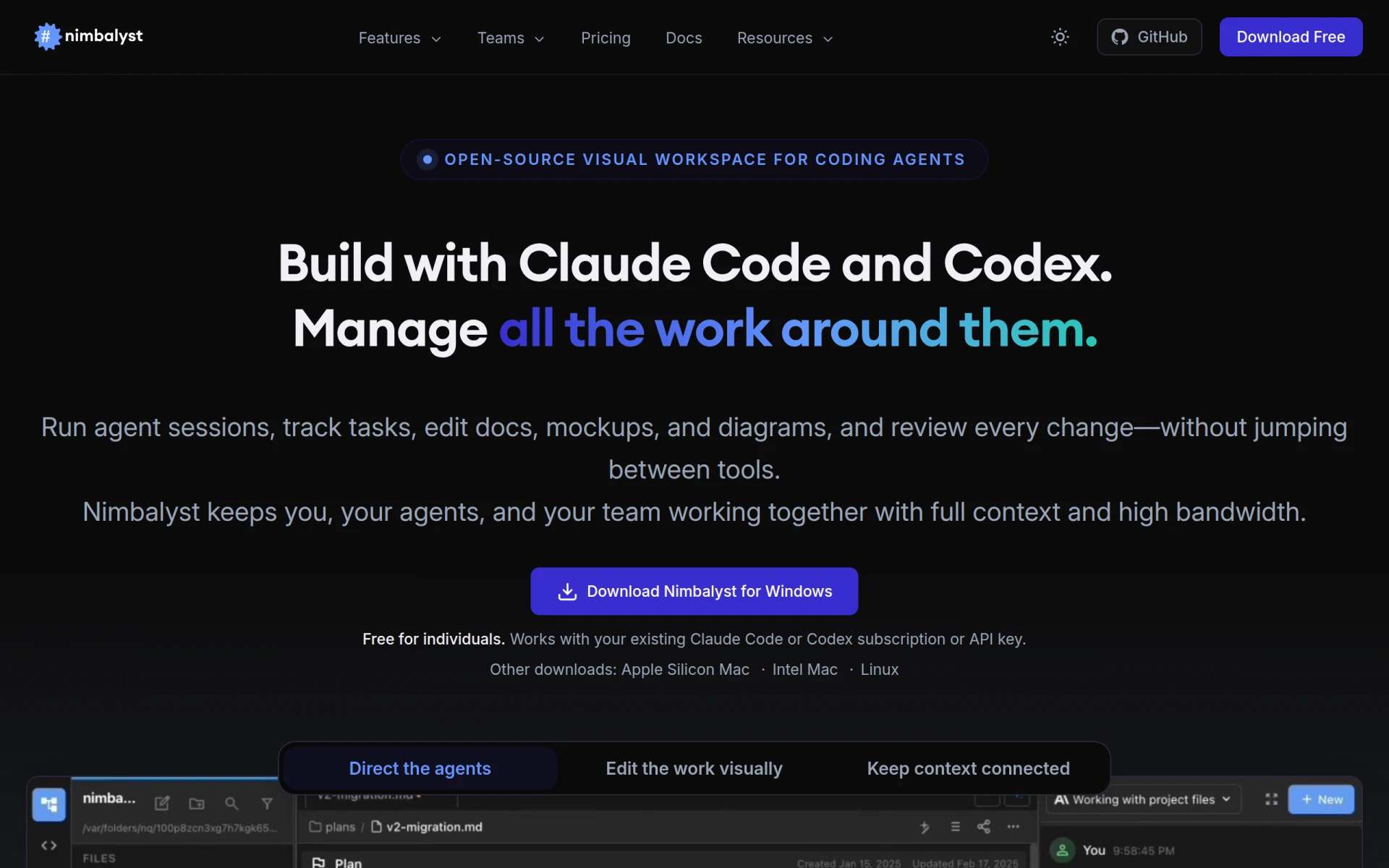 is an open-source visual editor that focuses on managing AI coding agents, making it ideal for collaborative coding efforts. It allows teams to work together on code and documentation in a visually engaging environment, which offers a stark contrast to the command-line interface of GPT Engineer. Nimbalyst is particularly beneficial for teams that require real-time collaboration, as it supports simultaneous editing and version control, ensuring that all team members are on the same page.
What makes Nimbalyst stand out is its emphasis on collaboration and visual management of coding agents. Unlike GPT Engineer, which operates in isolation, Nimbalyst fosters teamwork by providing tools for code sharing, review, and discussion. This feature is crucial for larger teams or projects where multiple developers are contributing to the same codebase. By facilitating collaboration, Nimbalyst enhances productivity and reduces the likelihood of miscommunication or errors that can arise from isolated development practices.
- Key Strength: Real-time collaboration features for teams.
- Key Strength: Visual management of coding agents enhances usability.
- Key Strength: Open-source flexibility allows customization.
- Limitation: May require a learning curve for new users.
Pricing: Free for individuals; team upgrades available. Best for: Teams needing collaborative coding solutions.
Build AI - Best for No-Code AI Application Development
Build AI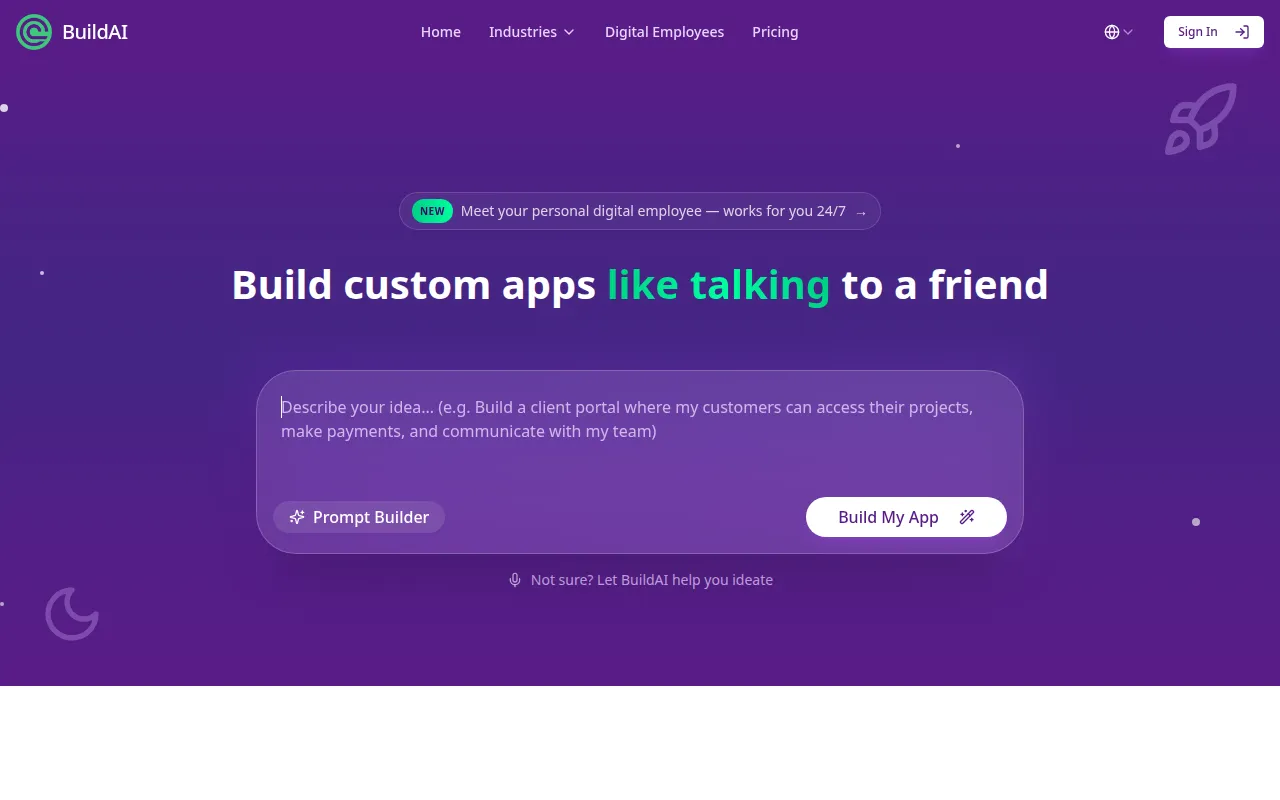 is a no-code platform that enables users to create AI applications effortlessly, making it an excellent alternative to GPT Engineer for those who may not have extensive programming skills. This tool simplifies the app development process by allowing users to drag and drop components to build their applications. In contrast to GPT Engineer, which requires a solid foundation in coding, Build AI opens up AI development to a broader audience, including entrepreneurs and business professionals.
One of the standout features of Build AI is its extensive library of pre-built templates and components, which accelerates the development process. Users can customize these templates to suit their needs, allowing for rapid prototyping and deployment of AI-driven applications. This flexibility makes Build AI particularly suitable for startups or businesses looking to test new ideas without heavy investment in development resources. While GPT Engineer is more focused on code generation, Build AI democratizes access to AI technology by enabling users to create applications without coding.
- Key Strength: No-code platform allows non-developers to build applications.
- Key Strength: Extensive library of templates for quick development.
- Key Strength: Rapid prototyping capabilities enhance innovation.
- Limitation: May not be suitable for highly customized AI solutions.
Pricing: Freemium with free trial and several paid plans. Best for: Non-developers looking to create AI applications.
Sider - Best for Streamlined Code Review and Collaboration
Sider is a dedicated code review tool that enhances collaboration among developers by streamlining the code review process. Unlike GPT Engineer, which focuses primarily on code generation, Sider provides a platform for teams to review each other’s code, ensuring quality and adherence to coding standards. This makes it an ideal choice for teams that prioritize code quality and collaboration in their development workflow.
One of Sider's key strengths is its integration capabilities with various version control systems, such as GitHub and Bitbucket. This allows teams to seamlessly incorporate code reviews into their existing workflows, enhancing productivity without disrupting the development process. Additionally, Sider's feedback mechanisms and analytics provide insights into code quality, helping teams continuously improve their coding practices. This focus on collaboration and quality assurance sets Sider apart from GPT Engineer, making it a valuable tool for teams committed to producing robust software.
- Key Strength: Streamlined code review process enhances team collaboration.
- Key Strength: Integration with popular version control systems.
- Key Strength: Analytics tools provide insights into code quality.
- Limitation: Pricing information is not publicly disclosed.
Pricing: Freemium model. Best for: Teams focused on code quality and collaboration.
Verdent - Best for AI Code Review and Orchestration
Verdent AI is a sophisticated tool that offers an agentic coding suite for AI code review and orchestration across various platforms. It caters well to developers seeking to enhance their coding efficiency through AI-driven insights and orchestration capabilities. Unlike GPT Engineer, which primarily focuses on code generation, Verdent emphasizes the review and orchestration of code, making it suitable for teams that want to ensure high-quality code delivery.
The ability of Verdent to integrate AI into the code review process is a significant advantage. By leveraging AI models, it provides real-time feedback and suggestions, helping developers identify potential issues before they become problematic. This proactive approach to code management is a notable contrast to GPT Engineer's reactive nature, where issues may only be addressed after code has been generated. Verdent’s orchestration features also allow for better management of complex projects, making it a strong candidate for teams working on multi-faceted applications.
- Key Strength: AI-driven code review capabilities enhance quality assurance.
- Key Strength: Orchestration features facilitate project management.
- Key Strength: Real-time feedback helps prevent coding errors.
- Limitation: May require more resources for optimal performance.
Pricing: Freemium with a limited-time free trial. Best for: Teams focused on AI-enhanced code quality.
TensorFlow - Best for Machine Learning Development
TensorFlow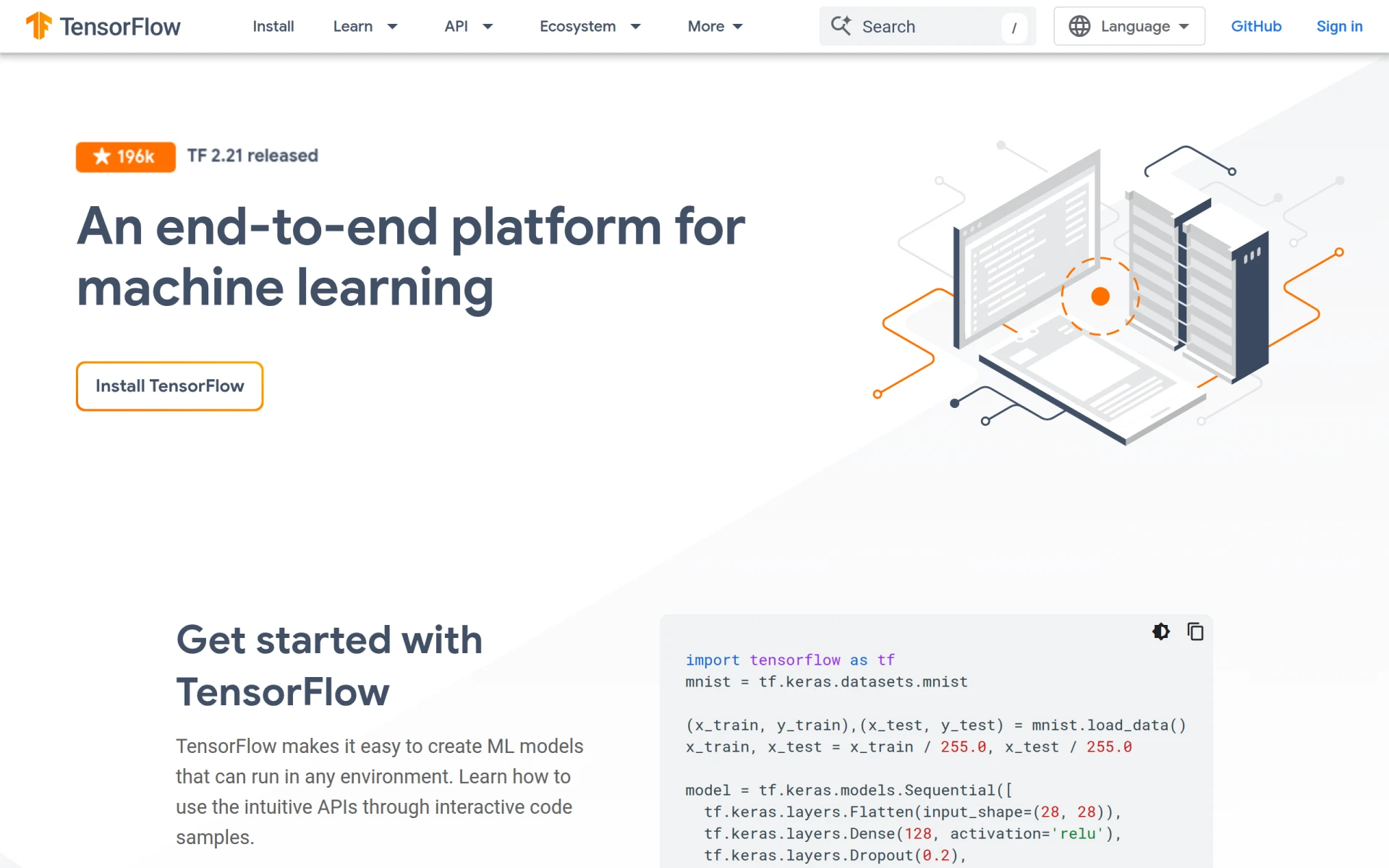 is an open-source machine learning platform that simplifies the development and deployment of machine learning models. While GPT Engineer is focused on AI-driven code generation, TensorFlow offers a broader scope by providing tools for creating and training machine learning models. This makes it an ideal choice for developers working on projects that require sophisticated AI algorithms or data analysis.
TensorFlow’s extensive libraries and community support make it a go-to solution for developers looking to integrate machine learning into their applications. Unlike GPT Engineer, which is primarily concerned with generating code snippets, TensorFlow allows developers to build complex machine learning models from the ground up. This flexibility and depth of functionality make TensorFlow an invaluable resource for data scientists and machine learning engineers seeking to leverage AI in their projects.
- Key Strength: Comprehensive tools for machine learning model development.
- Key Strength: Extensive community support and resources.
- Key Strength: Open-source nature encourages collaboration and innovation.
- Limitation: Steeper learning curve for beginners compared to GPT Engineer.
Pricing: Free as an open-source platform. Best for: Developers and data scientists focused on machine learning.
TestSprite - Best for Automated Software Testing
TestSprite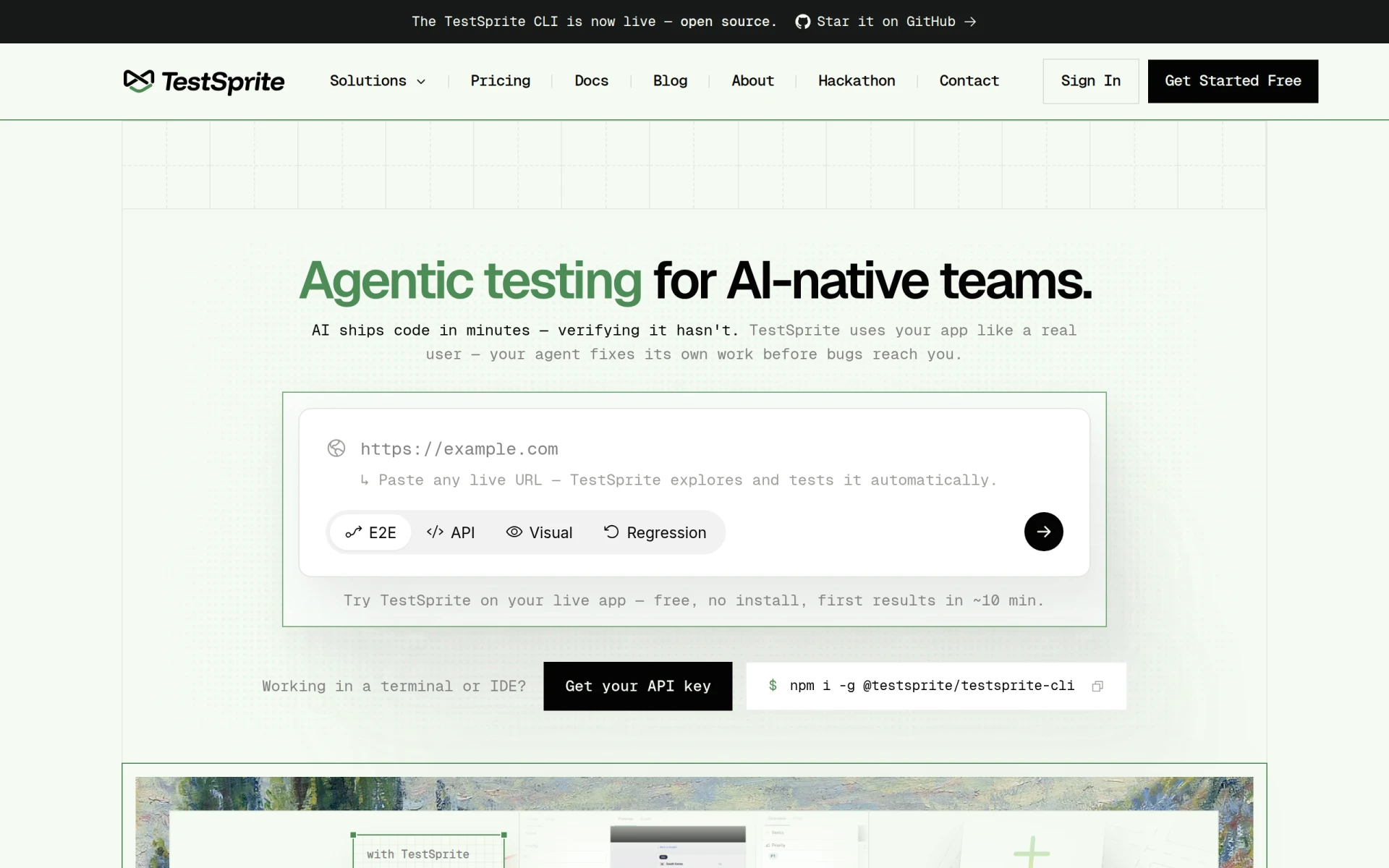 is an AI-driven software testing platform that automates test creation, execution, and debugging, making it an excellent alternative to GPT Engineer for teams focused on quality assurance. While GPT Engineer emphasizes code generation, TestSprite provides comprehensive testing capabilities, which are essential for ensuring software reliability. This makes TestSprite suitable for development teams that prioritize thorough testing as part of their workflow.
One of the standout features of TestSprite is its ability to automatically generate test cases based on the codebase, significantly reducing the time required for manual testing. This automation not only speeds up the testing process but also increases accuracy, as it minimizes human error. Unlike GPT Engineer, which does not offer testing capabilities, TestSprite empowers teams to maintain high standards of code quality through robust testing protocols, making it a valuable tool for any software development lifecycle.
- Key Strength: Automated test creation and execution enhances efficiency.
- Key Strength: Reduces human error in testing processes.
- Key Strength: Comprehensive platform for debugging and quality assurance.
- Limitation: Paid plans may be necessary for full feature access.
Pricing: Freemium with paid plans starting at $19 per month after the initial month. Best for: Teams focused on automated software testing.
Sprite Fusion - Best for 2D Game Development
Sprite Fusion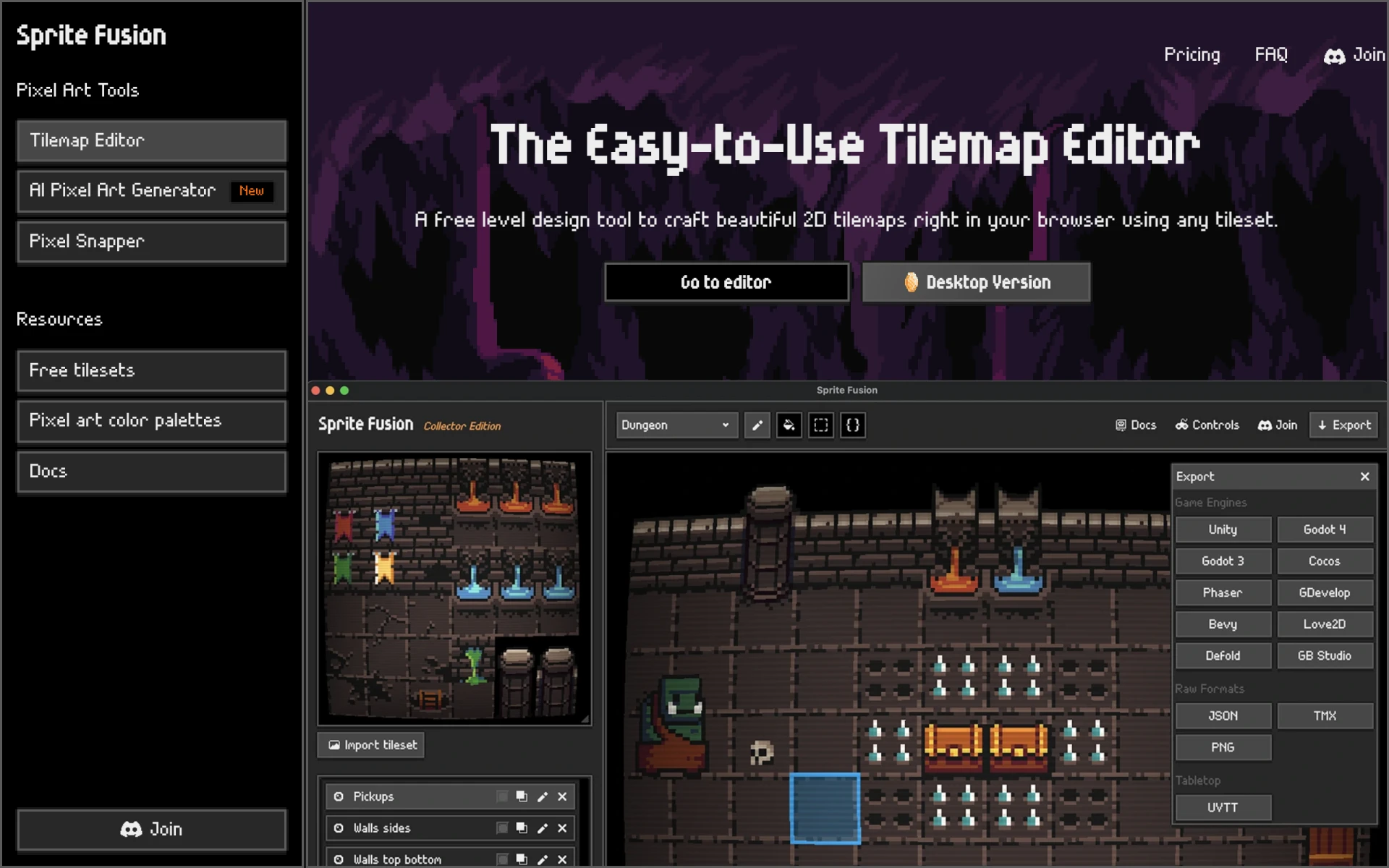 is a web-based tilemap editor and pixel art generator specifically designed for 2D game developers. It offers a unique set of features that cater to the needs of game designers, making it an excellent alternative to GPT Engineer for those in the gaming industry. While GPT Engineer focuses on general code generation, Sprite Fusion provides specialized tools for creating game assets, allowing developers to focus on the artistic aspects of game development.
One of the key advantages of Sprite Fusion is its user-friendly interface that simplifies the process of creating and managing pixel art and tilemaps. This accessibility is crucial for game developers who may not have extensive programming skills but want to create visually appealing games. Unlike GPT Engineer, which is geared towards coding, Sprite Fusion empowers developers to bring their creative visions to life through intuitive design tools, making it an essential resource for 2D game projects.
- Key Strength: Specialized tools for pixel art and tilemap creation.
- Key Strength: User-friendly interface for non-programmers.
- Key Strength: Web-based platform for easy access and collaboration.
- Limitation: Limited to 2D game development, lacking broader coding features.
Pricing: Free. Best for: 2D game developers looking for art creation tools.
Codegen - Best for Coding Insights and Guidance
Codegen is an AI coding tool that provides insights, guides, and comparisons to help developers enhance their coding efficiency. It serves as a valuable resource for those seeking to improve their coding skills or optimize their coding practices. Unlike GPT Engineer, which focuses primarily on code generation, Codegen offers a more holistic approach by providing contextual guidance and support throughout the coding process.
One of the standout features of Codegen is its ability to analyze code and provide suggestions for improvement, which can help developers write cleaner and more efficient code. This mentorship-like quality sets it apart from GPT Engineer, which may generate code but lacks the contextual understanding to guide users on best practices. Codegen is particularly beneficial for junior developers or those looking to refine their skills, making it a compelling choice for anyone invested in continuous learning.
- Key Strength: Provides insights and suggestions for coding improvement.
- Key Strength: Mentorship-like guidance for developers.
- Key Strength: Focus on coding efficiency and best practices.
- Limitation: Pricing information is currently unavailable.
Pricing: Freemium model available. Best for: Developers seeking coding insights and guidance.
Shakespeare - Best for Custom Application Development
Shakespeare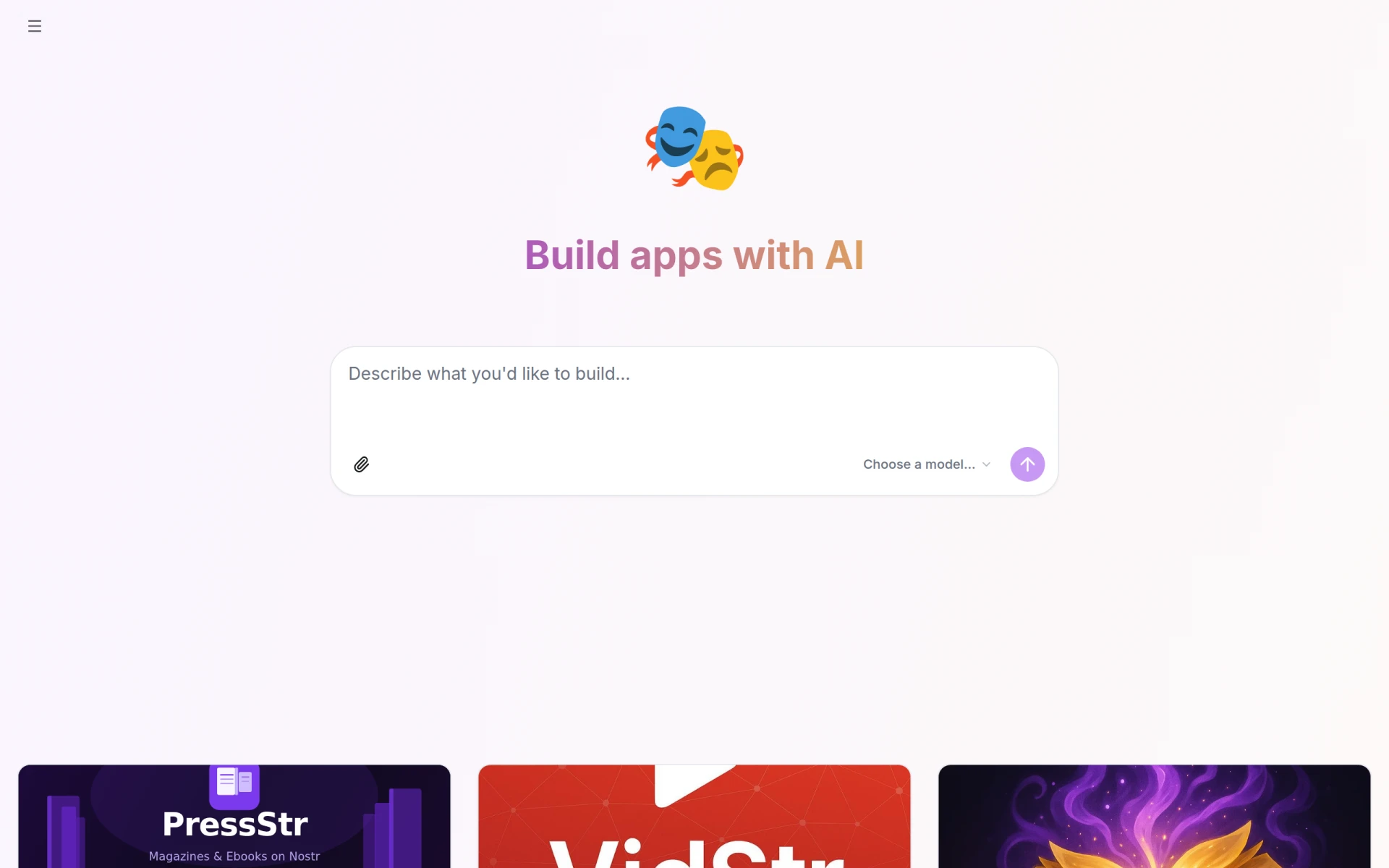 is an open-source AI builder designed to assist developers in creating custom applications efficiently. It stands out as an excellent alternative to GPT Engineer for those looking to build tailored solutions without starting from scratch. Unlike GPT Engineer, which focuses primarily on code generation, Shakespeare offers a more comprehensive development environment that supports the full application lifecycle.
The flexibility and openness of Shakespeare make it particularly appealing for developers who want to customize their applications fully. It allows users to modify and extend the code as necessary, fostering innovation and creativity. Additionally, Shakespeare’s open-source nature encourages collaboration and sharing among developers, which is a significant advantage over GPT Engineer’s more isolated approach. For teams or individuals looking to create unique applications, Shakespeare provides the tools needed to bring their ideas to fruition.
- Key Strength: Open-source flexibility for full customization.
- Key Strength: Encourages collaboration and sharing among developers.
- Key Strength: Comprehensive support for the application development lifecycle.
- Limitation: May require more technical knowledge to navigate effectively.
Pricing: Free as an open-source tool. Best for: Developers needing a customizable application builder.
OSS Insight - Best for Open Source Software Analytics
OSS Insight is a developer tool focused on providing analytics for open-source software repositories. It serves as a valuable resource for developers and organizations interested in understanding trends and performance metrics within the open-source ecosystem. Unlike GPT Engineer, which primarily aids in code generation, OSS Insight offers analytics that can inform decision-making and strategy for open-source projects.
One of the key strengths of OSS Insight is its ability to aggregate and analyze data from various repositories, providing insights into usage patterns, contributions, and project health. This data-driven approach enables teams to make informed decisions about their open-source projects, which is something GPT Engineer does not address. For developers and organizations looking to leverage open-source software effectively, OSS Insight provides the analytics necessary to optimize their contributions and engagement.
- Key Strength: Comprehensive analytics for open-source software.
- Key Strength: Informs decision-making and strategy for projects.
- Key Strength: Aggregates data from multiple repositories for broader insights.
- Limitation: Specific pricing information is currently unavailable due to maintenance.
Pricing: Free. Best for: Developers and organizations interested in open-source analytics.
Llama - Best for Building with Meta's AI Models
Llama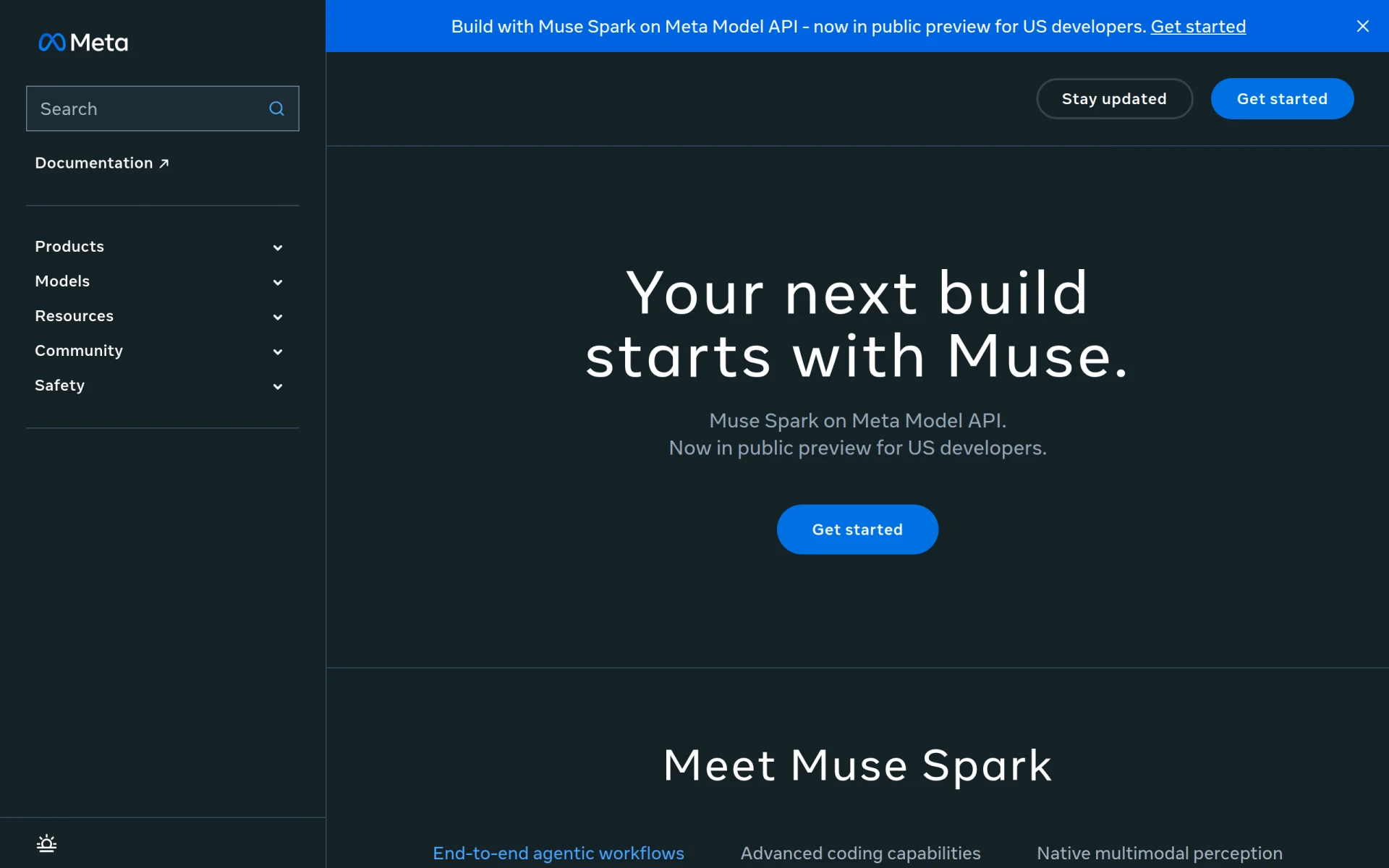 offers AI development tools and resources to help developers build applications utilizing Meta's AI models. It serves as a robust alternative to GPT Engineer for those specifically interested in harnessing the power of Meta's AI technology. While GPT Engineer focuses on code generation, Llama provides tools tailored for developers looking to integrate advanced AI functionalities into their applications.
A standout feature of Llama is its accessibility to free credits for initial usage, allowing developers to experiment with Meta's AI models without upfront costs. This is a significant advantage over GPT Engineer, as it enables users to test and refine their applications before committing to a full deployment. Llama's resources and support for integrating AI functionalities make it a valuable tool for developers interested in innovation and cutting-edge technology.
- Key Strength: Accessibility to Meta's advanced AI models.
- Key Strength: Free credits for initial usage facilitate experimentation.
- Key Strength: Resources and support for building AI applications.
- Limitation: Pricing details are not explicitly available.
Pricing: Freemium with free credits for initial usage. Best for: Developers looking to build with Meta's AI technology.
MLCode - Best for Optimizing Code Efficiency
MLCode is an AI-powered code generation tool designed to assist developers in writing and optimizing code efficiently. It serves as a strong alternative to GPT Engineer for those looking to enhance their coding practices through AI-driven insights. Unlike GPT Engineer, which focuses primarily on generating code, MLCode emphasizes optimization, making it particularly valuable for developers concerned with performance and efficiency.
One of the key advantages of MLCode is its ability to analyze existing code and suggest improvements, helping developers write cleaner and more efficient code. This analytical approach sets MLCode apart from GPT Engineer, which may generate functional code but lacks the optimization features that MLCode provides. For developers seeking to refine their coding skills and improve software performance, MLCode is a powerful tool that can elevate their development process.
- Key Strength: AI-driven insights for code optimization.
- Key Strength: Focus on enhancing coding efficiency and performance.
- Key Strength: Suitable for both novice and experienced developers.
- Limitation: Pricing information is currently unavailable.
Pricing: Freemium model available. Best for: Developers focused on optimizing code efficiency.
Momentic - Best for End-to-End Testing Solutions
Momentic is an AI-driven end-to-end testing tool designed for web and mobile applications, simplifying the testing process through plain English test writing. This tool stands out as an excellent alternative to GPT Engineer for teams focused on comprehensive testing solutions. While GPT Engineer is centered around code generation, Momentic emphasizes testing, making it essential for ensuring application reliability and performance.
One of the significant advantages of Momentic is its ability to enable users to write tests in plain English, making it accessible for non-technical stakeholders to participate in the testing process. This feature fosters collaboration between technical and non-technical team members, something that GPT Engineer does not facilitate. Additionally, Momentic provides a robust testing framework that covers various aspects of application functionality, ensuring a thorough testing process that enhances overall software quality.
- Key Strength: Plain English test writing for accessibility.
- Key Strength: Comprehensive end-to-end testing capabilities.
- Key Strength: Collaboration features for technical and non-technical stakeholders.
- Limitation: Pay-as-you-go pricing may be a barrier for some users.
Pricing: Freemium with pay-as-you-go plans starting at $125 per month. Best for: Teams focused on end-to-end testing solutions.
Feature Comparison Table
| Tool | Best For | Starting Price | Free Plan | Standout Feature |
|---|
| GPT Engineer | AI-driven code generation | Free | Yes | Command-line interface |
| ArchitectGPT | Efficient code and documentation generation | Freemium | Yes | Dual focus on code and documentation |
| BashSenpai | Streamlined command management | Free | Yes | Custom command workflows |
| Nimbalyst | Collaborative coding projects | Free | Yes | Real-time collaboration |
| Build AI | No-code AI application development | Freemium | Yes | No-code application builder |
| Sider | Streamlined code review and collaboration | Freemium | Yes | Integration with version control systems |
| Verdent | AI code review and orchestration | Freemium | Yes | AI-driven code review |
| TensorFlow | Machine learning development | Free | Yes | Comprehensive ML tools |
| TestSprite | Automated software testing | Freemium | Yes | Automated test creation |
| Sprite Fusion | 2D game development | Free | Yes | Pixel art and tilemap creation |
| Codegen | Coding insights and guidance | Freemium | Yes | Insights for code improvement |
| Shakespeare | Custom application development | Free | Yes | Open-source flexibility |
| OSS Insight | Open-source software analytics | Free | Yes | Analytics for open-source projects |
| Llama | Building with Meta's AI models | Freemium | Yes | Access to Meta's AI technology |
| MLCode | Optimizing code efficiency | Freemium | Yes | AI-driven code optimization |
| Momentic | End-to-end testing solutions | Freemium | Yes | Plain English test writing |
How to Choose the Right Alternative to GPT Engineer
Choosing the right alternative to GPT Engineer depends heavily on your specific needs and goals as a developer. If you are looking for a tool that emphasizes collaboration and documentation alongside coding, ArchitectGPT or Nimbalyst would be ideal choices. Both tools cater to teams that prioritize clear communication and project alignment, making them suitable for larger development projects.
For those focused on code quality and review processes, Sider and Verdent offer robust solutions that enhance collaboration and ensure high coding standards. If your work revolves around machine learning or data science, TensorFlow provides comprehensive tools that extend far beyond what GPT Engineer can offer. Similarly, if you are a non-developer or someone looking to create applications without extensive coding knowledge, Build AI presents a no-code solution that democratizes AI development.
Final Verdict
In conclusion, while GPT Engineer offers solid capabilities in AI-driven code generation, its limitations prompt many users to seek alternatives that better suit their diverse needs. For efficient code and documentation generation, ArchitectGPT is a standout choice. For teams focused on collaboration and code review, Sider and Nimbalyst are excellent options. Ultimately, the best alternative will depend on your specific requirements, whether it's machine learning, testing, or application development.