
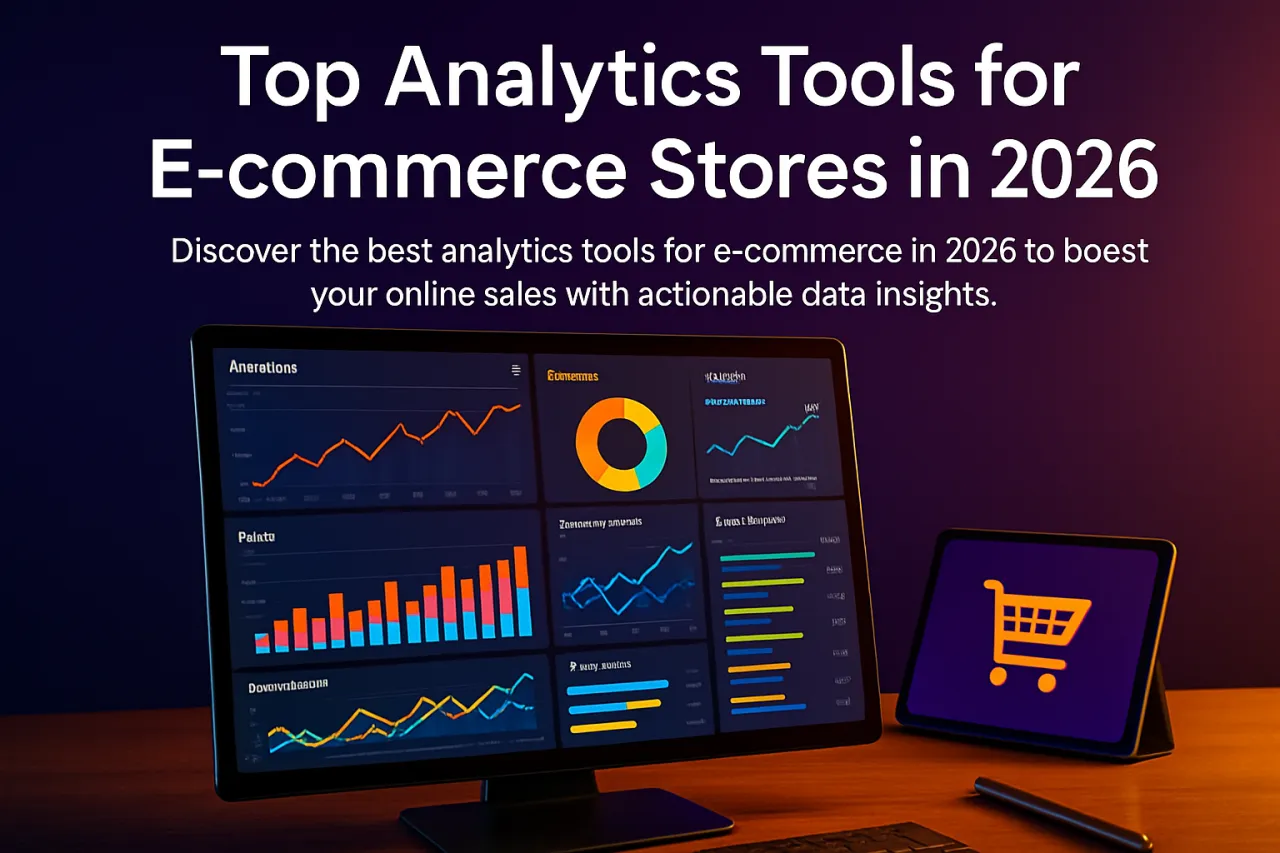
Top Analytics Tools for E-commerce Stores in 2026
Introduction
Understanding customer behavior is essential for e-commerce success. Analytics tools play a critical role in providing insights that inform business decisions, enhance customer experiences, and ultimately drive sales. In this article, we’ll review the best analytics tools tailored for e-commerce stores in 2026. We’ll offer unique comparisons of features to guide you in selecting the most effective tools for your online business.
With the rapid growth of e-commerce, having the right tools to analyze data can differentiate successful stores from those that struggle. This article aims to equip you with the knowledge necessary to make informed decisions on analytics tools, helping you to leverage data insights that can improve your online sales.
What Are Analytics Tools?
Analytics tools are software applications that collect, process, and analyze data to help businesses understand their performance, customer behavior, and market trends. They can track a wide range of metrics, including website traffic, conversion rates, and customer interactions, providing invaluable insights that inform marketing strategies and operational decisions. In the context of e-commerce, these tools enable businesses to optimize their online storefronts and enhance customer experiences.
Why It Matters
In the competitive landscape of e-commerce, data-driven decision-making is essential. Analytics tools provide clarity on customer preferences, shopping behaviors, and sales patterns. By utilizing these insights, e-commerce businesses can tailor their offerings, optimize marketing campaigns, and ultimately enhance customer satisfaction, leading to increased loyalty and repeat purchases.
Best Analytics Tools for E-commerce Stores
Google Analytics
Overview
Google Analytics is a free web analytics tool that provides comprehensive insights into website traffic and user behavior. It helps e-commerce businesses track sales conversions, understand customer journeys, and analyze marketing effectiveness.
Strengths
- Free to use with robust features
- Extensive customization options
- Integrates seamlessly with other Google services
Limitations
- Can be complex for beginners
- Data sampling may occur with large datasets
Best for
Small to medium-sized businesses looking for a powerful, free analytics solution.
Pricing overview
Free with optional paid services for enhanced features.
Shopify Analytics
Overview
Shopify Analytics is built into the Shopify platform, offering e-commerce businesses tools to track their sales, analyze customer data, and monitor store performance directly from their dashboard.
Strengths
- User-friendly interface tailored for e-commerce
- Real-time data tracking
- Integrated with Shopify store functionalities
Limitations
- Limited to Shopify users
- Fewer advanced features compared to standalone analytics tools
Best for
Businesses using Shopify that want integrated analytics solutions.
Pricing overview
Included with Shopify subscription plans, which start at $29/month.
Adobe Analytics
Overview
Adobe Analytics is a powerful and sophisticated analytics tool that provides in-depth analysis of customer data and behavior. It is designed for larger businesses and offers extensive customization and reporting capabilities.
Strengths
- Highly customizable reporting
- Advanced segmentation and predictive analytics
- Integrates with other Adobe Experience Cloud products
Limitations
- High cost, making it less accessible for small businesses
- Requires technical expertise to fully utilize
Best for
Large enterprises seeking comprehensive analytics solutions.
Pricing overview
Pricing is available upon request and varies based on business needs.
Mixpanel
Overview
Mixpanel specializes in product and user analytics. It focuses on tracking user interactions with applications and websites, offering insights into customer engagement and retention.
Strengths
- Real-time data analysis
- Event-based tracking for deeper insights
- Strong focus on user engagement
Limitations
- Can become expensive with high data usage
- Steeper learning curve for new users
Best for
Businesses looking for detailed tracking of user interactions.
Pricing overview
Free for basic features, with paid plans starting at $89/month.
How to Choose the Right Solution
When selecting an analytics tool for your e-commerce store, consider the following criteria:
- Business Size: Determine whether you need a basic tool or a comprehensive system based on your business scale.
- Specific Needs: Identify what insights are most important to you (e.g., customer behavior, sales tracking).
- Ease of Use: Consider the user interface and whether your team can effectively utilize the tool.
- Integration: Ensure the tool can integrate with your existing systems (e.g., CRM, e-commerce platform).
- Budget: Evaluate the cost in relation to the features offered and your business's budget constraints.
Common Mistakes
- Ignoring Data Quality: Relying on inaccurate data can lead to poor decision-making. Always verify data sources and accuracy.
- Overlooking User Training: Not training your team on how to use analytics tools may result in underutilization of features.
- Neglecting Goals: Failing to align analytics efforts with business goals can lead to wasted resources.
Frequently Asked Questions
1. What are the key metrics to track in e-commerce analytics?
Key metrics include conversion rates, average order value, cart abandonment rates, and customer lifetime value.
2. How often should I check my analytics data?
Regularly reviewing your analytics data, such as weekly or monthly, helps you stay informed about trends and performance.
3. Can I use multiple analytics tools together?
Yes, using multiple tools can provide a more comprehensive view, but ensure they integrate well.
4. What is the difference between Google Analytics and Shopify Analytics?
Google Analytics offers broader web analytics capabilities, while Shopify Analytics focuses specifically on e-commerce metrics within the Shopify platform.
5. How can analytics tools help improve customer experience?
By analyzing customer behavior, you can tailor marketing efforts, optimize website design, and personalize offerings to enhance the overall experience.
Conclusion
Choosing the right analytics tool is crucial for e-commerce success. The tools reviewed in this article offer various strengths and limitations, catering to different business needs. As you evaluate your options, keep in mind your specific goals, budget, and the importance of data quality. By leveraging the right analytics tools, you can gain valuable insights that drive sales and improve customer satisfaction in your e-commerce store.
About the Author
Tech Journalist
James Anderson is passionate about helping teams discover the right software. As a tech journalist, He specializes in Social Media solutions and has been featured in multiple tech publications.