

Airbook vs Airtable AI
Discover the key differences between Airbook and Airtable AI in 2026. Find out which analytics tool suits your needs best!
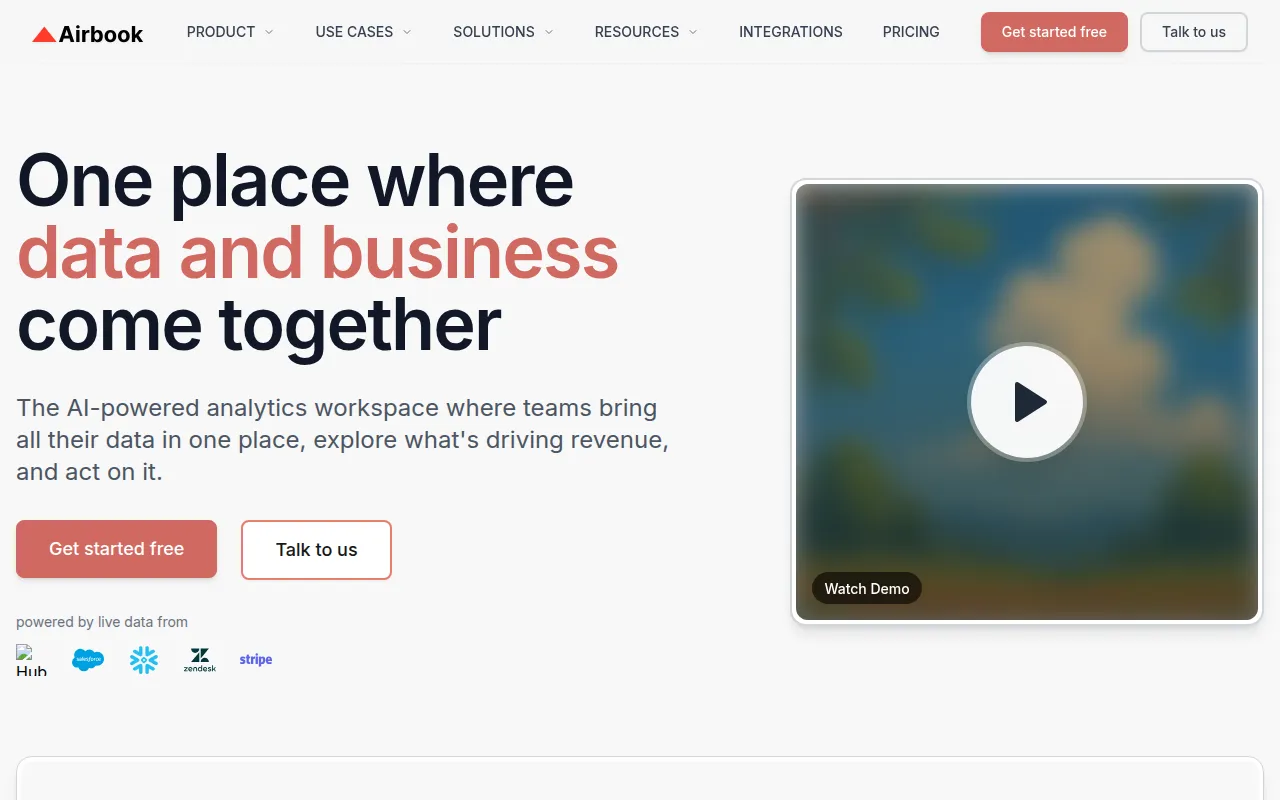

Airbook
Airbook is a GTM analytics platform that connects data across teams to enhance decision-making and revenue optimization.
View Profile →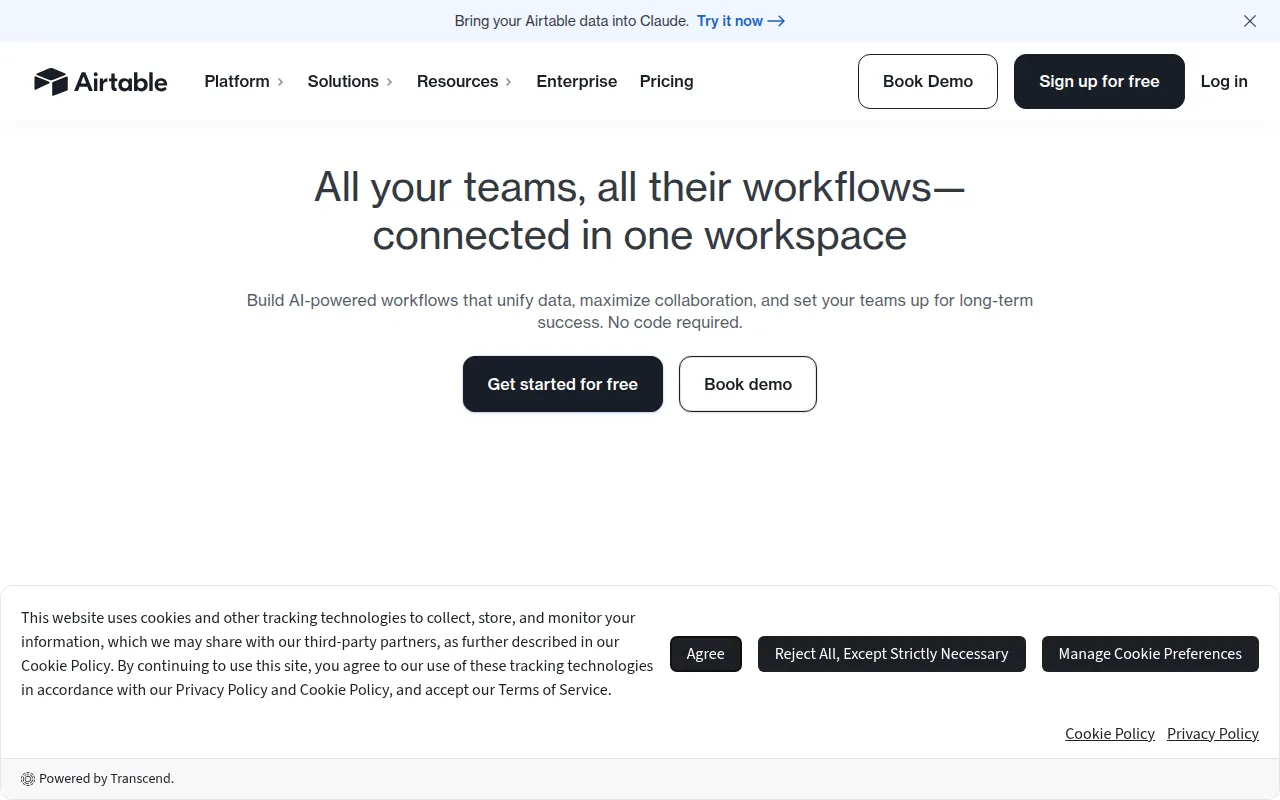

Airtable AI
Airtable AI is a versatile workflow automation tool that helps teams collaborate and streamline processes using customizable apps.
View Profile →Overview
In today's fast-paced digital landscape, businesses seek tools that enhance efficiency and data-driven decision-making. Airbook and Airtable AI serve distinct purposes but cater to teams focused on analytics and workflow automation, respectively. This comparison is tailored for business leaders, data analysts, and project managers looking to optimize their operations and improve collaboration.
Airbook Overview
Airbook is an advanced analytics platform designed to facilitate data integration across various teams, empowering organizations to make informed decisions and optimize revenue. The platform excels in connecting disparate data sources, enabling users to visualize trends and patterns that may not be immediately apparent. This functionality is particularly beneficial for data analysts and marketing teams who rely on accurate metrics to shape their strategies. For instance, a marketing team at a mid-sized e-commerce company utilized Airbook to consolidate customer behavior data from multiple channels, leading to a 20% increase in conversion rates by making data-driven adjustments to their campaigns.
One of Airbook's most notable strengths is its user-friendly interface, which simplifies the complex world of analytics for non-technical users. The platform offers customizable dashboards that allow teams to tailor data presentations to their specific needs. Additionally, the freemium pricing model makes it an attractive option for startups and small businesses looking to leverage analytics without heavy upfront costs. A small tech startup used Airbook's freemium plan to track user engagement metrics, ultimately refining their product based on the insights gained, which contributed to their rapid growth.
Airtable AI Overview
Airtable AI is a versatile workflow automation tool that combines the power of customizable apps with artificial intelligence to streamline processes and enhance collaboration among teams. The platform is particularly suited for project managers, content teams, and businesses that require flexible, organized solutions for task management and data handling. For example, a content marketing team adopted Airtable AI to manage their editorial calendar, utilizing its automation features to schedule posts and track performance metrics, which greatly improved their workflow efficiency.
Airtable AI stands out due to its highly customizable nature, allowing users to create apps tailored to their specific workflows. With a plethora of templates and integrations available, teams can adapt the platform to suit various project needs, from tracking sales leads to managing event planning. The AI capabilities enhance the user experience by providing intelligent suggestions and automating repetitive tasks, freeing up time for teams to focus on more strategic activities. A nonprofit organization leveraged Airtable AI to manage volunteer schedules, improving communication and increasing volunteer engagement significantly.
Feature Comparison
| Feature | Airbook | Airtable AI |
|---|---|---|
| Data Integration | Robust integration with various data sources | Integrates with a wide range of applications |
| Dashboard Customization | Highly customizable dashboards for data visualization | Customizable views and apps tailored to workflows |
| Automation Features | Limited automation capabilities | Strong automation tools to streamline repetitive tasks |
| User Interface | User-friendly interface focused on analytics | Intuitive design suitable for non-technical users |
| Collaboration Tools | Basic collaboration features | Robust collaboration tools with comment and chat options |
| Reporting | Advanced reporting features with real-time data | Custom reports based on user-defined parameters |
| Freemium Plan | Freemium with limited features | Freemium with more extensive capabilities |
| Scalability | Scalable options for growing teams | Flexible scalability for various business sizes |
| AI Features | No AI capabilities | AI-driven suggestions and insights |
| Support and Resources | Good support with analytics-focused resources | Comprehensive support with extensive documentation and community |
Pricing Comparison
Both Airbook and Airtable AI operate on a freemium pricing model, making them accessible to users looking to explore their functionalities without initial investment. Airbook offers a basic free plan that includes essential analytics features, perfect for startups and small teams. Paid tiers are available for users requiring advanced analytics capabilities, with prices scaling based on the number of users and features needed.
Airtable AI, on the other hand, also provides a free plan that allows users to create and automate workflows with limited features. Its tiered pricing structure includes several paid options that unlock more advanced functionalities, such as higher record limits and automation capabilities. For businesses seeking extensive customization and automation, Airtable AI's paid tiers may offer better value for money compared to Airbook, particularly for teams that prioritize workflow management in addition to analytics.
Pros and Cons
Airbook Pros and Cons
- Pro: Robust data integration capabilities that connect various data sources for insightful analytics.
- Pro: User-friendly interface designed for non-technical users, making analytics accessible to all team members.
- Pro: Strong reporting features that allow for real-time data tracking and visualization.
- Con: Limited automation features compared to competitors, which may hinder efficiency for some teams.
- Con: The freemium model offers fewer features compared to other tools, which may limit initial user experience.
Airtable AI Pros and Cons
- Pro: Highly customizable apps and workflows that can be tailored to specific team needs.
- Pro: Strong automation capabilities that enhance productivity by streamlining repetitive tasks.
- Pro: Intuitive design that is easy to navigate, making it suitable for both technical and non-technical users.
- Con: The advanced features may require a steeper learning curve for new users unfamiliar with workflow automation tools.
- Con: While the freemium plan is robust, some key features are locked behind higher-tier paid options.
Which Should You Choose?
If you are a data analyst or a marketing team leader focused on enhancing decision-making through data insights, Airbook is the tool for you. Its advanced analytics capabilities and user-friendly interface make it ideal for teams that prioritize data visualization and reporting without the need for extensive automation.
On the other hand, if you are part of a project management team that requires flexible workflow automation and collaboration tools, Airtable AI may be the better choice. Its customization options and strong automation features allow teams to streamline processes effectively, making it suitable for organizations looking to boost productivity.
For small businesses or startups, both tools offer valuable free plans. However, if your primary need is data integration and analysis, Airbook’s freemium model may suffice. Conversely, if workflow management is critical, Airtable AI provides more comprehensive features even in its free version. Finally, larger organizations looking for scalability may find Airtable AI's tiered pricing and extensive capabilities more advantageous.
Conclusion
In summary, both Airbook and Airtable AI serve distinct yet essential roles in the business landscape. Depending on your specific needs—whether it's advanced analytics or flexible workflow automation—either tool can enhance your team's performance. For businesses focused on data insights, Airbook is a strong choice, while Airtable AI is better suited for those seeking to streamline and automate workflows.
Frequently Asked Questions
It depends on your specific needs. Airbook excels in advanced analytics and data integration, making it ideal for data-driven decision-making, while Airtable AI focuses on workflow automation and collaboration, catering more to project management.
Airbook typically offers tiered pricing based on the features and data volume, whereas Airtable AI has a freemium model with additional features available in paid plans. It's essential to compare the specific features offered at each pricing tier.
Airbook is particularly useful for businesses that require deep data insights and analytics for strategic planning. In contrast, Airtable AI is great for teams that need to streamline project workflows, manage tasks, and collaborate in real-time.
When migrating, assess the complexity of your existing data and workflows. Airbook may require more technical expertise for integration, while Airtable AI is generally user-friendly, making it easier for teams to get started quickly.
Both platforms offer free plans, but they differ in capabilities. Airtable AI's free plan includes basic features for workflow automation, whereas Airbook's free tier may provide limited access to analytics tools, so evaluate which features are crucial for your business.
A tie-breaker could be the level of collaboration needed in your team. If your focus is heavily on team collaboration and project management, Airtable AI might be the better choice. If data analytics is your priority, then Airbook would be more suitable.