

Buffer vs AirOps
Discover the differences between Buffer and AirOps in 2026. Find the right marketing tool for your needs today!
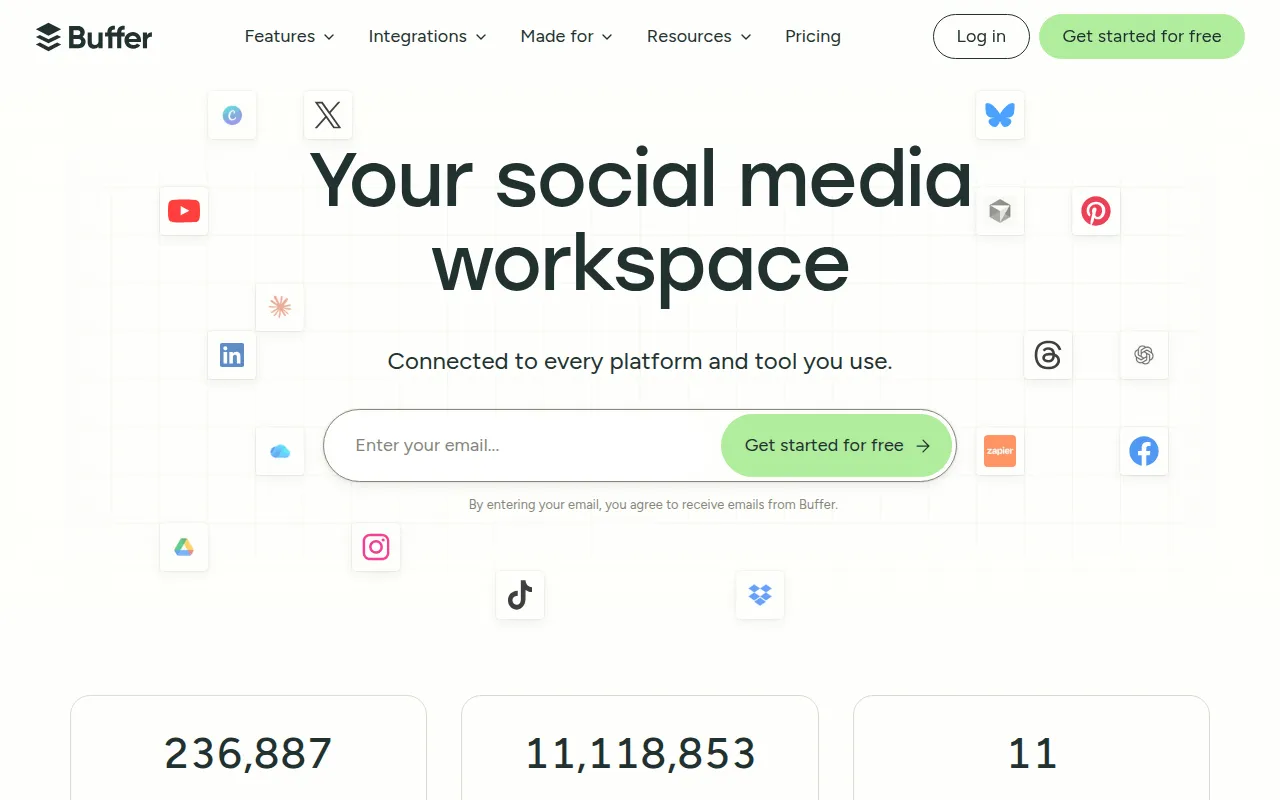
Buffer
Social media scheduling and management. Plan, schedule, and analyze content for all your social channels.
View Profile →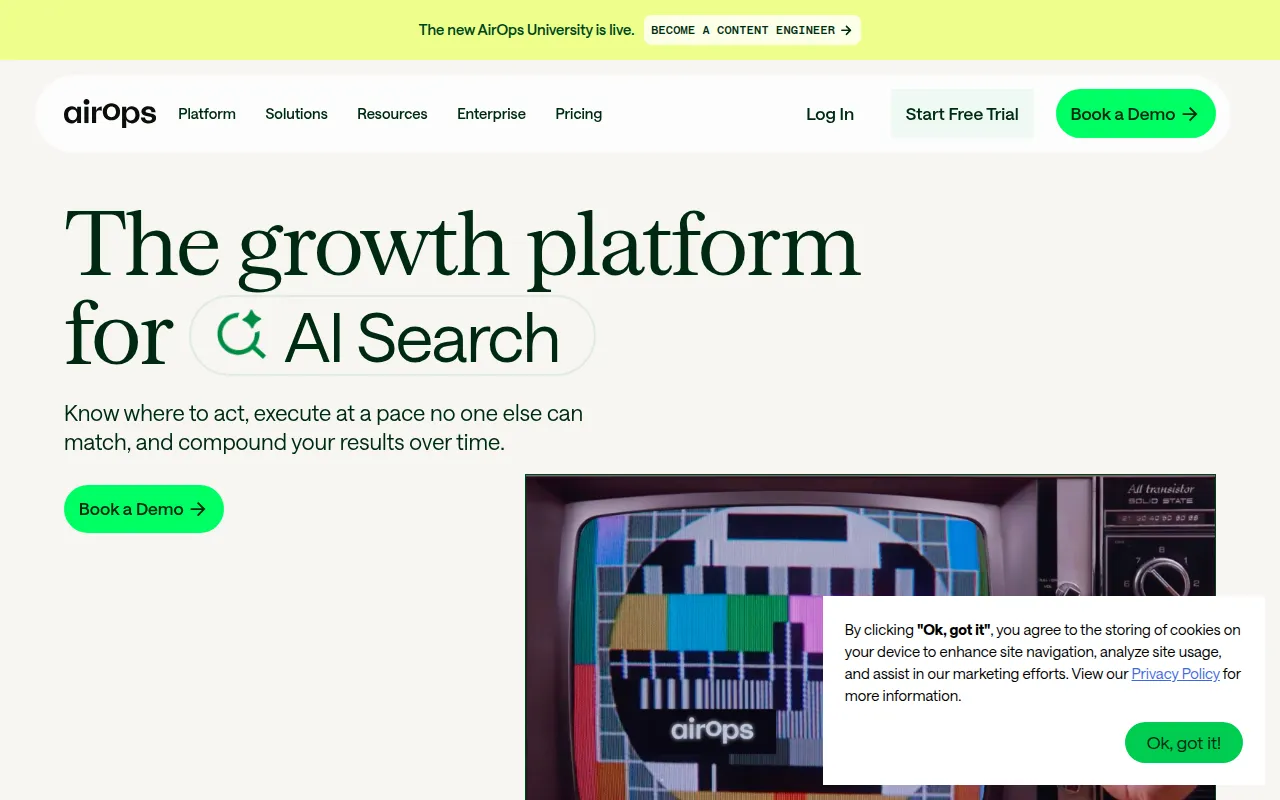

AirOps
AirOps is a growth platform that enhances AI search and AEO for marketing teams, optimizing content visibility and engagement.
View Profile →Overview
This article provides a detailed comparison of Buffer and AirOps, two powerful marketing tools designed to enhance social media management and content visibility. Buffer is aimed at social media managers and marketers looking to streamline their scheduling and analytics, while AirOps serves marketing teams focused on leveraging AI for improved content engagement and discoverability. Both tools cater to distinct user needs, making it essential to evaluate their features and pricing to determine the best fit for your marketing strategy.
Buffer Overview
Buffer is a widely recognized social media scheduling and management tool that helps users plan, schedule, and analyze content across multiple social media channels. Designed primarily for social media managers, small businesses, and marketing teams, Buffer provides a user-friendly interface that allows for efficient content distribution. Its core use case revolves around easing the burden of managing multiple social accounts by offering features like a unified dashboard, content calendar, and analytics. Users can easily schedule posts in advance, ensuring a consistent online presence while freeing up time for other marketing tasks.
One of Buffer's standout strengths is its analytics capabilities. Users can track engagement metrics such as likes, shares, and comments, allowing them to gain insights into what content resonates with their audience. Additionally, Buffer's browser extension simplifies the process of sharing content directly from the web, making it easier to curate and distribute relevant articles or posts. With competitive pricing that includes a freemium model, Buffer is accessible for solo entrepreneurs and scalable for larger teams, making it a versatile option for various user types.
AirOps Overview
AirOps is a growth platform that focuses on enhancing AI search and AEO (App Engine Optimization) for marketing teams, optimizing content visibility and user engagement. Unlike Buffer, which primarily targets social media management, AirOps is designed for content marketers and SEO specialists looking to leverage artificial intelligence to boost their marketing efforts. Its core functionality revolves around improving the discoverability of content through advanced search techniques and data-driven insights, making it a valuable tool for businesses aiming to enhance their online presence.
The most notable strengths of AirOps lie in its AI-driven capabilities. The platform uses machine learning algorithms to analyze user behavior and optimize content strategies accordingly. This allows marketing teams to refine their content creation process based on real-time data, ultimately leading to higher engagement rates and better ROI. Additionally, AirOps offers a tiered pricing model, providing users with flexible options to access basic features for free while allowing for upgrades as their needs grow. This makes AirOps an appealing choice for teams looking to innovate and stay ahead in the competitive digital landscape.
Feature Comparison
| Feature | Buffer | AirOps |
|---|---|---|
| Social Media Scheduling | Yes, for multiple channels | No, focuses on content optimization |
| Content Calendar | Yes, visual planning tool | No, lacks integrated calendar |
| Analytics & Reporting | Comprehensive metrics on engagement | AI-driven insights for content performance |
| Browser Extension | Yes, easy sharing from the web | No, does not offer a browser extension |
| AI Tools | No, primarily manual scheduling | Yes, utilizes AI for optimization |
| Freemium Plan | Yes, for 3 channels | Yes, basic access available |
| Team Collaboration | Supports team accounts and workflows | Designed for marketing teams, collaboration features available |
| Content Curation | Yes, allows for easy content sharing | No, focuses on optimization |
| SEO Integration | Limited, primarily social media focused | Strong, integrates SEO strategies |
| User-Friendly Interface | Yes, intuitive design | Yes, though more complex due to features |
Pricing Comparison
Buffer offers a freemium model where users can manage up to three social media channels for free. For those needing more functionality, the Essentials plan starts at $6 per channel per month, allowing access to additional features such as post analytics and team collaboration. The Team plan is priced at $12 per channel per month, providing advanced options designed for larger marketing teams, including enhanced reporting and priority support. This tiered pricing structure makes Buffer a cost-effective choice for individuals and small teams, while still being scalable for larger organizations.
On the other hand, AirOps also provides a freemium option, allowing users to access basic features at no cost. Its tiered pricing starts at $0 but varies based on the additional features required. Beyond the free tier, users can upgrade to paid plans that unlock advanced tools for AI-driven content optimization and analytics, though specific pricing details may vary based on the features selected. This flexibility allows marketing teams to choose the level of access that best suits their needs without committing to a hefty upfront investment. Overall, both tools provide good value for money, but the choice largely depends on whether the user prioritizes social media management or content optimization.
Pros and Cons
Buffer Pros and Cons
- Pro: User-friendly interface that simplifies social media management.
- Pro: Comprehensive analytics features help track engagement effectively.
- Pro: Flexibility with pricing tiers caters to both individuals and teams.
- Con: Limited SEO capabilities compared to dedicated optimization tools.
- Con: The free plan is restricted to just three social channels.
AirOps Pros and Cons
- Pro: AI-driven insights enhance content performance and engagement.
- Pro: Strong focus on SEO and content optimization for marketing teams.
- Pro: Flexible freemium model allows users to explore features before committing.
- Con: Steeper learning curve due to advanced features and AI integration.
- Con: Lacks social media scheduling capabilities, focusing more on content strategy.
Which Should You Choose?
If you are a social media manager or a small business owner focusing on maintaining a consistent online presence, Buffer is likely the better choice for you. Its intuitive interface and robust scheduling features allow for easy management of multiple accounts, while its analytics tools provide valuable insights into audience engagement. Additionally, the affordable pricing structure makes it accessible for freelancers and small teams looking to grow their social media impact without breaking the bank.
For marketing teams that prioritize content optimization and engagement through advanced analytics, AirOps is an excellent option. Its AI-driven features allow for real-time data analysis and help refine content strategies, making it particularly useful for businesses that want to enhance their visibility in search results. If your team is larger and focuses heavily on SEO and content marketing, investing in AirOps can provide significant long-term benefits.
For consultants and agencies that need to manage multiple clients, consider Buffer for its straightforward scheduling capabilities and analytics. However, if your agency specializes in content marketing and needs to leverage AI for better performance, AirOps would be a more fitting tool. Ultimately, the decision should align with your specific marketing goals and the type of content strategy you wish to implement.
Conclusion
Both Buffer and AirOps serve distinct purposes within the marketing landscape, making them valuable tools depending on your specific needs. Buffer excels in social media management with its user-friendly scheduling and analytics, while AirOps stands out with its AI-driven content optimization features. Ultimately, your choice should depend on whether you prioritize social media management or content visibility enhancement in your marketing strategy.
Frequently Asked Questions
The choice between Buffer and AirOps largely depends on your specific needs. Buffer excels in social media scheduling and analytics, making it ideal for traditional social media managers. In contrast, AirOps leverages AI to enhance content engagement, making it better suited for teams focused on innovative marketing strategies.
Buffer typically offers tiered pricing based on the number of social accounts and features needed, starting with a basic free plan. AirOps, on the other hand, may have a higher entry point due to its AI-driven capabilities, but it often includes more advanced features that can justify the cost for teams seeking to boost their content visibility.
Buffer is perfect for social media managers aiming to schedule posts and analyze performance metrics across platforms. AirOps is more suitable for marketing teams that want to use AI for personalized content recommendations and improved discoverability, making it a great choice for those focusing on content marketing strategies.
When migrating from Buffer to AirOps or vice versa, consider the learning curve associated with new features and interfaces. Additionally, assess how your current workflows may need to adapt, and ensure that you can transfer existing analytics or historical data to maintain continuity in your marketing efforts.
Buffer offers a free plan that allows basic scheduling for a limited number of accounts, making it accessible for individuals and small teams. AirOps may not provide a comparable free plan, focusing instead on its premium features, which could limit access for users wanting to test the platform before committing.
A key tie-breaker question could be, 'Is my primary goal to streamline social media management or to enhance content engagement using AI?' If the former is your focus, Buffer may be the better fit, while AirOps would shine if you prioritize innovative content strategies.