Why Look for Alternatives to Jam?
While Jam is designed to simplify the bug reporting process for developers by automatically generating ready-to-share reports, it may not fully meet the diverse needs of all users. One significant limitation is the lack of comprehensive pricing information, which can create uncertainty for teams evaluating the overall cost of implementation. Additionally, users have reported that Jam may not offer robust integrations with other tools in their development stack, which can hinder workflow efficiency. For teams relying on a variety of software for project management, collaboration, and testing, the absence of these integrations can lead to fragmented processes and increased manual work.
Furthermore, Jam’s focus on bug reporting may come at the expense of other critical functionalities that developers require. For instance, users looking for end-to-end testing solutions or automated documentation may find Jam lacking in these areas. As software development continues to evolve, teams are increasingly looking for tools that not only help with bug tracking but also integrate AI-driven capabilities to enhance productivity. These pain points drive many users to seek out alternatives that can provide a more comprehensive solution to their development needs.
Best Alternatives to Jam in 2026
DOCKR - Best for Documentation Automation
Dockr stands out as an excellent alternative for teams that require seamless documentation generation alongside their development processes. Unlike Jam, which focuses primarily on bug reporting, Dockr automatically creates and updates documentation based on changes in the code base. This feature is particularly valuable for teams that need to keep their documentation current without the constant manual effort that often accompanies code updates. With Dockr, developers can focus more on coding and less on administrative tasks, making it a vital addition to any development workflow.
Moreover, Dockr's AI-driven approach to documentation means that it can adapt to the specific needs of your project, learning as your codebase evolves. This adaptability not only saves time but also helps ensure that documentation accurately reflects the current state of the project. For developers who are frustrated with the limitations of Jam in terms of documentation capabilities, Dockr offers a compelling solution that enhances productivity and reduces overhead.
- Key Strength: Automatic documentation updates based on code changes.
- Key Strength: AI-driven adaptability to evolving project needs.
- Key Strength: Reduces manual documentation efforts significantly.
- Limitation: May not focus specifically on bug reporting features.
Pricing: Freemium with usage-based pricing. Best for: Development teams that prioritize documentation automation.
Vercel Checkpoint - Best for Workflow Automation
Vercel Checkpoint offers a sophisticated solution for developers looking to streamline their project management and deployment processes. Unlike Jam, which is primarily focused on bug reporting, Vercel Checkpoint automates various workflows, enabling teams to manage their projects more efficiently. This tool is particularly beneficial for developers who often find themselves bogged down by repetitive tasks, as it allows for more streamlined collaboration and faster deployment cycles. With its intuitive interface, Vercel Checkpoint simplifies the overall development lifecycle.
In addition to its automation capabilities, Vercel Checkpoint integrates seamlessly with other tools commonly used in development environments, thereby enhancing its utility in a developer's toolkit. For teams that find Jam lacking in terms of project management features, Vercel Checkpoint provides a well-rounded alternative that not only improves workflow efficiency but also supports faster iteration and deployment.
- Key Strength: Automation of workflows for enhanced project management.
- Key Strength: Seamless integration with other development tools.
- Key Strength: Intuitive interface that simplifies collaboration.
- Limitation: Primarily focused on deployment, less on bug tracking.
Pricing: Freemium with pricing details currently unavailable. Best for: Development teams looking to automate workflows efficiently.
Whacka - Best for No-Code App Development
If you are a developer or a product manager seeking to create applications without extensive coding knowledge, Whacka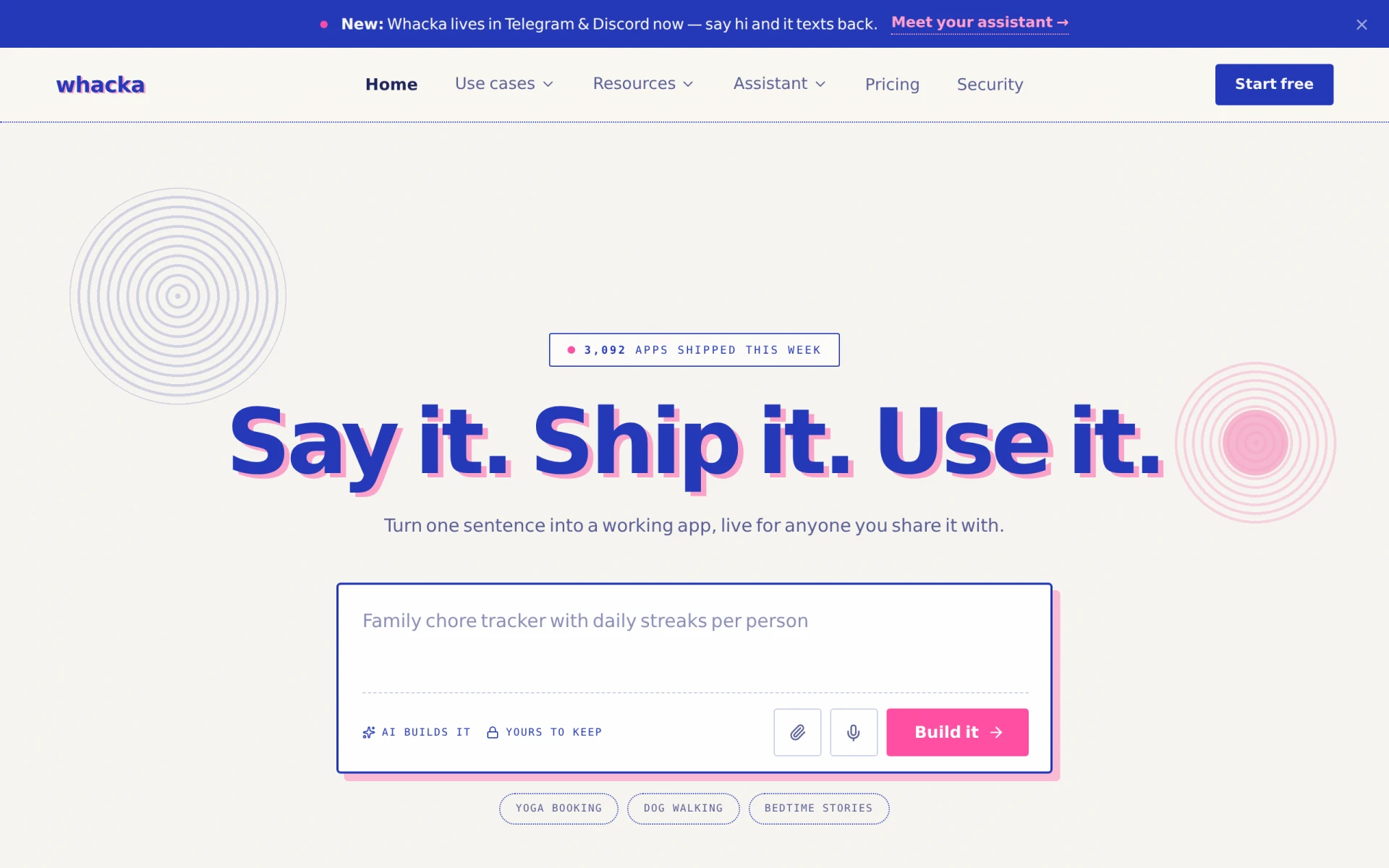 is an exceptional alternative to Jam. Whacka enables users to build apps simply by describing them in plain language, making it accessible to non-technical team members as well. This no-code approach can significantly accelerate the app development process, allowing teams to focus on idea generation and user experience rather than getting bogged down by coding challenges.
In contrast to Jam, which is designed for bug reporting, Whacka provides a platform for rapid prototyping and testing of app concepts, catering to a different segment of the development process. Teams that wish to involve stakeholders from various backgrounds in the app creation process will find Whacka’s user-friendly interface particularly advantageous. This capability to democratize app development can lead to more innovative solutions and a stronger alignment with user needs.
- Key Strength: Enables app creation through plain language descriptions.
- Key Strength: Accessible for non-technical team members, facilitating collaboration.
- Key Strength: Accelerates the prototyping and testing phases.
- Limitation: May not provide as robust bug tracking features.
Pricing: Freemium with a free trial and usage-based payment model. Best for: Teams looking to empower non-developers in app creation.
Momentic - Best for AI-Driven Testing
Momentic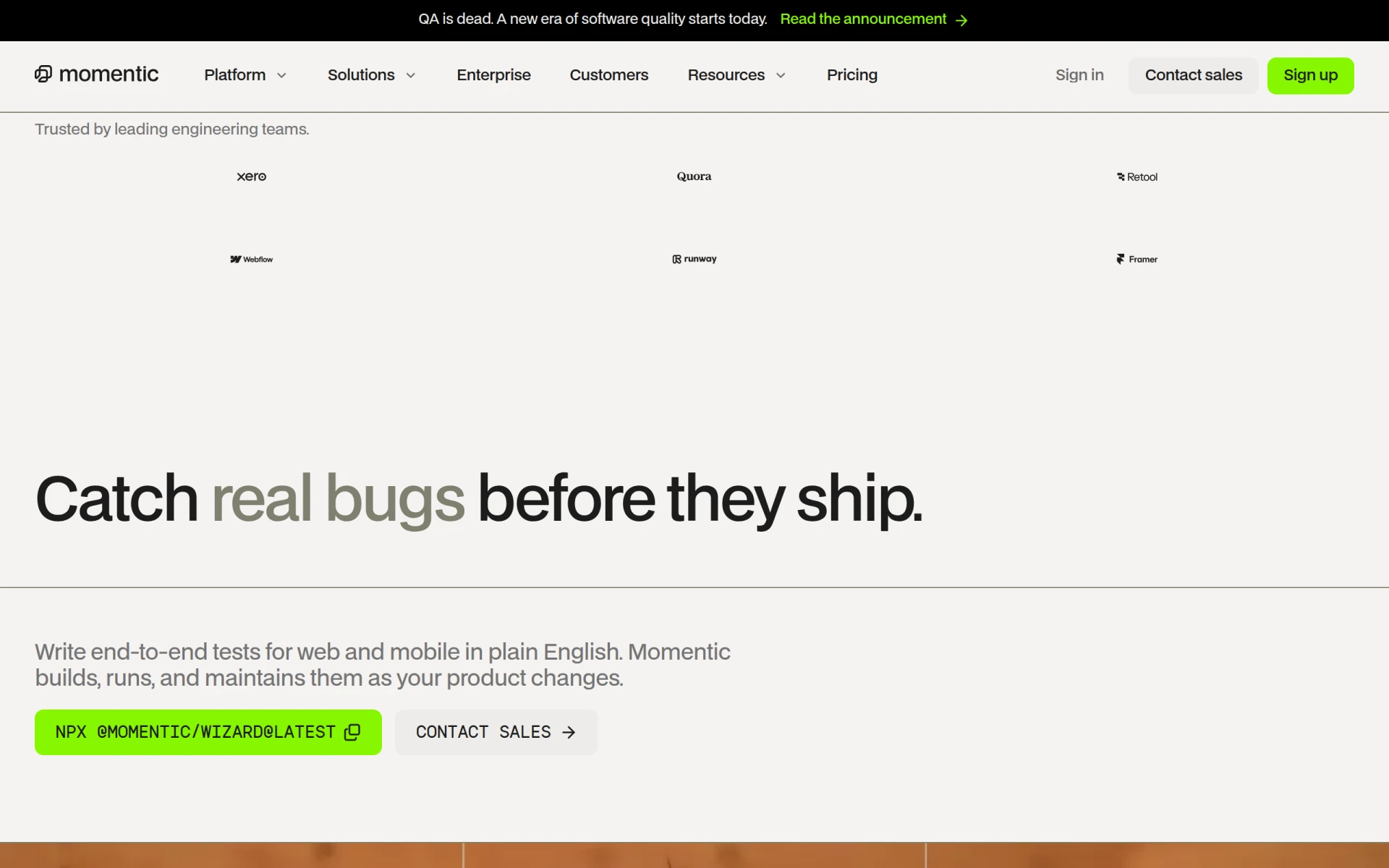 is an AI-driven end-to-end testing tool designed to simplify the testing process for web and mobile applications. Unlike Jam, which primarily focuses on bug reporting, Momentic allows developers to write tests in plain English, significantly lowering the barrier to effective testing. This feature makes it easier for teams to create comprehensive test cases without needing to be experts in testing frameworks or coding languages, thus streamlining the testing workflow.
Moreover, Momentic’s AI capabilities enable it to adapt and learn from previous test executions, improving accuracy and efficiency over time. This continuous learning aspect sets it apart from Jam, which may not offer such advanced testing features. For teams that prioritize testing within their development cycle, Momentic provides a powerful alternative that enhances both the speed and quality of software releases.
- Key Strength: AI-driven test writing in plain English.
- Key Strength: Continuous learning for improved testing accuracy.
- Key Strength: Simplifies the testing process for web and mobile applications.
- Limitation: Higher starting price compared to some alternatives.
Pricing: Freemium with plans starting at $125 per month. Best for: Teams focused on simplifying the testing process.
TESTR - Best for Automated Unit Testing
TESTR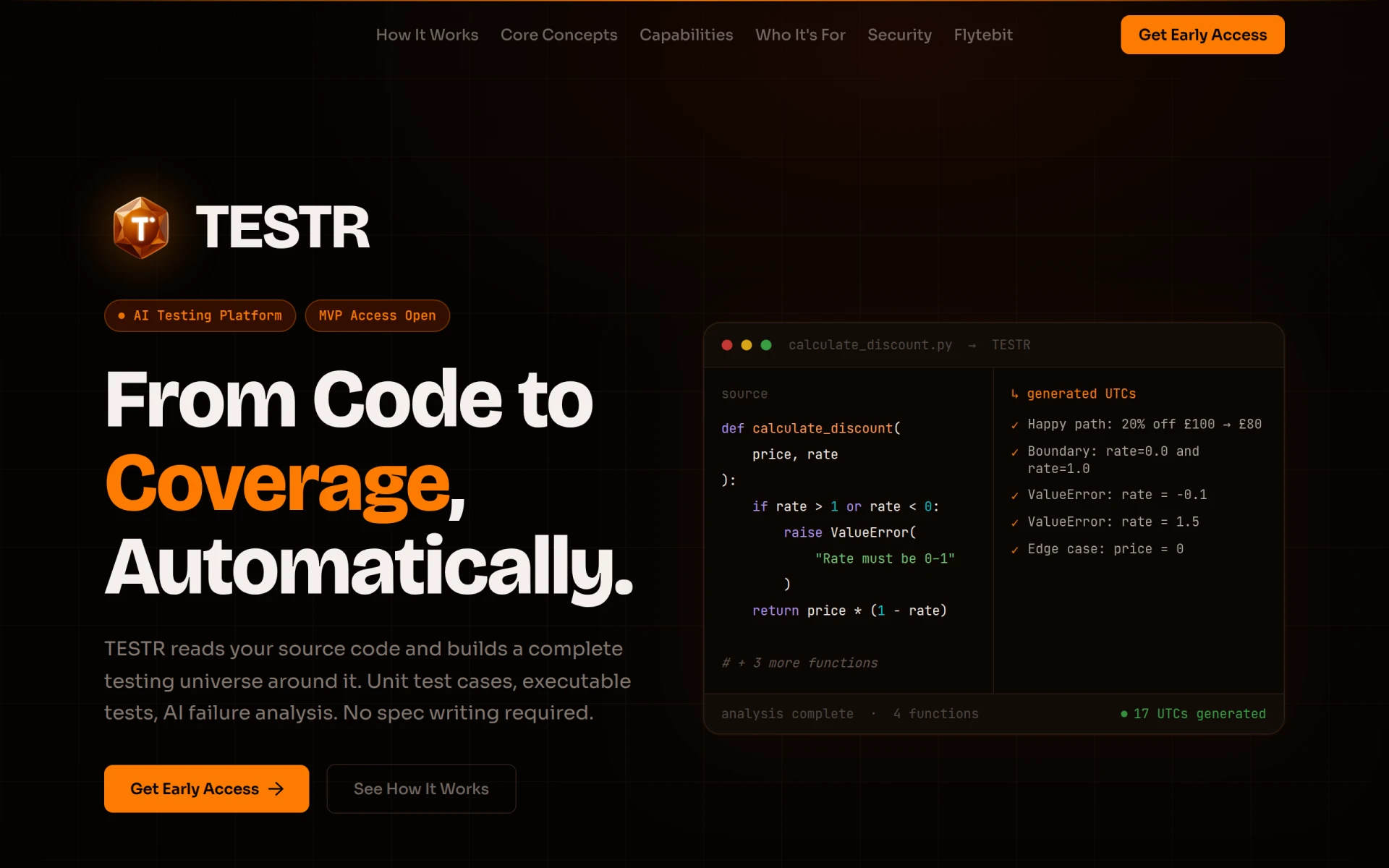 is an AI-driven testing platform that excels in automatically generating unit tests and analyzing code failures, making it a robust alternative to Jam for teams that prioritize software reliability. While Jam simplifies bug reporting, TESTR automates the creation of tests, which can help catch issues earlier in the development process. This proactive approach to testing can significantly enhance code quality and reduce debugging time down the line.
An additional advantage of TESTR is its ability to analyze code failures, providing insights that can be invaluable for developers looking to improve their codebase. Unlike Jam, which focuses on reporting existing bugs, TESTR aids in preventing bugs from becoming an issue in the first place. For teams that recognize the importance of thorough testing in their development lifecycle, TESTR presents a compelling solution that integrates seamlessly into existing workflows.
- Key Strength: Automatic generation of unit tests.
- Key Strength: Detailed analysis of code failures for improved reliability.
- Key Strength: Proactive approach to bug prevention.
- Limitation: Specific pricing details are currently unavailable.
Pricing: Freemium with pricing information not disclosed. Best for: Teams that prioritize automated unit testing and code reliability.
Windsurf - Best for AI Coding Assistance
Windsurf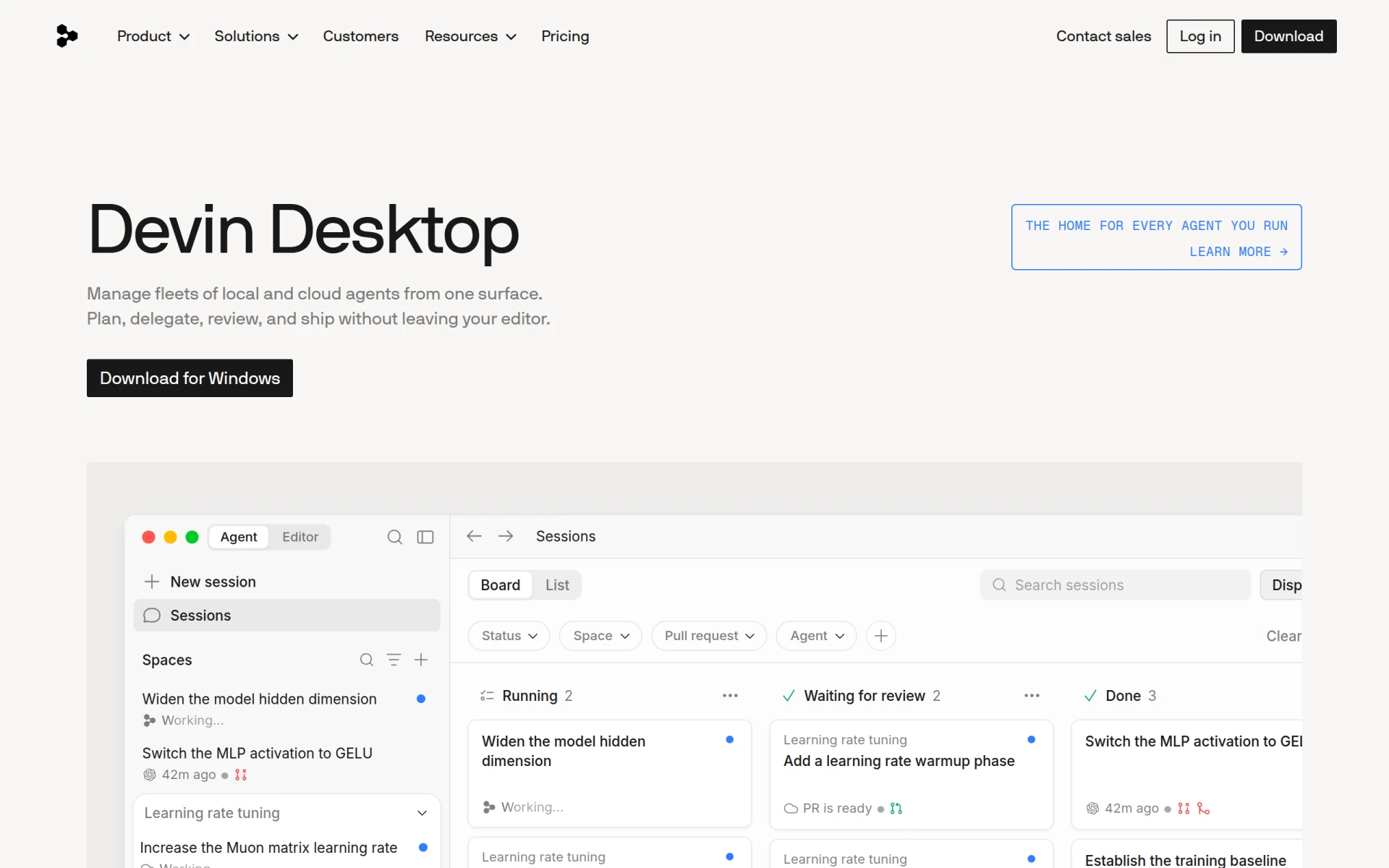 serves as an AI coding assistant that streamlines the coding process by helping developers manage both local and cloud agents effortlessly. This tool is particularly beneficial for teams that require quick access to coding resources without the traditional overhead associated with managing multiple environments. Unlike Jam, which is focused on bug reporting, Windsurf enhances the coding experience itself, allowing developers to be more efficient in their work.
One of Windsurf's standout features is its ability to integrate with various development platforms, ensuring that coding assistance is readily available regardless of the environment. This flexibility allows development teams to maintain productivity while working on diverse projects. For those who find Jam lacking in terms of coding assistance features, Windsurf offers a more holistic approach that addresses the broader challenges developers face in their day-to-day work.
- Key Strength: AI-driven assistance for managing local and cloud agents.
- Key Strength: Integration with various development platforms.
- Key Strength: Enhances coding efficiency and productivity.
- Limitation: Limited focus on bug reporting capabilities.
Pricing: Freemium with a free plan for individuals and paid plans for enhanced features. Best for: Developers seeking AI assistance in coding.
Build AI - Best for Rapid AI Application Development
BuildAI is a no-code platform designed to enable users to create AI applications quickly and easily, making it an excellent alternative for those looking for speed in app development. Unlike Jam, which is primarily a bug reporting tool, BuildAI empowers users to focus on the actual creation of AI applications without needing extensive programming skills. This feature is particularly advantageous for teams that wish to leverage AI technology but lack the resources to hire specialized developers.
The platform’s intuitive drag-and-drop interface allows users to build AI applications in a fraction of the time it would take using traditional coding methods. Additionally, BuildAI supports rapid prototyping, enabling teams to test and iterate on their ideas swiftly. For those who find Jam inadequate for their app development needs, BuildAI provides a powerful alternative that democratizes the process of creating AI solutions.
- Key Strength: Rapid development of AI applications through a no-code platform.
- Key Strength: Intuitive drag-and-drop interface for ease of use.
- Key Strength: Supports quick prototyping and iteration on ideas.
- Limitation: May not provide extensive bug tracking features.
Pricing: Freemium with a free trial and various paid plans. Best for: Teams looking to quickly create AI applications without coding.
Reworkd - Best for Web Scraping
Reworkd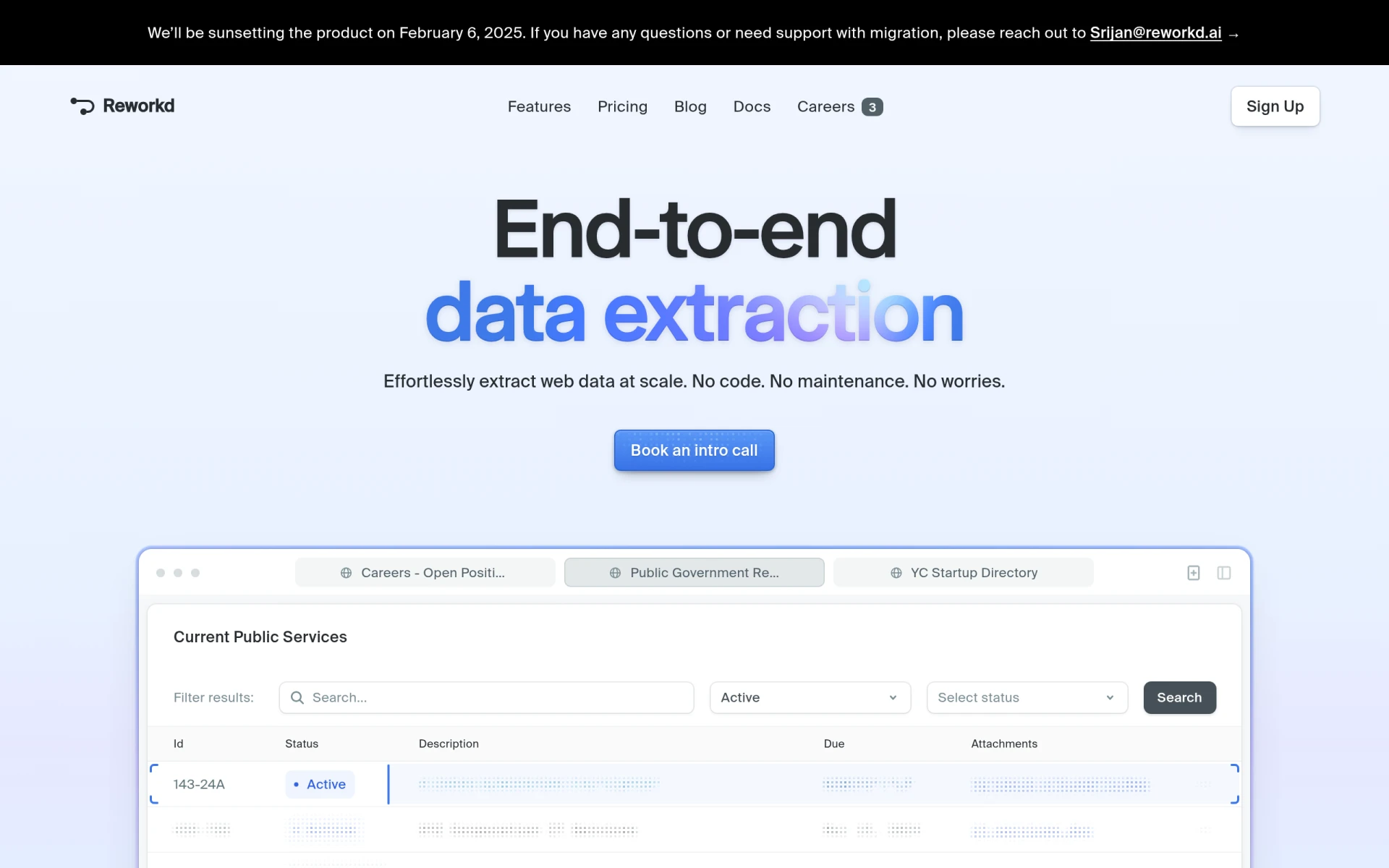 is a powerful end-to-end web scraping tool that allows users to efficiently extract data without needing any coding skills. This capability makes it an excellent alternative to Jam for teams that require data collection as part of their project process. Unlike Jam, which focuses solely on bug reporting, Reworkd empowers users to gather valuable insights from the web, facilitating better decision-making based on real-time data.
Reworkd's user-friendly interface allows users to set up scraping tasks quickly, enabling them to focus on analysis rather than the technicalities of data extraction. This ease of use is complemented by robust features that allow for scheduled scraping and data storage, making it a comprehensive solution for teams needing to integrate web-sourced data into their workflows. For teams that find Jam insufficient for data extraction needs, Reworkd is a strong alternative that can enhance their data-driven strategies.
- Key Strength: No coding required for data extraction tasks.
- Key Strength: User-friendly interface for quick setup.
- Key Strength: Scheduled scraping and data storage capabilities.
- Limitation: Less focus on bug tracking functionalities.
Pricing: Freemium with a free hobby plan and a Pro plan for $99 per month. Best for: Teams needing efficient web scraping tools.
Sider - Best for Code Review Collaboration
Sider is a code review tool designed to enhance collaboration among development teams, providing a valuable alternative to Jam for teams looking to improve their code quality. While Jam focuses primarily on bug reporting, Sider streamlines the code review process, making it easier for teams to collaborate on code changes and ensure that quality standards are met before deployment. This focus on collaboration can significantly reduce the number of bugs that make it into production.
Moreover, Sider integrates with various version control systems, allowing developers to incorporate code reviews into their existing workflows seamlessly. This integration is essential for teams that utilize multiple tools and need a cohesive process for managing code quality. For those who find Jam lacking in collaborative features, Sider offers a focused approach that addresses the critical need for effective code reviews in the development lifecycle.
- Key Strength: Enhances collaboration through streamlined code reviews.
- Key Strength: Integrates with various version control systems.
- Key Strength: Helps maintain high code quality standards.
- Limitation: Pricing information is currently not disclosed.
Pricing: Freemium with pricing information unavailable. Best for: Teams focused on improving code quality through collaboration.
Railway - Best for Development Workflow Automation
Railway is a developer tool that automates and streamlines workflow processes for software development teams, making it a valuable alternative to Jam for those looking for enhanced operational efficiency. Unlike Jam, which is primarily focused on bug reporting, Railway provides a comprehensive suite of tools that facilitate project management and continuous integration. This holistic approach to development workflows allows teams to spend less time on administrative tasks and more on actual coding and deployment.
One of Railway’s standout features is its ability to link different aspects of the development process, from coding to deployment, into a single platform. This integration can help reduce friction in workflows and improve overall productivity. For teams that find Jam insufficient for their broader development needs, Railway offers a robust solution that addresses multiple facets of the development lifecycle.
- Key Strength: Comprehensive suite for automating development workflows.
- Key Strength: Seamless integration of coding and deployment processes.
- Key Strength: Reduces administrative overhead for development teams.
- Limitation: Pricing details are currently unavailable.
Pricing: Freemium with no disclosed pricing details. Best for: Development teams looking for automation in their workflows.
Heex - Best for Workflow Automation
Heex is designed to improve efficiency for developers and teams by simplifying repetitive tasks through workflow automation. Unlike Jam, which is primarily focused on bug reporting, Heex allows teams to automate various aspects of their development workflows, freeing up valuable time for more critical tasks. This capability is especially beneficial for teams that deal with numerous repetitive processes that can slow down development cycles.
Heex’s user-friendly interface and automation capabilities enable teams to set up workflows quickly, ensuring that they can implement efficiencies without a steep learning curve. For teams that find Jam lacking in automation features, Heex provides a strong alternative that can significantly enhance productivity and streamline operations. Its focus on simplifying workflows makes it an ideal choice for teams looking to optimize their development processes.
- Key Strength: Simplifies repetitive tasks through workflow automation.
- Key Strength: User-friendly interface for quick implementation.
- Key Strength: Enhances overall team productivity.
- Limitation: Limited focus on bug tracking functionalities.
Pricing: Freemium with pricing information currently unavailable. Best for: Teams looking to automate repetitive development tasks.
TestSprite - Best for Automated Software Testing
TestSprite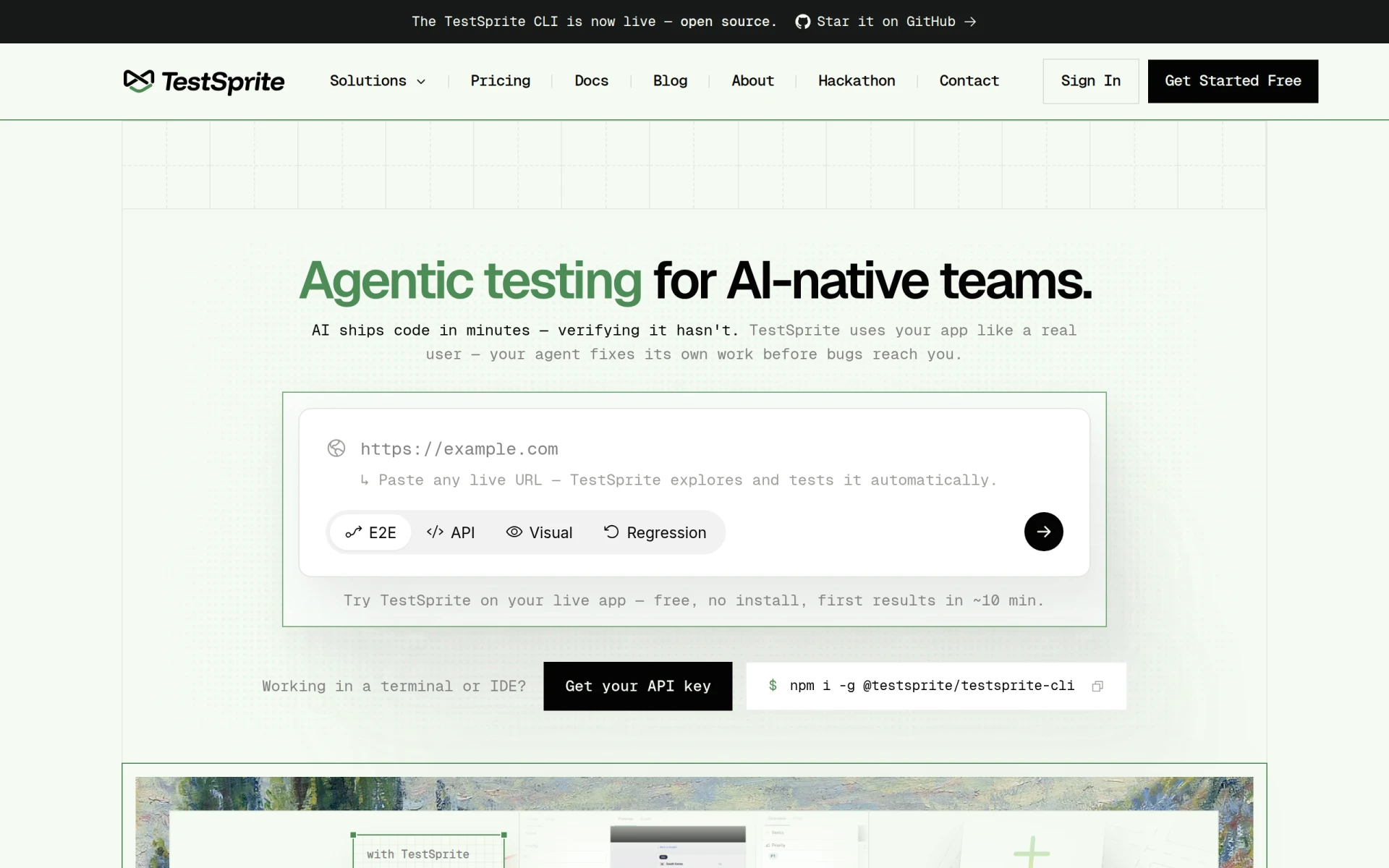 is an AI-driven software testing platform that automates the entire testing process, including test creation, execution, and debugging. This comprehensive approach makes it a compelling alternative to Jam for teams that want to enhance their testing efficiency. While Jam focuses mainly on reporting bugs, TestSprite allows teams to automate every aspect of testing, ensuring that they can deliver high-quality software without the traditional overhead associated with manual testing.
One of the standout features of TestSprite is its ability to automate the debugging process, providing developers with immediate feedback on test failures. This proactive approach to testing can significantly reduce the time spent on identifying and fixing bugs, allowing teams to focus more on feature development and less on troubleshooting. For teams that require a more robust testing solution than what Jam offers, TestSprite provides an advanced alternative that integrates seamlessly into modern development workflows.
- Key Strength: Comprehensive automation of the testing process.
- Key Strength: Immediate feedback on test failures for quicker debugging.
- Key Strength: Enhances efficiency in software delivery.
- Limitation: Pricing starts at $19 per month after the free tier.
Pricing: Freemium with paid plans starting at $19 per month after the initial month. Best for: Teams seeking comprehensive automated testing solutions.
MLCode - Best for Code Generation
MLCode is an AI-powered code generation tool that assists developers in writing and optimizing code efficiently. This tool serves as a strong alternative to Jam for teams that are looking to enhance their coding processes rather than simply manage bugs. Unlike Jam, which is primarily a bug reporting tool, MLCode focuses on improving developer productivity by providing intelligent code suggestions based on context. This feature allows developers to write code faster and with fewer errors, elevating overall code quality.
Additionally, MLCode’s learning capabilities enable it to adapt to a team’s specific coding style and preferences, further enhancing the coding experience. For teams that find Jam lacking in terms of development support, MLCode provides a valuable tool that can significantly impact productivity and code quality. Its focus on code generation makes it an ideal choice for agile development teams aiming to optimize their coding processes.
- Key Strength: AI-powered suggestions for writing and optimizing code.
- Key Strength: Adapts to the team's coding style for personalized assistance.
- Key Strength: Enhances overall developer productivity.
- Limitation: Pricing information is currently unavailable.
Pricing: Freemium with pricing details not disclosed. Best for: Teams that prioritize efficient code generation.
Akela Hub - Best for Workflow Automation
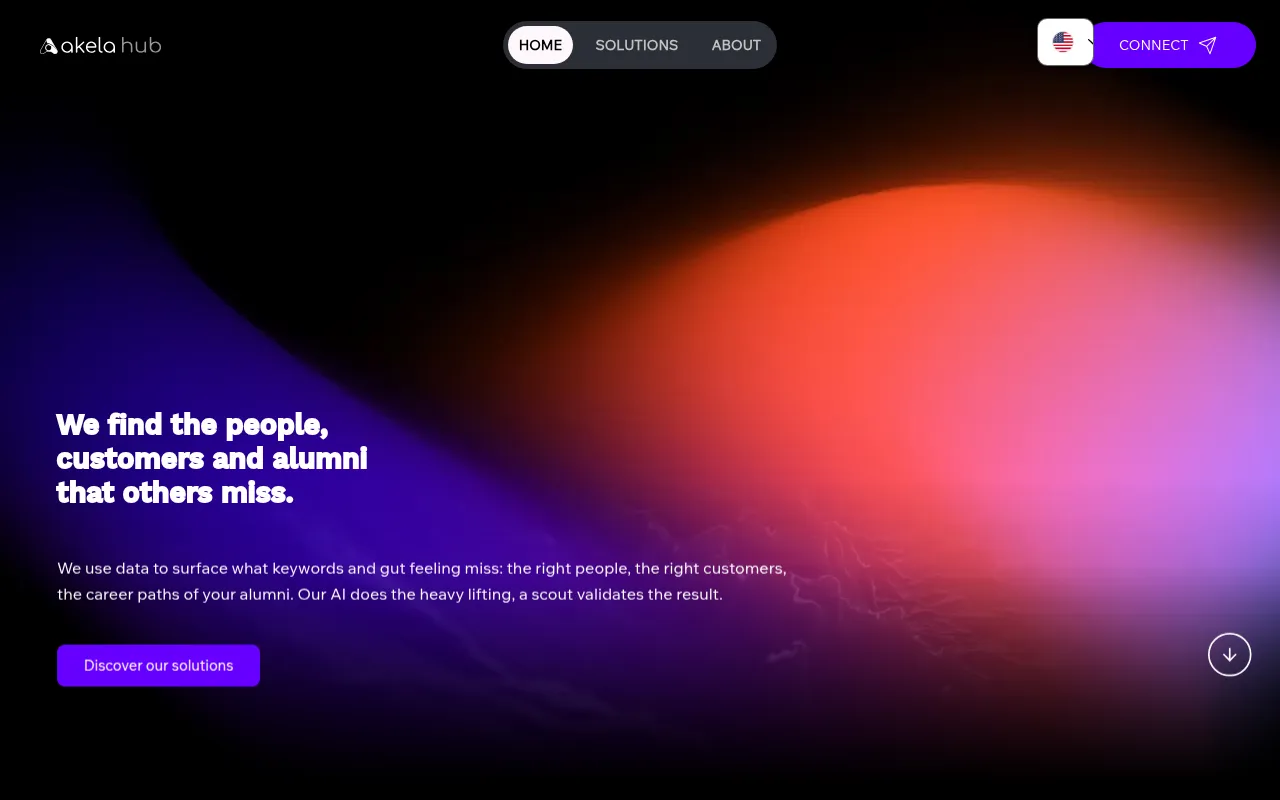
Akela Hub is designed to streamline repetitive tasks for developers and teams, offering a compelling alternative to Jam for those looking to improve operational efficiency. Unlike Jam, which focuses on bug reporting, Akela Hub enables teams to automate various workflows, thus saving time and reducing the likelihood of manual errors. This functionality is particularly beneficial for development teams dealing with high volumes of tasks that can become cumbersome over time.
The user-friendly interface of Akela Hub allows teams to set up automation flows quickly, ensuring that they can start reaping the benefits of increased efficiency without extensive training. For teams that find Jam insufficient for managing repetitive tasks, Akela Hub provides a tailored solution that enhances productivity and operational flow. Its focus on automation makes it an ideal choice for teams seeking to optimize their development workflows.
- Key Strength: Streamlines repetitive tasks through automation.
- Key Strength: User-friendly setup for quick implementation.
- Key Strength: Enhances operational efficiency for development teams.
- Limitation: Limited focus on bug reporting features.
Pricing: Freemium with pricing information currently unavailable. Best for: Teams looking to automate repetitive workflows.
Runtime - Best for AI Agent Development
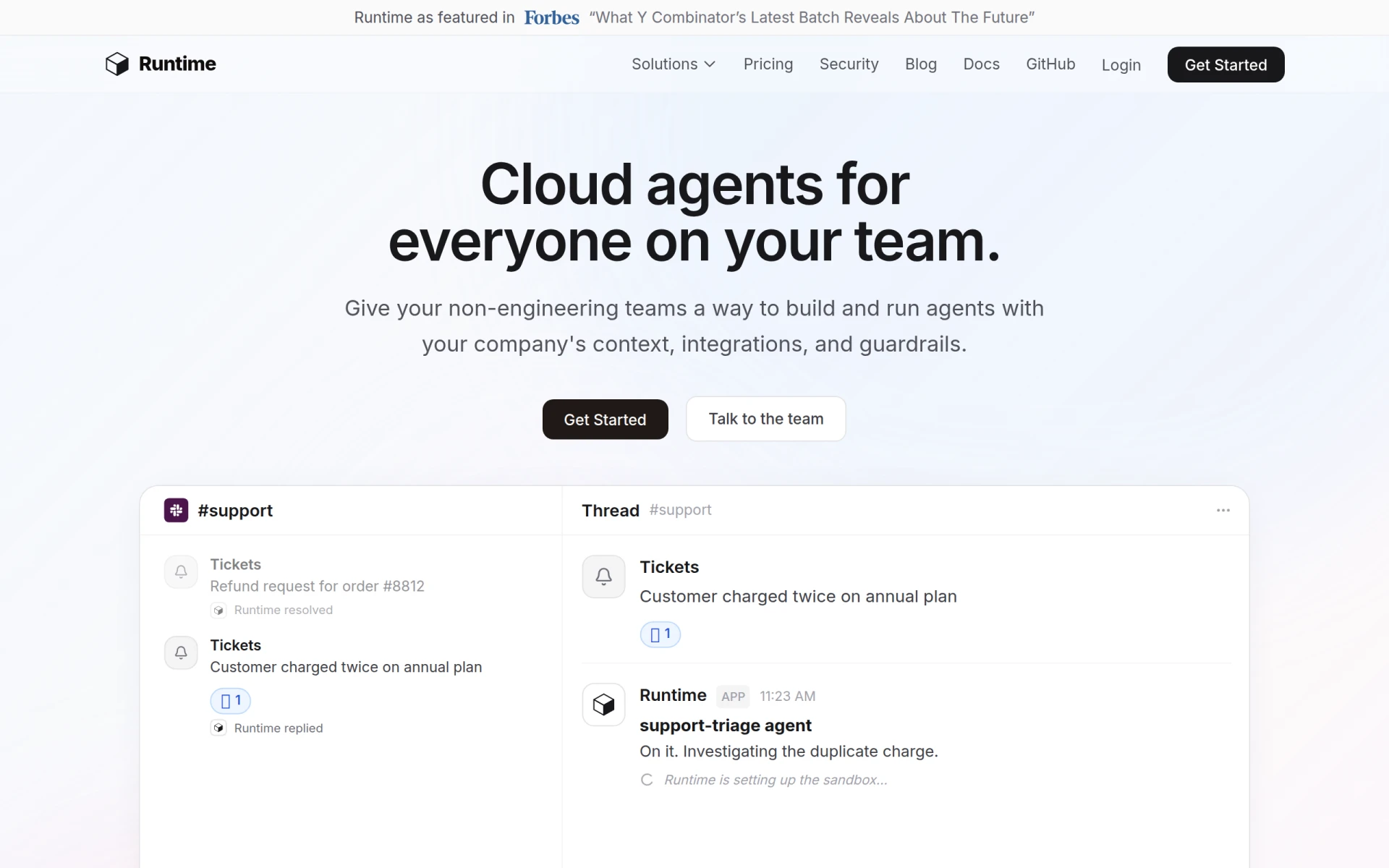
Runtime enables teams to build and run AI agents tailored to their company's specific context without requiring extensive engineering skills. This tool serves as a strong alternative to Jam for organizations looking to harness AI technology in a streamlined manner. Unlike Jam, which is focused on bug reporting, Runtime empowers teams to develop AI solutions that can address various business challenges, from customer service to data analysis.
One of Runtime's key benefits is its user-friendly platform that accommodates users with varying levels of technical expertise, making it accessible for a broader audience. For teams that find Jam lacking in terms of AI capabilities, Runtime offers a compelling solution that can enhance innovation and efficiency. Its focus on AI agent development positions it as an ideal choice for organizations looking to integrate AI into their operations without a steep learning curve.
- Key Strength: Enables the development of context-specific AI agents.
- Key Strength: Accessible for users with varying technical skills.
- Key Strength: Enhances innovation in business processes.
- Limitation: Pricing details are currently unavailable.
Pricing: Freemium with a paid plan starting from $99 per seat per month. Best for: Organizations looking to develop AI solutions without extensive engineering skills.
Feature Comparison Table
| Tool | Best For | Starting Price | Free Plan | Standout Feature |
|---|
| Jam | Bug Reporting | Freemium | Yes | Automatic bug report generation |
DOCKR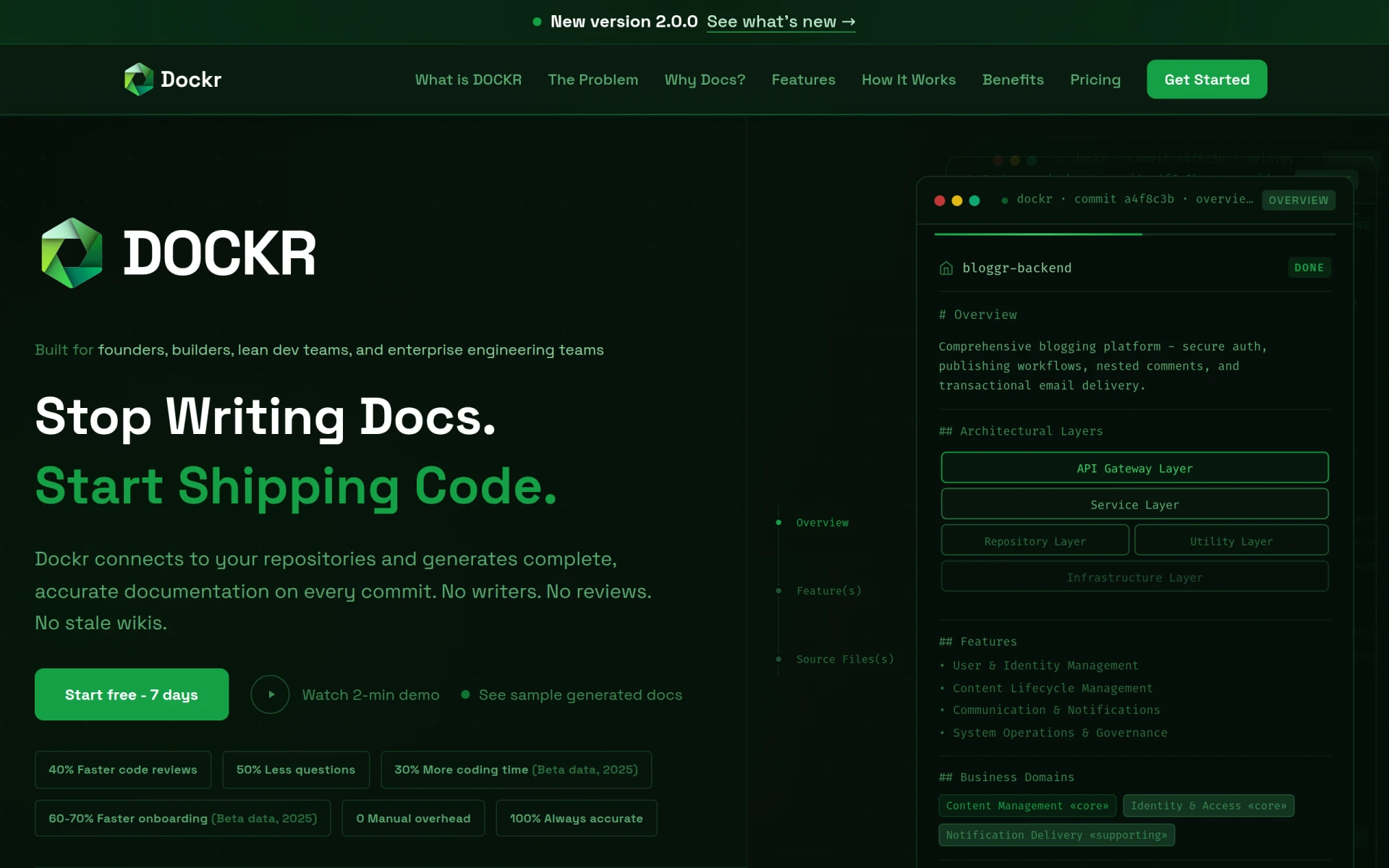 | Documentation Automation | Freemium | Yes | Automatic updates based on code changes |
| Vercel Checkpoint | Workflow Automation | Freemium | Yes | Automated project management workflows |
| Whacka | No-Code App Development | Freemium | Yes | App creation through plain language |
| Momentic | AI-Driven Testing | Freemium | Yes | Plain English test writing |
| TESTR | Automated Unit Testing | Freemium | No | Automatic unit test generation |
| Windsurf | AI Coding Assistance | Freemium | Yes | Management of local and cloud agents |
Build AI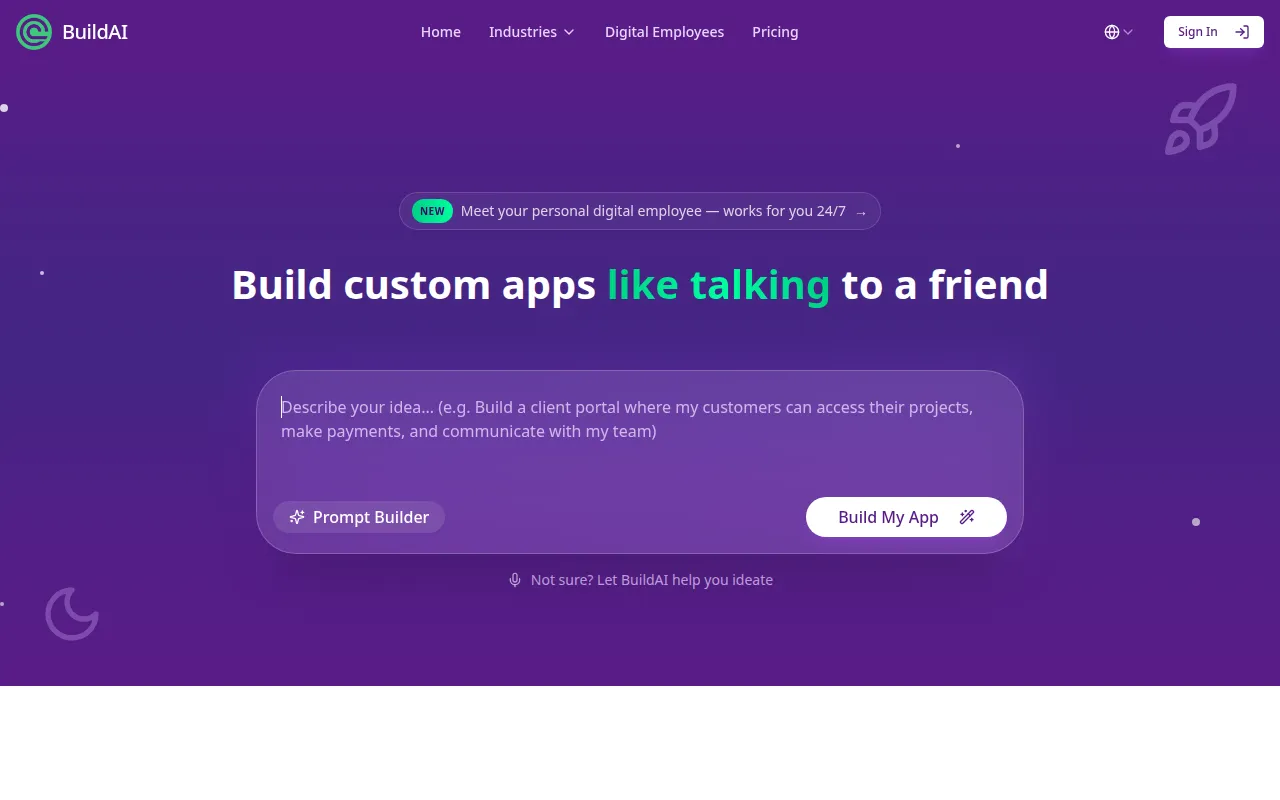 | Rapid AI Application Development | Freemium | Yes | No-code AI application creation |
| Reworkd | Web Scraping | Freemium | Yes | No coding required for data extraction |
| Sider | Code Review Collaboration | Freemium | No | Streamlined code review process |
| Railway | Development Workflow Automation | Freemium | No | Integration of coding and deployment |
| Heex | Workflow Automation | Freemium | No | Automation of repetitive tasks |
| TestSprite | Automated Software Testing | Freemium | Yes | Comprehensive automation of testing |
| MLCode | Code Generation | Freemium | No | AI-powered code suggestions |
| Akela Hub | Workflow Automation | Freemium | No | Streamlining repetitive tasks |
| Runtime | AI Agent Development | Freemium | Yes | Development of context-specific AI agents |
How to Choose the Right Alternative to Jam
Choosing the right alternative to Jam largely depends on your team’s specific needs and workflows. If your primary focus is on improving documentation processes, Dockr would be an excellent fit due to its automatic updates based on code changes. On the other hand, if your team needs a robust testing solution, Momentic or TESTR would be more aligned with your goals, offering advanced testing capabilities.
For teams looking to empower non-developers in app creation, Whacka’s no-code platform provides an accessible way to build applications quickly. In contrast, if you seek to enhance collaboration and code quality, Sider’s streamlined code review process could be the best choice. Consider your team’s workflow, the specific features you require, and how each tool integrates into your existing processes when making your decision.
Final Verdict
In summary, while Jam offers valuable features for bug reporting, its limitations in documentation, testing, and workflow automation drive users to seek alternatives. Each of the tools discussed provides unique strengths that cater to different aspects of the development lifecycle. For teams looking for comprehensive documentation, Dockr is the best fit, while those focused on testing should consider Momentic or TESTR. Evaluate your team’s specific needs to identify the best tool for your development processes.